Life on Earth is under accelerating stress. Habitat destruction, pollution, and climate change are weakening biodiversity. The intricate web of life within Earth’s ecosystems provides essential services people everywhere rely on, from clean air and water to the pollination that sustains staple food crops. Biodiversity is a prerequisite for a habitable planet.
The Harvard University Biodiversity Initiative for Planetary Stewardship (HUBS) is Harvard’s response. HUBS is a university-wide effort, anchored at the Salata Institute for Climate and Sustainability, to generate the evidence, tools, and talent needed to protect and restore nature at scale.
HUBS is built on the premise that addressing the biodiversity crisis requires disciplines to come together. By aligning discovery, measurement, and conservation, HUBS channels Harvard’s depth of experience across the sciences, policy, and practice – and leverages the university’s convening power – to deliver actionable evidence and scalable solutions.
Harvard University Biodiversity Initiative for Planetary Stewardship (HUBS) advances four connected goals
Discover, detect, and measure biodiversity using next-generation tools and integrated datasets
Assess biodiversity’s role in ecosystem function and resilience under rapid global change
Enable concrete conservation, restoration, and nature-based solutions with credible monitoring and forecasting
Train and convene leaders across disciplines and sectors to scale evidence-based action
How the work comes together
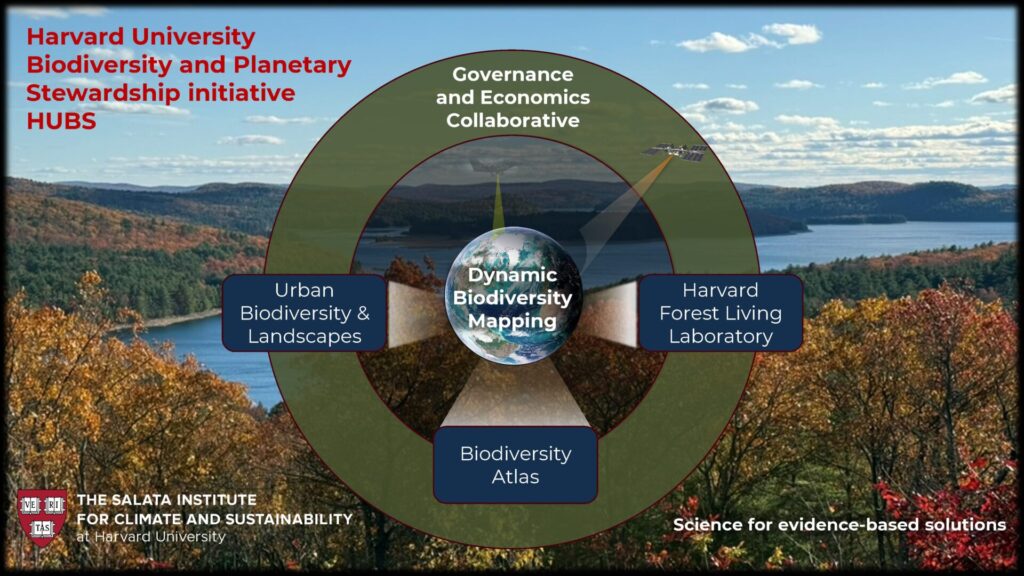
HUBS integrates five mutually reinforcing platforms that turn biodiversity science into action.
Image credit: NASA
1) Mapping nature and change through time
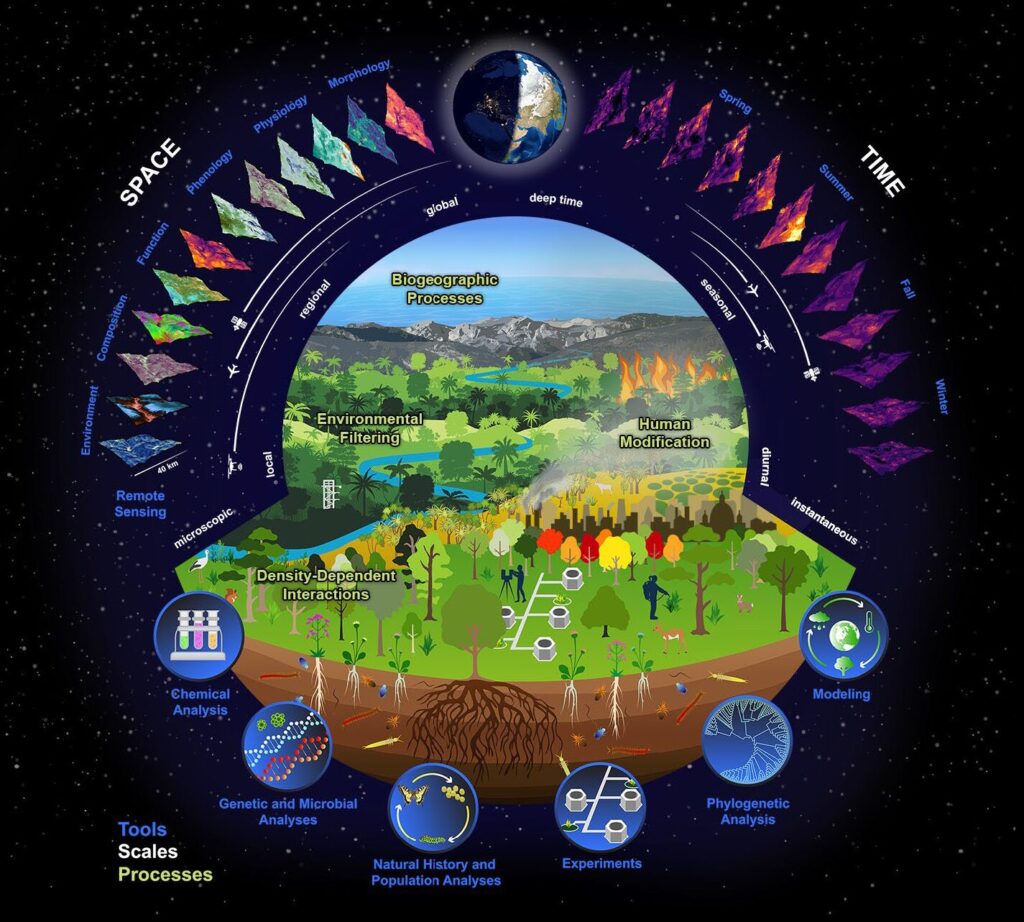
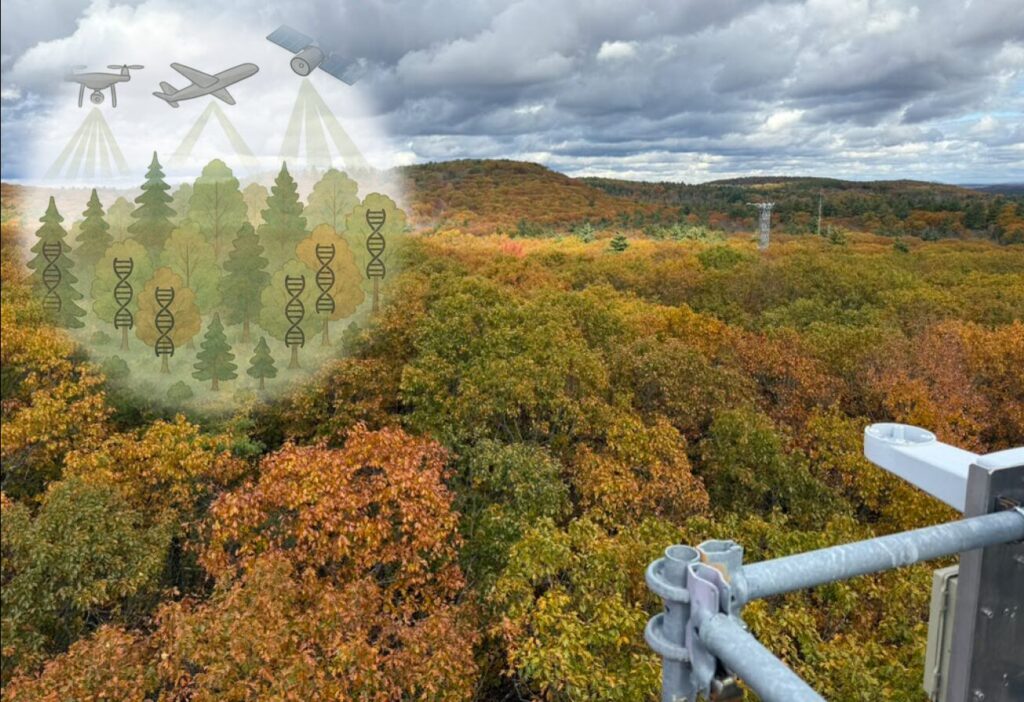
Using remotely sensed satellite, airborne and other environmental data layers the Center for Dynamic Biodiversity Mapping will build the data pipelines, computational infrastructure, and verification tools needed to make biodiversity change visible and measurable over time. The Center, which will serve as the biodiversity data nerve center of HUBS, will turn these observations into actionable monitoring data streams for verification of biodiversity targets, forecasts and educational tools.
Cavender-Bares, J., F. D. Schneider, M. J. Santos, A. Armstrong, A. Carnaval, K. M. Dahlin, L. Fatoyinbo, G. C. Hurtt, D. Schimel, P. A. Townsend, S. L. Ustin, Z. Wang, and A. M. Wilson. 2022. Integrating remote sensing with ecology and evolution to advance biodiversity conservation. Nature Ecology & Evolution 6:506-519.
Filling a critical gap for governments, NGOs, and the private sector working toward the UN Global Biodiversity Framework, the Center will produce multi-scale maps of forest and woodland biodiversity and canopy structure, detect change as it happens, and project future trajectories to guide conservation, restoration, and responsible investment. It will also serve as a convening and training hub, aligning Harvard expertise across biology, engineering, data science, policy, and practice and partnering with external leaders to ensure the work is usable in the real world.
2) A digital twin of Earth’s biodiversity
Millions of species remain unidentified around the world. At current rates of extinction, many will disappear before they are ever documented. Harvard is home to some of the most extraordinary natural history collections anywhere that collectively document how life has changed through time, but they are an under-utilized resource. By digitizing them in one globally accessible platform, the Harvard University Biodiversity Atlas will accelerate discovery, documentation, insight, and prediction.
By pairing integrated data for plants, animals, fungi and other domains of life with high-resolution imaging, genetic and genomic information, and spectral signatures, the Atlas will be a virtual collection that supports research across scales – from taxonomy and genomics to functional traits and ecosystem roles in changing environments. An early deliverable is a unified database of nearly 26 million specimens, with a longer-term plan to enrich records through high-throughput workflows and emerging approaches such as citizen science, remote sensing, and environmental DNA. The result will be faster identification, better forecasting, and deeper insight into what species do and how ecosystems work – supported by a collaboration model that aligns disciplines around shared standards and trains the next generation of biodiversity scientists.
3) Living forest ecosystem laboratory
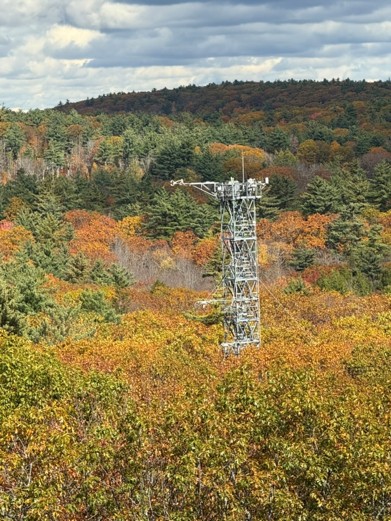
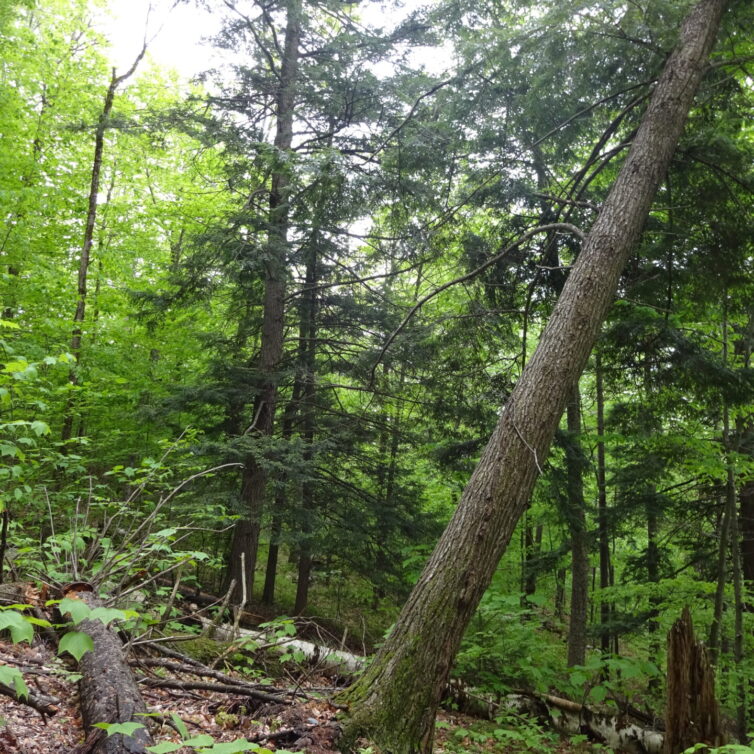
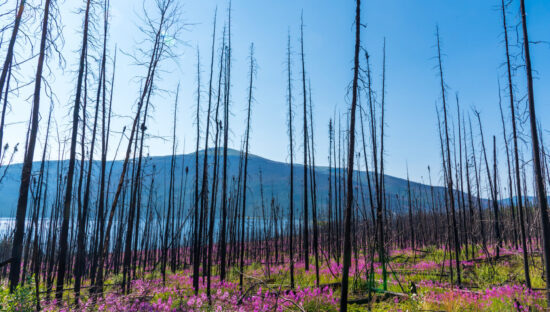
The Harvard Forest Living Laboratory for Forest biodiversity and Ecosystem Function (LIFE) positions the 1,600-hectare Harvard Forest – and its century-plus legacy of monitoring and experimentation – as a global platform for understanding how biodiversity undergirds ecosystem resilience. It answers a critical question: How does biodiversity – ranging from microbes and insects to plants, birds, and mammals – sustain forest function as climate stress intensifies? Despite strong evidence that rising carbon dioxide, warming temperatures, and increasing drought are degrading forests, remarkably few in situ experiments test how these pressures interact and few large-scale monitoring systems can link changes in biodiversity to ecosystem processes.
Figure Credit: Antonio Guzmán
1/10
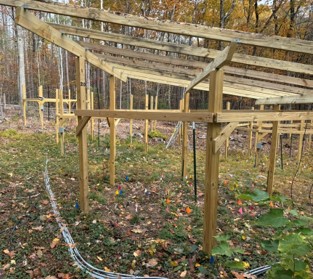
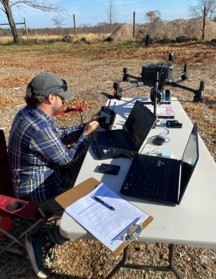
LIFE fills that gap by pairing next-generation monitoring tools – including spectroscopy, LiDAR, acoustic sensors, camera traps, and field inventories – with long-term experiments that simulate interacting climate stressors and ecosystem models that predict future trajectories. Building on Harvard Forest’s leadership in long-term, ecosystem flux measurements of the exchange of gases between the terrestrial land surface and the atmosphere, and continuous forest ecosystem datasets, LIFE will produce validated, comparable data, forecasts, and insights that inform forest management, restoration, and nature-based climate solutions. In doing so, LIFE will trainfellows and students through interdisciplinary, co-mentored research.
4) Urban solutions
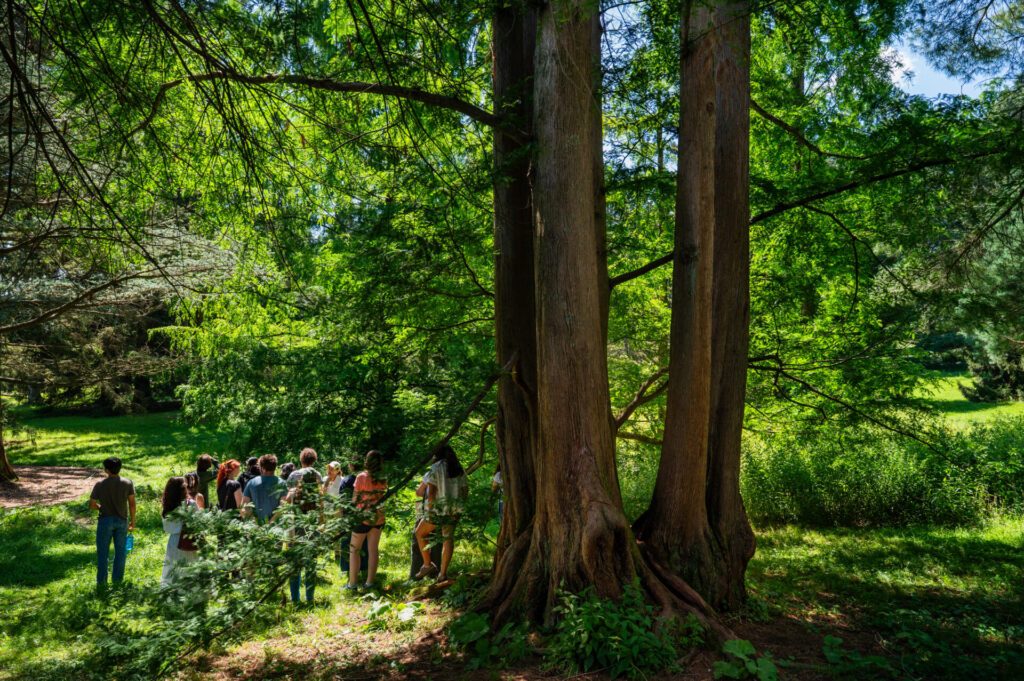
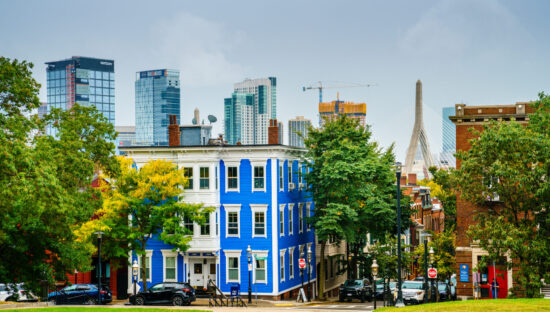
Most people now experience nature primarily in cities, yet urban biodiversity is rarely measured with consistent standards and is often treated as an amenity rather than essential civic infrastructure. The Urban Biodiversity and Landscape Project will establish practical protocols to measure urban nature and its benefits, training students and practitioners, convening city leaders, and creating demonstrations that test interventions in the built environment and translate results into policy and practice.
Image Credit: Max PianaImage Credit: Max Piana
1/10
Utilizing the Arnold Arboretum of Harvard University, a 281-acre living museum in Boston’s Emerald Necklace, and a suite of parks from Boston’s urban core to exurban realms, the project will treat urban nature as essential civic infrastructure that links design, public health, ecology, policy, and law. In partnership with city officials and communities – who often lack baseline information needed for stewardship, planning, and natural resource management – the project will help reverse the long decline of designed public spaces and generate solutions cities can adopt and scale.
5) Governance and economics
Too often, we still cannot answer basic questions about biodiversity and conservation: Which interventions work; what do they cost; what tradeoffs do they create; and which governance arrangements and incentives are durable enough to scale? How do we value nature in ways that change behavior?
The Biodiversity Governance and Economics Collaborative is the bridge from science to policy, legal, and market action, connecting new measurement capabilities to the decisions that determine biodiversity outcomes: incentives, regulations, public finance, contracts, and conservation investments. Building on the strong science and data foundations encompassed within HUBS, the Collaborative will build an open biodiversity-policy evidence base with high-resolution indicators and credible baselines, enabling causal evaluation and monitoring that policymakers and practitioners can trust. It will assess the salience and cost-effectiveness of tools such as carbon and biodiversity credits, species protections, and mitigation frameworks, and design incentives that internalize biodiversity’s value with attention to enforcement, additionality, and equity. The result is practical: maps, datasets, planning and permitting tools for infrastructure and energy siting, and decision toolkits that help leaders choose what works, where, and for whom.
What success looks like
HUBS will deliver practical outputs that partners can use immediately, including:
Integrated data products and verification pipelines that quantify biodiversity change and support credible monitoring, reporting, and accountability
A comprehensive biodiversity atlas that expands global access to tens of millions of specimen records and accelerates biodiversity discovery and prediction
Demonstration and training programs that grow the next generation of biodiversity leaders and translate evidence into stewardship.
HUBS positions Harvard and the Salata Institute as a trusted, interdisciplinary evidence base for biodiversity measurement and action – linking discovery to monitoring, and science to the policies, laws, and incentives that can deliver measurable biodiversity gains at scale.
Our work focuses on the physiological and evolutionary dimensions of plant ecology that influence community assembly and ecosystem function. We are particularly interested in the genetic and evolutionary basis of variation in plant phenotypes and spectral properties that can be detected at scales...
Director of the Harvard University Herbaria, Climate Action Acceleration Professor of Organismic and Evolutionary Biology
My primary research focuses on the evolution and biogeography of invertebrate animals and in the use of museum specimens for genomic research. In the lab we use genomic and morphological data from living and extinct animals to better understand invertebrate evolution and changes in their distribu...
Professor Michele Holbrook studies the physics and physiology of vascular transport in plants with the goal of understanding how constraints on the movement of water and solutes between soil and leaves influences ecological and evolutionary processes. Dr. Holbrook is currently working on question...
Charles Bullard Professor of Forestry, Professor of Organismic and Evolutionary Biology, Director of the Harvard Forest, Faculty Fellow of the Arnold Arboretum, Affiliate of Environmental Science and Engineering
Andrew Mergen is a Visiting Assistant Clinical Professor of Law and Faculty Director of the Emmett Environmental Law & Policy Clinic. Prior to joining the Harvard Law School faculty, Andrew Mergen served in the Appellate Section of the Environment & Natural Resources Division (ENRD) at th...
Joyce E. Chaplin, BA (Northwestern), MA (Johns Hopkins), PhD (Johns Hopkins), is the James Duncan Phillips Professor of Early American History in the Department of History at Harvard University, where she teaches the histories of science, climate, colonialism, and environment. She is also an Affi...
James Duncan Phillips Professor of Early American History, Director of Graduate Studies
Our research examines how animals interact with the environment and each other to affect ecosystem processes at landscape scales. We draw on the fields of community and ecosystem ecology, animal behavior, and remote sensing to explore multiple facets of animal-ecosystem interactions in a spatiall...
Assistant Professor of Organismic and Evolutionary Biology
My research focuses on the organismic interfaces between developmental, phylogenetic and evolutionary biology. Armed with hypotheses of relationships among clades, I seek to explore how patterns of morphology, anatomy and reproductive biology have evolved through the modification of developmental...
Dr. Gilmore is the founder and Principal Investigator of the Harvard-wide Program on Antibiotic Resistance, and of the academic/industry consortium Boston-Area Antibiotic Resistance Network (BAARN). His research focuses on the evolution and development of multidrug resistant strains of enterococc...
Director, Infectious Disease Institute; Sir William Osler Professor of Ophthalmology
Professor Girguis’ focuses on understanding how marine organisms have adapted to their habitats, and how they respond to a changing world. His highly interdisciplinary, residing at the crossroads of ecology, physiology, and biogeochemistry. His lab uses molecular biology (e.g., genomics, tr...
Professor of Organismic and Evolutionary Biology, Harvard University, Adjunct Oceanographer, Applied Ocean Engineering and Physics, Woods Hole Oceanographic Institution
I am an ecologist and epidemiologist interested in the human health impacts of environmental change, specifically in the context of global trends in biodiversity loss, climate change, and ecosystem transformation. Please visit my research projects webpage to find out what my group and I are worki...
Associate Professor of Nutrition and Planetary Health
Janet Gyatso is a specialist in Buddhist studies with concentration on Tibetan and South Asian cultural and intellectual history. Her 2015 book Being Human in a Buddhist World: An Intellectual History of Medicine in Early Modern Tibet (Columbia University Press) focuses upon alternative early mod...
Hershey Professor of Buddhist Studies Associate Dean for Faculty and Academic Affairs
The Holford lab studies venoms and venomous animals as agents of molecular change and medicinal innovations. Specifically, I am interested in how venoms direct the evolution of organisms and how they can improve human lives. My research demonstrates the scientific path from mollusks to medicine, ...
Professor of Organismic and Evolutionary Biology, Curator of Malacology in the Museum of Comparative Zoology
Primary research interests: Isotope geochemistry and historical geobiology; re-animating ancient ecosystems and ocean chemistry using stable isotope systems, chemical speciation techniques, modern microbial experiments (for calibration) and theoretical considerations.
Faculty Website
Dean of Science, Professor of Earth and Planetary Sciences
I am ecologist specializing in urban systems and applied ecology. My teaching and research engage the interface of ecology and design. Specific research topics include plant population and community dynamics in urban landscapes (from natural to constructed), urban restoration ecology, green infra...
Lecturer in Landscape Architecture in Plant Science and Forest Ecology
Wolfram Schlenker studies the effect of weather and climate on agricultural yields and migration, how climate trends and the US biofuel mandate influences agricultural commodity prices, and how pollution impacts both agricultural yields and human morbidity. He is a Research Associate at the Natio...
Ray A. Goldberg Professor of the Global Food System
James H. Stock is Vice Provost for Climate and Sustainability, Harvard University; the Harold Hitchings Burbank Professor of Political Economy, Faculty of Arts and Sciences; and a member of the faculty at the Harvard Kennedy School. His current research includes energy and environmental economics...
Director; Vice Provost for Climate and Sustainability; Harold Hitchings Burbank Professor of Political Economy, Faculty of Arts and Sciences
Charles Taylor is an Assistant Professor of Public Policy at Harvard Kennedy School. His research interests are in environmental economics with a focus on climate change, agriculture, land use, and ecosystem services. He often uses satellite data and remote sensing to help answer policy questions...
Assistant Professor of Public Policy at Harvard Kennedy School
Dr. Jonathan Thompson is the Director of the Harvard Forest, a research center of Harvard University. His research focuses on long-term and broad-scale changes in forest ecosystems, with an emphasis on quantifying how land use – including harvest, conversion, and land protection – affects forest ...
Christina (Tina) Warinner is Professor of Anthropology and Human Evolutionary Biology at Harvard University. She additionally leads international research groups at the Max Planck Institute for Evolutionary Anthropology in Leipzig, Germany, and the Leibniz Institute for Infection Biology and Natu...
Landon T. Clay Professor of Scientific Archaeology
Amy is a registered landscape architect, practitioner, and educator. Prior to her role as Design Critic in Landscape Architecture she spent 10 years in the Boston office of Stoss Landscape Urbanism where she was most recently the Director of Resilience. She continues to work with Stoss as an advi...
Margaret Williams is a Senior Fellow at the Belfer Center’s Arctic Initiative.
Williams has worked for over 25 years on conservation issues in Russia and Alaska. She joined the Arctic Initiative from the World Wildlife Fund (U.S.), where she established and served as the Managing Director o...
Our work focuses on the physiological and evolutionary dimensions of plant ecology that influence community assembly and ecosystem function. We are particularly interested in the genetic and evolutionary basis of variation in plant phenotypes and spectral properties that can be detected at scales...
Director of the Harvard University Herbaria, Climate Action Acceleration Professor of Organismic and Evolutionary Biology
Our research examines how animals interact with the environment and each other to affect ecosystem processes at landscape scales. We draw on the fields of community and ecosystem ecology, animal behavior, and remote sensing to explore multiple facets of animal-ecosystem interactions in a spatiall...
I am an integrative plant ecologist and remote sensing scientist whose interest focuses on understanding of ecological mechanisms that enable the observation and monitoring of forest biodiversity and its changes across spatial and temporal scales
My research combines remote sensing and animal observations to understand how animal-vegetation interactions contribute to ecosystem stability. I work primarily with animal tracking data, LiDAR, and satellite remote sensing to reveal the 3D structural attributes that support the functional roles ...
The Albertin lab investigates the evolutionary and developmental bases of biological novelty using soft-bodied cephalopods (squid and octopus) as model systems. To enable this work, Carrie and her group have built new tools to study cephalopod biology, including sequencing, assembling, and annota...
Assistant Professor of Organismic and Evolutionary Biology, Curator of Malacology in the Museum of Comparative Zoology
Our work focuses on the physiological and evolutionary dimensions of plant ecology that influence community assembly and ecosystem function. We are particularly interested in the genetic and evolutionary basis of variation in plant phenotypes and spectral properties that can be detected at scales...
Director of the Harvard University Herbaria, Climate Action Acceleration Professor of Organismic and Evolutionary Biology
Our research examines how animals interact with the environment and each other to affect ecosystem processes at landscape scales. We draw on the fields of community and ecosystem ecology, animal behavior, and remote sensing to explore multiple facets of animal-ecosystem interactions in a spatiall...
Assistant Professor of Organismic and Evolutionary Biology
Our research on plant diversity integrates the disciplines of systematics, paleobiology, evolution, ecology, and molecular biology. One major theme that unites these disciplines is phylogenetic theory, which we apply to reconstruct the history of plant diversity through evolutionary time. Biogeog...
Professor of Organismic and Evolutionary Biology, Curator of Vascular Plants in the Harvard University Herbaria
Individual animals with identical genomes, reared identically, nevertheless exhibit behavioral differences. This underpins our sense of individuality. Where these inter-individual differences arise in the causal cascade from transcription to gene products to cellular physiology to neural circuit ...
Professor of Organismic and Evolutionary Biology, Co-Chair of the Department of Organismic and Evolutionary Biology
I am a scientist with broad interests in the evolution of life on earth and the processes that have generated biodiversity. I mostly use birds as models to study patterns of speciation, biogeography, evolution of the genome, and the process of adaptation. This work has exposed my lab to a wide r...
Professor of Organismic and Evolutionary Biology, Curator of Ornithology in the Museum of Comparative Zoology
My primary research focuses on the evolution and biogeography of invertebrate animals and in the use of museum specimens for genomic research. In the lab we use genomic and morphological data from living and extinct animals to better understand invertebrate evolution and changes in their distribu...
The Holford lab studies venoms and venomous animals as agents of molecular change and medicinal innovations. Specifically, I am interested in how venoms direct the evolution of organisms and how they can improve human lives. My research demonstrates the scientific path from mollusks to medicine, ...
Professor of Organismic and Evolutionary Biology, Curator of Malacology in the Museum of Comparative Zoology
Mansi Srivastava
Professor of Organismic and Evolutionary Biology, Curator of Invertebrate Zoology in the Museum of Comparative Zoology
I am an integrative plant ecologist and remote sensing scientist whose interest focuses on understanding of ecological mechanisms that enable the observation and monitoring of forest biodiversity and its changes across spatial and temporal scales
Aaron Lee is a Postdoctoral Fellow in the Department of Organismic and Evolutionary Biology. He is a botanist and plant systematist interested in understanding how the dynamic relationships between plant ecology and evolution produce and influence plant diversity today. His research uses interdis...
Postdoctoral Fellow, Organismic and Evolutionary Biology
I am a Postdoctoral Research Associate in the Farlow Herbarium within OEB, working with the Davis Lab. I am broadly interested in the ecology and evolution of lower land plants, especially on tropical islands and mountains. My main taxonomic interest and favorite plants are bryophytes, particular...
Dawson White is a botanist focused on advancing our understanding of plant diversity through work in the field, laboratory, and herbarium. A native of Colorado, his research at the Harvard University Herbaria centers on developing herbarium spectroscopy as a tool to generate high-throughput pheno...
Dr. Jonathan Thompson is the Director of the Harvard Forest, a research center of Harvard University. His research focuses on long-term and broad-scale changes in forest ecosystems, with an emphasis on quantifying how land use – including harvest, conversion, and land protection – affects forest ...
About
I am a principal investigator and organizational leader at Harvard Forest, a 4,000-acre center for research and education in ecology and conservation since 1907. I direct the Forest’s education, communications, and public outreach initiatives: I manage the Fisher Museum; communicate H...
David A. Orwig is Senior Ecologist at the Harvard Forest. His research interests encompass various aspects of forest ecology and ecosystem science, with particular emphasis on dendroecology and the role of land use history and disturbance on forest composition and structure. His doctoral disse...
Audrey Barker Plotkin is Senior Scientist and Site & Research Manager at the Harvard Forest, and Director of the Harvard Forest Summer Research Program in Ecology. Her research delves into how long-term forest development trajectories are shaped by disturbances such as wind and invasive insec...
Senior Scientist and Site & Research Manager, Harvard Forest
Our work focuses on the physiological and evolutionary dimensions of plant ecology that influence community assembly and ecosystem function. We are particularly interested in the genetic and evolutionary basis of variation in plant phenotypes and spectral properties that can be detected at scales...
Director of the Harvard University Herbaria, Climate Action Acceleration Professor of Organismic and Evolutionary Biology
Joyce E. Chaplin, BA (Northwestern), MA (Johns Hopkins), PhD (Johns Hopkins), is the James Duncan Phillips Professor of Early American History in the Department of History at Harvard University, where she teaches the histories of science, climate, colonialism, and environment. She is also an Affi...
James Duncan Phillips Professor of Early American History, Director of Graduate Studies
I am a scientist with broad interests in the evolution of life on earth and the processes that have generated biodiversity. I mostly use birds as models to study patterns of speciation, biogeography, evolution of the genome, and the process of adaptation. This work has exposed my lab to a wide r...
Professor of Organismic and Evolutionary Biology, Curator of Ornithology in the Museum of Comparative Zoology
Professor Michele Holbrook studies the physics and physiology of vascular transport in plants with the goal of understanding how constraints on the movement of water and solutes between soil and leaves influences ecological and evolutionary processes. Dr. Holbrook is currently working on question...
Charles Bullard Professor of Forestry, Professor of Organismic and Evolutionary Biology, Director of the Harvard Forest, Faculty Fellow of the Arnold Arboretum, Affiliate of Environmental Science and Engineering
My lab is very broadly interested in the evolution of floral morphology. We use molecular, morphological, and phylogenetic approaches to study how flowers have changed over the course of evolutionary time. Research projects in the lab cover a diverse set of topics, including gene lineage evolutio...
Bussey Professor of Organismic and Evolutionary Biology, Faculty Fellow of the Arnold Arboretum, Co-Director of Harvard Integrated Life Sciences
Kaighin McColl is an Associate Professor at Harvard University, jointly appointed in the Department of Earth and Planetary Sciences and the School of Engineering and Applied Sciences. His group uses theory, models and observations to understand the terrestrial water cycle, and its connection to w...
I am ecologist specializing in urban systems and applied ecology. My teaching and research engage the interface of ecology and design. Specific research topics include plant population and community dynamics in urban landscapes (from natural to constructed), urban restoration ecology, green infra...
Lecturer in Landscape Architecture in Plant Science and Forest Ecology
Terrestrial ecosystems have a massive capacity to capture carbon and mitigate anthropogenic global change. However, the build-up of plant and soil carbon pools depends heavily on the ability of plants and their below-ground symbionts to acquire soil resources to match demands set by their environ...
Associate Professor of Organismic and Evolutionary Biology, Faculty Fellow of the Arnold Arboretum
Steven C. Wofsy is Professor of Atmospheric and Environmental Chemistry in the John A. Paulsen School of Engineering and Applied Science at Harvard University. He has degrees in Chemistry from University of Chicago (BS, 1966) and Harvard (Ph.D., 1971). His scientific work spans the broad range of...
Abbott Lawrence Rotch Professor of Atmospheric and Environmental Science, Faculty of Arts and Sciences
Emilie Isasa is a postdoctoral researcher in plant ecophysiology studying how forests respond to climate change. Her work focuses on the hydraulic and physiological mechanisms underlying drought resilience. She integrates field experiments, plant physiological measurements, and remote sensing to ...
My research uses a combination of field and remote sensing methods to answer questions about the impacts of biodiversity and global change on species interactions and the organization and function of ecosystems. I’m focusing my PhD research on better understanding the connections between forest d...
My research is motivated by a desire to alleviate environmental health disparities. A question we frequently ask in public health is: Why does place matter? In an effort to answer this question, my work aims to identify the specific aspects of housing, communities, and neighborhoods that shape an...
Associate Professor of Environmental Health and Exposure Disparities, Harvard T.H. Chan School of Public Health
My research focuses on the organismic interfaces between developmental, phylogenetic and evolutionary biology. Armed with hypotheses of relationships among clades, I seek to explore how patterns of morphology, anatomy and reproductive biology have evolved through the modification of developmental...
Gary Hilderbrand is the Peter Louis Hornbeck Professor in Practice of Landscape Architecture and Chair of the Department of Landscape Architecture at Harvard University Graduate School of Design, where he has taught since 1990. He is also a founding principal of Reed Hilderbrand LLC, in Cambridge...
Chair of the Department of Landscape Architecture, Peter Louis Hornbeck Professor in Practice of Landscape Architecture
I am ecologist specializing in urban systems and applied ecology. My teaching and research engage the interface of ecology and design. Specific research topics include plant population and community dynamics in urban landscapes (from natural to constructed), urban restoration ecology, green infra...
Lecturer in Landscape Architecture in Plant Science and Forest Ecology
Katharine (Kate) Robb received her doctorate from the Harvard T.H. Chan School of Public Health. She holds an Master of Public Health in global environmental health from Emory University and a Bachelor of Arts in environmental studies from the University of Michigan.
Kate’s research centers on ur...
Amy is a registered landscape architect, practitioner, and educator. Prior to her role as Design Critic in Landscape Architecture she spent 10 years in the Boston office of Stoss Landscape Urbanism where she was most recently the Director of Resilience. She continues to work with Stoss as an advi...
Biodiversity Governance and Economics Collaborative
Select profile picture to see more
Andrew Mergen is a Visiting Assistant Clinical Professor of Law and Faculty Director of the Emmett Environmental Law & Policy Clinic. Prior to joining the Harvard Law School faculty, Andrew Mergen served in the Appellate Section of the Environment & Natural Resources Division (ENRD) at th...
Emmett Visiting Assistant Clinical Professor of Law in Environmental Law; Faculty Director, Emmett Environmental Law and Policy Clinic
Anna Russo is a Junior Fellow at the Harvard Society of Fellows. She will begin as an Assistant Professor of Economics and Social Studies at Harvard in 2026. In her research, she studies the design of government intervention in markets, with a focus on environmental regulation and market design. ...
Wolfram Schlenker studies the effect of weather and climate on agricultural yields and migration, how climate trends and the US biofuel mandate influences agricultural commodity prices, and how pollution impacts both agricultural yields and human morbidity. He is a Research Associate at the Natio...
Ray A. Goldberg Professor of the Global Food System
James H. Stock is Vice Provost for Climate and Sustainability, Harvard University; the Harold Hitchings Burbank Professor of Political Economy, Faculty of Arts and Sciences; and a member of the faculty at the Harvard Kennedy School. His current research includes energy and environmental economics...
Director; Vice Provost for Climate and Sustainability; Harold Hitchings Burbank Professor of Political Economy, Faculty of Arts and Sciences
Charles Taylor is an Assistant Professor of Public Policy at Harvard Kennedy School. His research interests are in environmental economics with a focus on climate change, agriculture, land use, and ecosystem services. He often uses satellite data and remote sensing to help answer policy questions...
The Biodiversity and Planetary Stewardship Committee at Harvard comprises senior leaders and faculty across the Schools whose research and teaching focus on biodiversity, ecosystems, and the intersections of nature, society, and policy.
The Committee’s mission is to:
Advance the discovery, detection, and measurement of biodiversity,
Discern how changing trends and patterns in biodiversity, including responses to global change, are affecting ecosystem functioning and the consequences of these changes for human well-being,
Make concrete and verifiable steps to enhance planetary stewardship, and
Promote cross-disciplinary education to enhance student understanding of all dimensions of biodiversity, global change threats to ecosystems, the interactions of nature and society, and the role of policy in planetary stewardship.
To pursue its mission, the Biodiversity and Planetary Stewardship Committee has established three subcommittees that bring together faculty leaders from across Harvard. Each subcommittee focuses on a key area—teaching, research infrastructure, and engagement—ensuring that Harvard’s scholarship and collaboration contribute meaningfully to understanding and protecting Earth’s biodiversity.
Pedagogy
Co-Chairs: Gonzalo Giribet and Andrew Mergen Exploring new ways to integrate biodiversity and planetary stewardship into teaching across Harvard. Efforts include developing a new course on remote sensing, compiling biodiversity-related courses across Schools, and considering new curricular undergraduate pathways to studying biodiversity.
Biodiversity Data Processing Facility
Chair: Paul Moorcroft Designing a shared facility to help students and researchers analyze biodiversity data. The focus is on integrating remote sensing, museum collections, and field data, while building the infrastructure and expertise needed for cutting-edge biodiversity research and education.
Outreach and Engagement
Co-Chairs: Jeannine Cavender-Bares and Noel Michele Holbrook Building connections locally and globally to advance biodiversity solutions. Current work includes planning engagement with state and city partners, and developing a science-informed side event for COP30 in Brazil to highlight strategies that link climate and biodiversity goals.
Focuses on global change, environmental justice, and education, with the world’s most biodiverse temperate woody plant collection, 81 research projects, and K-12 programs.
Connects Harvard faculty and students with Brazilian counterparts through collaborative research, education, and programs like the Amazon Rainforest Immersion, biodiversity studies, and initiatives addressing deforestation, mercury pollution, and invasive species, supported by the Lemann Brazil Research Fund and other resources.
Conducts research and offers courses on biodiversity-related topics such as life’s origins, hydrology, forest ecosystems, and climate change, supported by 30 faculty and FAS funding.
Kokolopori Bonobo Research Project, led by Assistant Professor Martin Surbeck, focuses on bonobo behavior, ecology, and conservation in the Congo basin, supported by $500,000 in start-up funding.
Explores the molecular basis of life through diverse biodiversity-related research programs, including environmental adaptation in the Bellono Lab, genome analysis in the Eddy Lab, host-parasite interactions in the Elya Lab, plant chemical diversity in the Nett Lab, and RNA gene regulation in the Rivas Lab, supported by federal and foundation funding exceeding $7M annually.
Many faculty in OEB have biodiversity as their core research interest, including ecology, systematics, evolution, behavior, physiology, etc. Many of these aspects are represented in the affiliated institutions, including AA, Harvard Forest, HUH, and MCZ, but other faculty members not affiliated with these institutions are also instrumental in biodiversity research.
The Segel Lab studies mammalian lifespan evolution by reprogramming cell lines from rare, long-lived species, contributing to both research and species preservation, with funding from the Glenn Center for the Biology of Aging.
Integrates the academic study of religion with leadership preparation and has increasingly focused on ecology and environmentalism through research, courses on biodiversity and climate change, and initiatives like “Religion in Times of Earth Crisis,” “Thinking with Plants and Fungi,” and the emerging “Religion and Ecology” focus for its Master of Theological Studies degree.
A 4,000-acre research hub focuses on long-term ecological studies of forest ecosystems, climate change, land-use history, and global changes, serving as an NSF Long-Term Ecological Research site and offering extensive research, education, and public engagement programs.
The Department of Landscape Architecture offers a battery of required and elective courses on climate—including "Climate by Design"—along with ecology and ecological restoration, urban forestry, coastal adaptation, soils, and earthwork and storm water management.
Leads innovative, federally funded projects like EcoLEARN and Wake:Tales from the Aqualab to develop technology-based learning tools and curricula on ecosystems and biodiversity for middle and high school students, while also offering courses such as "Teaching Climate Change" to explore pluralistic and dynamic approaches to environmental education.
Focuses on improving public policy and leadership for safer, freer, and more sustainable societies, with faculty conducting sustainability-related research on biodiversity, agricultural policy, land use change, climate policy; also an Arctic conservation initiative.
Addresses climate and biodiversity issues through the Environmental & Energy Law Program, the Emmett Environmental Law & Policy Clinic, and the Animal Law & Policy Clinic, offering students practical experience and courses on environmental, natural resources, and biodiversity law.
Originally focused on biodiversity through the influential book Sustaining Life, now integrates biodiversity principles into initiatives like the Climate Change and Planetary Health concentration, the annual Youth Summit on Climate, Equity, and Health, and the Climate and Health Research Network, though much of this work is currently unfunded.
First of its kind globally, advances understanding of nutrition and health, with the Golden Planetary Health Research Group examining the impacts of biodiversity loss on food systems and nutrition, supported by $3M in biodiversity-related grants.
World’s largest university herbaria with over 5 million specimens and renowned for its Asian plant collection and glass flower exhibit, advances biodiversity research through digitization, global data contributions, and fostering the “extended specimen” concept, supported by dedicated endowments.
The Harvard wide Antibiotic Resistance Program studies the origins, biodiversity, and human impact on antibiotic-resistant microbes like enterococci, aiming to inform new antimicrobial therapies and track changes influenced by climate, supported by $2.5M annually from NIH/NIAID.
A global leader in biodiversity research, houses over 20 million animal specimens, supports extensive field-based courses and research through the Department of Organismic and Evolutionary Biology, and is funded by $19M in endowments and $3M in federal grants.
Funded by its endowment, supports up to 10 multidisciplinary Rowland Fellows conducting independent research, including projects on light pollution, efficient surface design for reduced fuel consumption, and catalytic reactions, with a focus on biodiversity and environmental issues.
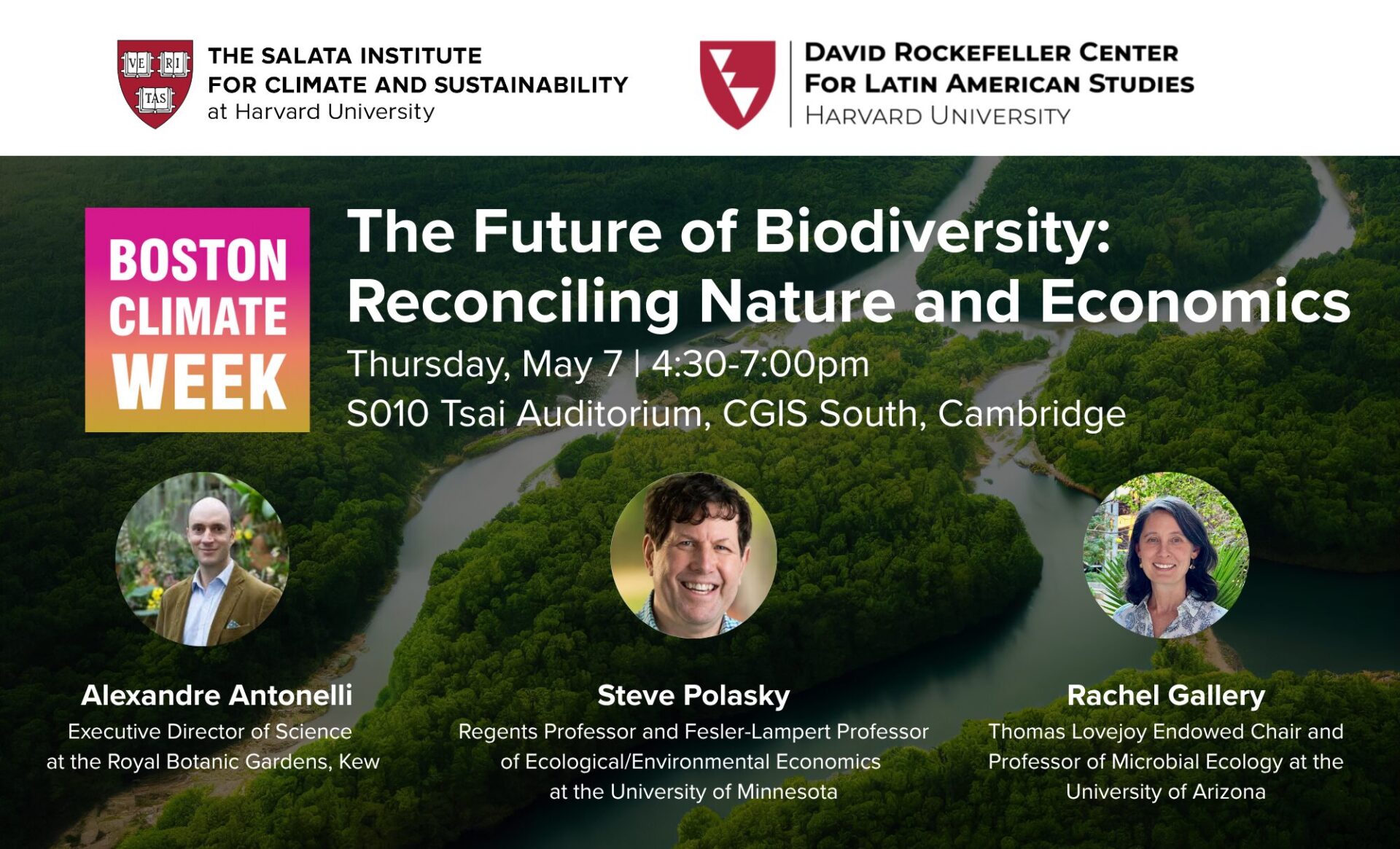
As part of Boston Climate Week, The Harvard University Biodiversity and Planetary Stewardship Initiative (HUBS) , anchored at the Salata Institute for Climate and Sustainability invit...
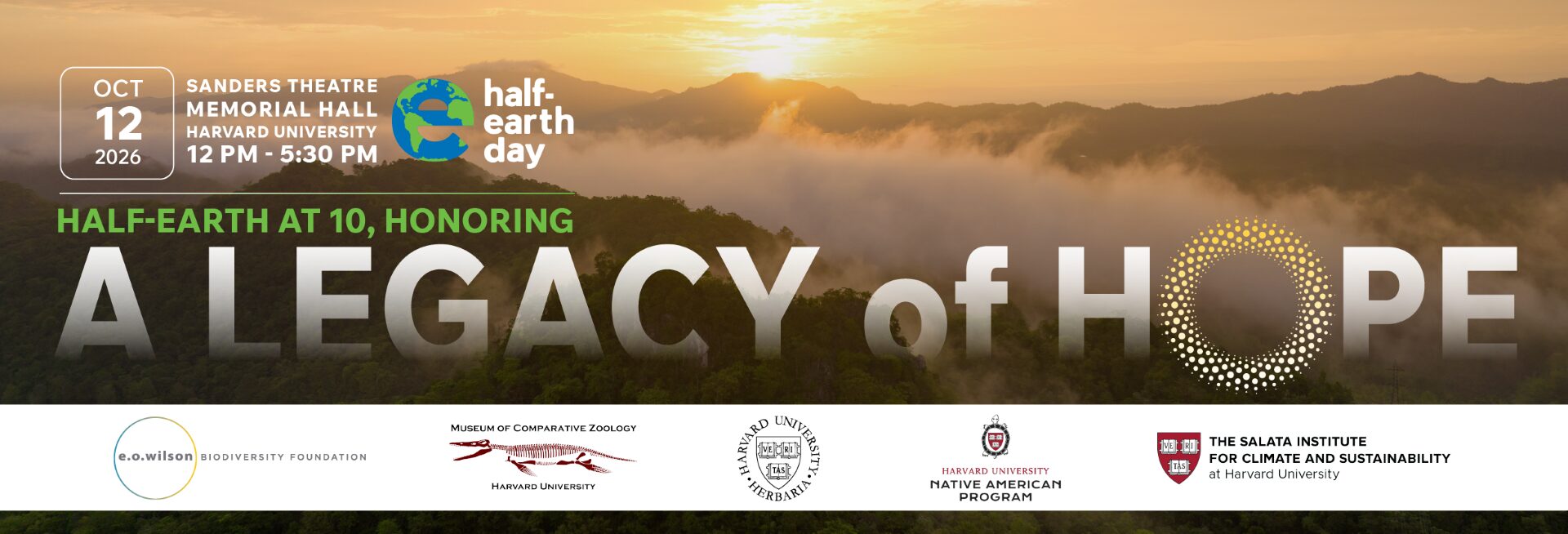
Join the Museum of Comparative Zoology, the Harvard University Herbaria, the Harvard University Native American Program, the Salata Institute for Climate and Sustainability, ...
12:00 pm - 5:30 pm
In-Person / Sanders Theater, Memorial Hall, 45 Quincy St., Cambridge
The Salata Institute for Climate and Sustainability and the Harvard Alumni Association invite you to the next installment of Harvard Voices on Climate Change, a virtual series showcasing Harvard facul...
Boston and Cambridge treat trees as a public system, not decoration. Three contributors to these cities’ urban forest plans explain how heat and historic disinvestment are guiding where canopy goes next – amid pressure to add housing and density.
Thu, Mar 5, 2026
HARVARD UNIVERSITY
THE SALATA INSTITUTE FOR CLIMATE AND SUSTAINABILITY