Chocolate’s new climate threat: Too much rain
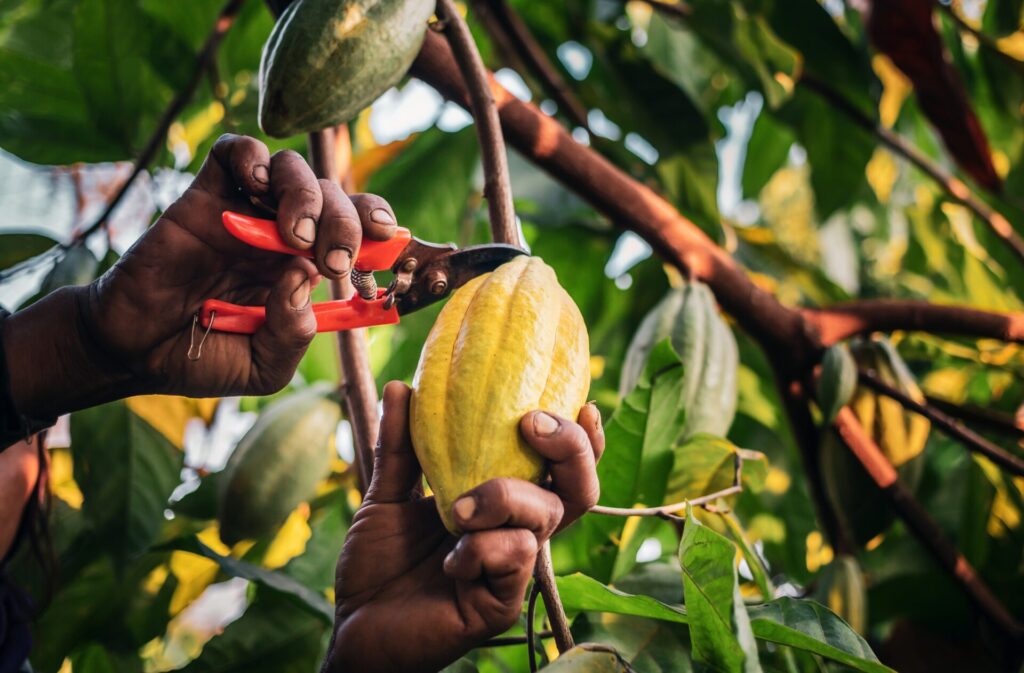
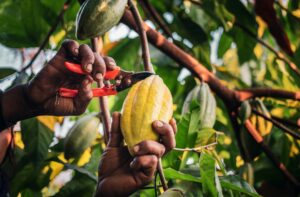
Cocoa farmers in West Africa cannot stop intense, crop-damaging downpours. But they may be able to anticipate the risk and prepare, protecting both their livelihoods and their plants, the source of one of the world’s most beloved foods.
Scientists at Harvard and the University of Ghana say that large-scale weather patterns could make some threats to cocoa harvests predictable months in advance, giving farmers time to act. Cocoa trees live for decades and a successful harvest depends on a long sequence of flowering, pollination, and pod development. Too little or too much rain at the wrong moment can damage the crop for the rest of the season.
“Drought is a real threat to cocoa, and that’s well established. What has not been as well articulated is the other extreme of too much rain. Heavy rain arriving while the trees are flowering – or that favors the spread of fungal disease during flowering and early pod development – turns out to matter just as much,” said Anna Lea Albright, who led the research as a postdoctoral fellow at the Harvard University Center for the Environment.
“In Ghana, we found that excess rain during the wet season, together with dry-season drought, explains about two-thirds of the year-to-year swings in the cocoa harvest.”
The resulting price volatility – raw cocoa prices tripled in 2024 – is hitting chocolate lovers, showing up in higher prices, smaller bars, or reformulated products.
Because cocoa is especially vulnerable at certain stages of its growth cycle, adaptation must be precise. Disease control can be timed around periods of heavy rain, especially if forecasts can be provided that give enough time to prepare – a capacity that the team is currently working to develop.
“We hope the findings will help reduce future crop damage, possibly by encouraging more canopy cover to shield cocoa flowers from large raindrops or by retaining more leaf litter to prevent splashes that transmit infection from soil to cocoa pods,” said senior author Peter Huybers, chair of Harvard’s Department of Earth and Planetary Sciences.
Farmers have long worried about drought, and previous studies have warned that rising temperatures could make some cocoa-growing areas less suitable. But this study finds that average rainfall and average temperatures overlook the damage caused by short, intense bursts of rain.
In Ghana, the most damaging rains appear during the April-to-June wet season, when cocoa trees are flowering and young pods are beginning to form. Later, during the November-to-February dry period, too little rain can hurt the crop as pods continue to develop.
Cocoa over time
The researchers began with two decades of newly available district-level data from the Ghana Cocoa Board, a government agency. Production grew over that period as more land came into cultivation, so the researchers removed each district’s long-term trend to isolate the year-to-year swings. Then they tested those swings against daily weather records and a range of possible culprits: average rainfall, heavy downpours, dry spells, soil moisture, and temperature extremes. In Ghana, the best predictors were heavy rain during the main wet season and too little rain during the dry season.
Then they asked whether Ghana was an exception. They looked at two other major producers on other continents, Ecuador and Indonesia, and found a similar pattern: Years with heavier wet-season rains tended to be worse for cocoa.
That is why forecasting matters. The team emphasizes that the rains that hurt cocoa are tied to larger climate patterns, such as El Niño or shifts in Atlantic sea-surface temperatures, and therefore some bad years may be predictable before the damage is done – early enough to give farmers a warning. For example, a strong El Niño is currently developing; that typically favors heavy rainfall in coastal Ecuador and drier weather across West Africa and Indonesia.
Also lurking in the background is the potential for substantial changes in the timing and pattern of rainfall as a consequence of climate change. Current climate models, however, struggle to effectively represent the climatology of rainfall over West Africa, let alone how it will change in coming decades.
The study comes with caveats. Rain is not the only problem Ghanaian cocoa farmers face. Aging trees, gold mining, smuggling, fertilizer costs, pests, and disease can all lead to lower cocoa production. Rainfall data also do not always capture the biggest downpours well, and those are exactly the events that matter most here.
Still, the study clarifies the climate threat. A hotter world is not the only risk to cocoa’s future. Farmers must also consider when, and how hard, the rain falls.
-As told to David Trilling