What oaks teach us about biodiversity
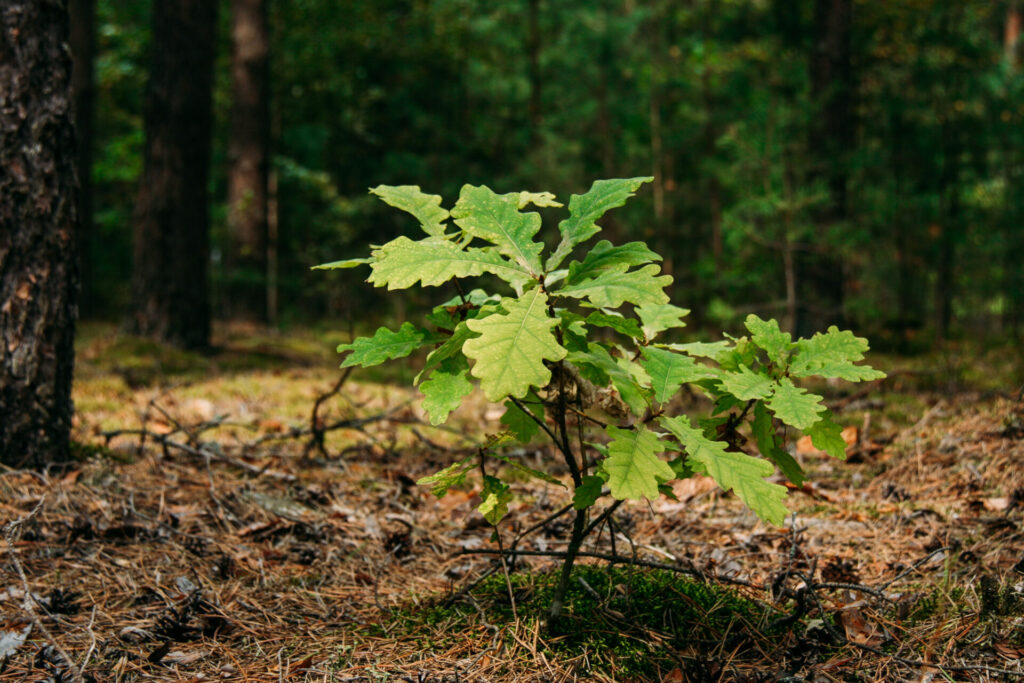
My childhood memories of southeastern Ohio are filled with the bark of chestnut oaks and white oaks, the leaves of bur oaks and shingle oaks matting the forest floor, the colorful mushrooms that grew under northern pin oaks, and the musty smell of the humus these giants deposited beneath my feet.
Years later, in graduate school at Harvard, the oaks that cover 60 percent of Harvard Forest became my puzzle: How do mature oaks and regenerating seedlings respond to drought, and how do they exchange water and carbon with the soil and the atmosphere? These questions – increasingly critical today amid rapid biodiversity loss and widespread extinction – are not only about oaks. They are about how forests will function as the climate warms and droughts intensify.
Oaks are more than familiar trees. They help us understand how biodiversity forms, how forests function, and why that matters for people. Their evolutionary history helps explain how life adapts to changing environments, while their ecological role – supporting wildlife, cycling nutrients, and sustaining the microbes that move those nutrients through landscapes – shows what is at risk as those environments change. To understand oaks is to understand both how rich ecosystems are built and how they might hold together under pressure.
Oaks have long served people directly, supplying wood for homes, furniture, paper, and ships, and even helping build the USS Constitution – “Old Ironsides” – whose frame was fashioned of live oak and sides were planked with white oak.
Yet their greatest contribution may be less visible. Colleagues and I have found that the non-market value of trees (benefits not captured in timber prices or markets) – especially carbon storage and air-pollution removal – exceeds their commercial value. Among U.S. tree genera, oaks provide the greatest annual climate- and air-quality-regulation benefits. They store carbon, filter pollutants, protect coasts, and often survive fire by resisting damage or resprouting, helping forests remain resilient under stress and environmental change.
If we want to protect or restore ecosystems, we need to understand what makes resilience possible.
Evolving solutions
While we once thought that oaks may have evolved in the tropical regions of Mexico, we now know they spread southward from higher latitudes in North America as the Earth cooled and dried during the Eocene, around 40 million years ago. As winters grew harsher, many of the tropical trees disappeared.
As oaks migrated southward, their rates of evolution accelerated. In a new PNAS paper led by Kieran Althaus and Andrew Hipp, we found that different oak lineages repeatedly evolved comparable solutions to similar environmental challenges.
Mexico’s oak diversity was not simply inherited from the north – it was built in place, as red and white oaks moved into new montane environments and rapidly evolved to occupy them. This Mesoamerican oak hotspot is a product of accelerated diversification, repeated adaptation, and convergence in shared climates. That helps explain how oaks became one of the dominant tree lineages of North America, and it points to a broader principle: Biodiversity can arise quickly when ecologically flexible lineages enter complex new landscapes.
But the story is still incomplete.
A major question remains: Why did oaks explode in diversity in Mexico, but not farther south, in the Andes?
Oaks arrived in Mexico as volcanic belts and mountain systems were rising, creating steep elevation gradients and new ecological opportunity over roughly the last 20 million years.
As they spread across those terrains, their rates of evolution accelerated, and new species followed.
But when oaks later crossed Central America into the northern tip of South America, only a single species made it there. Why? We can only hypothesize. Perhaps they arrived too late to spread farther. Perhaps other tree lineages had already filled much of the available niche space.
Oaks still have much to teach us. Understanding their evolutionary history will help us better safeguard and restore them to the landscape.
What resilience requires
Oaks show that biodiversity is the product of deep time, migration, adaptation, and repeated evolutionary experimentation. They also show that these long processes gave rise to trees that help stabilize climate, sustain wildlife, and support human life. In that sense, oaks are not just a subject of study. They are part of the living systems we depend on.