
get the brief in your inbox
Subscribe
Renewables are overlooking opportunity at the county fair

At county fairs across the United States, posters and signage displaying the names of fossil fuel producers outnumber those of renewable energy firms, often by a margin of eight to one.
That imbalance matters to the energy transition. Amid the livestock competitions and Ferris wheels, millions of Americans see these logos and messaging.
Sponsorships help signal who is invested locally. As we show in a new paper, fossil fuel companies consistently show up at county and state fairs. Renewable firms rarely do – even when they are generating electricity from wind and solar in local fields. That gap helps incumbents retain trust and illustrates why clean energy firms may struggle to win communities’ confidence.
Research has shown that credibility challenges are obstructing the energy transition. Some communities doubt governments will follow through on promises and question whether new industries will deliver lasting local economic benefits – the kind that fossil fuel companies have provided for generations. County fair sponsorships offer a window into how energy companies build, or fail to build, the local relationships that address these concerns.
The sponsorship gap
We identified sponsors the same way fairgoers would: navigating to fair websites, reviewing sponsor listings on Facebook pages, and in some cases, examining print programs and flyers. This approach captured the publicly visible sponsorships that community members encounter when learning about or planning to attend these events.
In our review, we found that fossil fuel companies vastly outpace renewable energy firms in sponsorships. Across the nearly 200 counties with high energy-sector employment we sampled, fossil fuel sponsors accounted for 38 percent of all energy and related industries’ (like vehicle sales and electrical services) fair sponsorships, while renewable energy sponsors made up just 5 percent. At state fairs in all 50 states, the pattern held: 21.4 percent fossil fuel compared to 5.1 percent renewable.
Even in counties in the top decile for both fossil fuel and renewable energy employment, fossil fuel sponsors dominated their renewable energy counterparts, 32.8 percent to 5.8 percent. Only in counties at the very top of renewable employment (the top 1 percent) did the numbers approach parity.
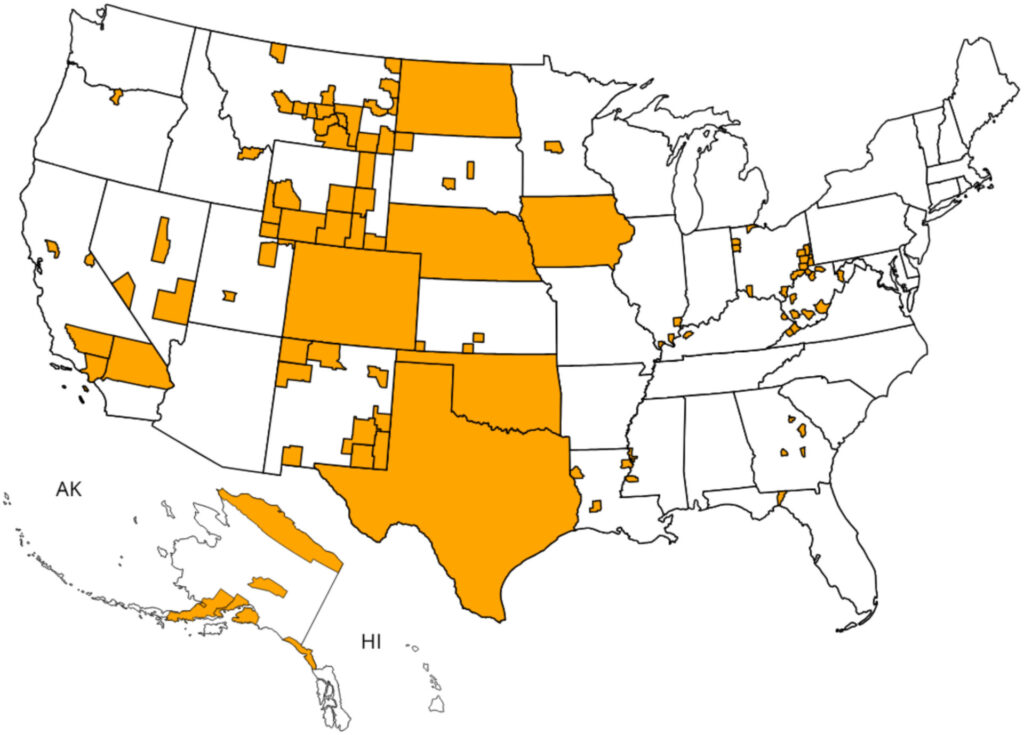
To examine regional variation more systematically, we also analyzed every county fair in six energy-rich states: Iowa, Nebraska, Oklahoma, North Dakota, Texas, and Colorado. The state-by-state picture varies, but the trend persists. Texas showed the widest gap: Fossil fuel companies represented 22.8 percent of county fair sponsors while renewable firms accounted for only 1.7 percent. Iowa, the nation’s second-largest wind power producer, came closest to balance, with fossil fuel companies at 5.9 percent and renewable companies at 4.9 percent. But nowhere did renewable energy sponsors match the consistent presence of their fossil fuel counterparts.
Why sponsorships matter
Fair sponsorships might seem like small-scale marketing, but a nationally representative survey we conducted last fall revealed their impact. When respondents learned that a company, whether solar or oil, sponsored their local fair, their favorability toward that company increased significantly.
These aren’t expensive ventures. Fair sponsorships typically cost only a few hundred dollars, orders of magnitude less than other types of corporate philanthropy. Yet they create repeated, visible touchpoints between companies and communities. They signal investment and presence. In regions where energy development shapes local economies – providing jobs, tax revenue, and infrastructure – these relationships matter.
The sponsorship disparity extends to how companies communicate about community engagement. We reviewed the websites of the 40 largest publicly traded fossil fuel and alternative energy companies in the United States. All 40 fossil fuel companies prominently featured their community engagement efforts, with detailed descriptions of local economic development initiatives, educational programs, youth projects, and cultural heritage support. Only 10 of the 40 alternative-energy companies highlighted any community engagement on their websites.
The energy playbook
Fossil fuel companies have spent decades perfecting community engagement: sponsorships, youth programs, educational initiatives, support for cultural heritage. These aren’t random acts of corporate goodwill. They’re strategic investments in local relationships, establishing presence and demonstrating commitment. Our research shows this playbook works. It increases favorability and generates support for future projects.
Few renewable companies, by contrast, have adopted this approach. Whether by strategic choice, resource constraints, or simply not recognizing the importance of community touchpoints, they’ve ceded this ground. As the energy transition accelerates, understanding local perceptions is crucial for companies wishing to enter and thrive in these markets. Communities want to know: Will these new companies be long-term partners or temporary extractors? Will they invest locally the way previous energy companies did?
The Ferris wheels will keep turning, the livestock competitions will continue, but which company logos appear on the banners may help determine which energy future Americans embrace.
Written with support from Ana Martinez.
All perspectives expressed in the Harvard Climate Brief are those of the authors and not of Harvard University or the Salata Institute for Climate and Sustainability. Any errors are the authors’ own. The Harvard Climate Brief is edited by an interdisciplinary team of Harvard faculty.