Strengthening Communities
Summary
Strengthening Communities for Changing Energy Systems
The world is in the midst of changes in the energy system that rival the emergence of the fossil fuel technologies that drove the industrial revolution. Global efforts to reduce greenhouse gas emissions are pushing for new energy systems and for a rapid reduction in fossil fuel use. As new technologies emerge, they will create new industries, new classes of jobs, and new economic opportunities. Such changes will affect, and be affected by, diverse communities, from traditional energy-rich regions to agricultural communities to fisheries, across the United States, and among the United States’ global competitors. These changes, many hope, will happen in a short period of time.
The Cluster focuses on two principal social challenges, which occur at multiple scales: the disruptions and opportunities arising from the adoption of new technologies, including dislocations as communities move away from fossil fuels or shift to a new energy mix.
The first question that the Cluster seeks to answer is, how can new technologies and new energy industries be deployed effectively, efficiently and equitably? The United States has a history of making ad hoc and inefficient energy and infrastructure policy choices that place heavier burdens on people of color and the poor. Energy transitions raise many practical legal and planning challenges, such as how best to retire old infrastructure and address legacy pollution; approve and site new facilities and infrastructure; establish ownership rights and compensation; set environmental, safety, and public health standards; and monitor and enforce compliance with legal obligations.
The development and deployment of new energy sources can also magnify inequities. Uptake of new technologies has occurred unevenly across different social classes, groups, and communities. Research suggests this might reflect community norms or the lack of access to capital for infrastructure improvement, among other factors. Making new technologies more familiar and accessible can accelerate adoption rates.
The second question that the Cluster seeks to answer is, how can the United States navigate an effective, efficient, and equitable transition toward faster electrification and more intensive use of renewable energy? Many communities with fossil fuel driven industry, such as energy, steel, and autos, are in relatively poor parts of the country, where economic activities tend to be concentrated in poorer parts of urban areas and in rural areas. In these regions, reducing use of fossil fuels may shrink employment opportunities, impede economic growth, and lower government revenues required to respond to social and economic effects of economic decline. The Cluster is examining how communities are addressing these challenges and plans to recommend strategies for addressing the consequences of transforming our energy systems.
The Cluster is to deploy social science tools, especially intensive local case work, stakeholder interviews, and surveys, to understand the challenges facing communities. The Cluster also plans to use these tools to open dialogues about pathways forward. Fieldwork can reveal the complex social and political processes at play, the cultural meanings of energy, the institutional obstacles to planning a new economic course in communities, the social patterns and habits that are solving unstated problems for people in a pragmatic way, and the regional planning activities and legal and regulatory reforms that can help ease the transition to a new energy future.
Central to the Cluster’s approach is detailed and pragmatic assessment of the current legal and regulatory systems that are structuring the status quo. In many circumstances, it may be sufficient to use the existing legal and regulatory system more effectively. In other circumstances, existing structures may need reform, rescaling, or wholesale reimagining. One important contribution of this project, then, is explaining why the legal and regulatory system is structured the way it is, and what effect that has on the existing situation, which can help stakeholders to envision what the solutions might be in a precise and practical way.
Stephen Ansolabehere
Jody Freeman
Diane Davis
Dustin Tingley
Jason Beckfield
Ana Martinez
Richard J. Lazarus
Carrie Jenks
Elizabeth Thom
Major Eason
DA Evrard
Hannah Perls
Dylan Carlson Sirvent León
Amelia Linton
Pranav Moudgalya
Samantha Wyman
The Harvard GSD Office for Urbanization has engaged in a multi-year scenario planning design research study on Cape Ann to examine the region’s vulnerability to climate change. The work is made possible through partnerships with local organizations, including Town Green, Water Alliance, Cape Ann Climate Coalition, the City of Gloucester, and the town of Manchester-by-the-Sea. The project is entering its third phase of work on climate adaptation that builds directly upon previous tranches of work, including (phase 0, 2020) Cultural Landscapes Survey of Cape Ann; (phase 1, 2021-22) Great Storm of 2038 and Near Future Adaptations; and (phase 2, 2023-24) Regenerative Landscapes: Beyond Conservation to Adaptation. In Phase Three of the study (2024-25), Cluster faculty Diane Davis and Jason Beckfield are contributing to the ongoing initiative to build local capacity to anticipate, prepare for, manage, and recover from extreme weather events associated with rising sea levels as well as increased frequency and intensity of tropical storms and hurricanes. Davis is working on Governance & Policy to enhance the capacity of Cape Ann’s municipal governments to develop effective policies and governance practices to manage the challenges and threats of increasingly frequent and intense tropical storms and hurricanes, and adapt the region’s regenerative landscapes. Beckfield is working on Engagement & Communication to strengthen the capacity for Cape Ann’s municipalities to communicate and engage with civic and community leaders as well as the public in decision-making in relation to extreme weather events and ecological resilience.
External partners:
Resources:
Tribal Nations in the United States are uniquely exposed to the impacts of climate change, and are spearheading novel, effective adaptation and mitigation solutions. However, Tribes also report significant, persistent barriers and unmet needs to achieve their adaptation goals. The Cluster is supporting two projects designed to support Tribes’ identify and address these barriers:
First, in the Pacific Northwest, the Cluster is supporting work to build on the August 2024 report, Climate Adaptation Barriers and Needs Experienced by Northwest Coastal Tribes: Key Findings from Tribal Listening Sessions. This collaborative project seeks to develop policy resources and tools to address those barriers, in partnership with the Affiliated Tribes of Northwest Indians (ATNI), the Tribal Coastal Resilience Project of the Northwest Climate Resilience Collaborative, the Native American Law Center at the University of Washington School of Law, the Environmental and Energy Law Program (EELP) at Harvard Law School, and the Environmental Policy Innovation Center (EPIC).
Second, in Louisiana, the Cluster is supporting research into How the Gulf Coast Can Lead the Energy Transition. This project takes a closer look at equitable energy and industrial transitions and is being implemented in partnership with the Lowlander Center and the Disaster Justice Network (DJN).
External partners (Pacific Northwest):
Affiliated Tribes of Northwest Indians (ATNI)
Environmental Policy Innovation Center (EPIC)
External partners (Louisiana):
In today’s rapidly changing energy landscape, local communities are grappling with the challenge of sustaining their public finances amid increasingly volatile shifts in the value and availability of resources from fossil fuel extraction. The energy transition in the United States raises pressing questions about the financial implications for communities that have long relied on fossil fuel production to fund essential public services, such as K-12 education and local public infrastructure. Central to this issue is the need to better understand how local economies can adapt and thrive in a world where energy dynamics are continuously evolving.
Resources:
- Federal Land Leasing, Energy, and Local Public Finances
- To Grow Local Support, Washington Must Share Renewable Energy Revenues
County fairs are a staple of American community life and offer companies a chance to sponsor events, promote their brand, and demonstrate local engagement. Energy companies, in particular, have long played a complex role, bringing jobs and funding, but also at times creating local environmental externalities. Understanding their community involvement is key to grasping the broader context of energy transitions. This study provides a unique perspective on firm-level activities, revealing that fossil fuel companies maintain a significantly stronger local sponsorship presence than renewable energy firms.
This study examines the legal and political institutions and the social context within which transmission lines are built in the United States, and the challenges that an aggressive extension of the grid faces. We focus on one aspect of the grid: long-distance transmission lines. Several recent studies (DOE, NREL, Princeton) offer a technical road map for different ways that the U.S. can develop its long-distance electricity transmission system. These studies are the starting point for this inquiry. They lay out a picture of what the future electricity transmission system might be. This study examines how we get there: the process for developing, scrutinizing, and approving long-distance transmission lines. We examine, side-by-side, the regulatory, economic, and social challenges that arise with the development of long-distance transmission lines. The essential lesson of this study is that local communities and the public broadly should be treated as partners in the development of new transmission infrastructure. In tandem with this study, we have explored transmission line developments in four different areas of the country (for more details, see “How Grid Projects Get Stuck”). In all four cases, the marginalization of community and public preferences fueled opposition and delayed the process. We draw lessons from these cases, especially in developing recommendations for how to improve public engagement in the permitting and siting processes.
Resources:
Reducing greenhouse gas emissions (GHGs) and moving to more renewable sources of energy will require a dramatic expansion and reconfiguration of the U.S. electrical grid. This is especially true given that areas of the country with the highest capacity to generate electricity using wind, solar, hydro dams, and other low-GHG sources of electricity are located far from the nation’s industrial and urban centers. Connecting these regions will bring social and political conflict. We often observe these conflicts play out in the development of long-distance transmission lines that cross multiple states and jurisdictions. Today, transmission projects around the country take about 15 years to move from the initial planning stage to project approvals and breaking ground for construction. These timelines are simply too long if the United States wants to meet its climate goals. In this book project, we develop a theory that helps explain this phenomenon, what we call the politics of delay. We draw on insights from political economy, regulatory policy, business incentives, and community engagement to offer a framework that helps explain why different sets of actors engage in the politics of delay and how we can ultimately overcome these dynamics to meet clean energy goals in a timely and just manner.
Strong environmental and public health protections rely on comprehensive, high-quality data, which only the federal government has the capacity to collect and maintain at scale. Recognizing this, Congress has long mandated agencies to gather and publish national data. During the first Trump administration, Harvard Law School’s Environmental & Energy Law Program (EELP) documented efforts across the federal government to weaken agencies’ scientific functions, including halting vital data collection. After Trump’s reelection in 2024, EELP joined an interdisciplinary initiative to identify and preserve key federal datasets on pollution, health, and climate. This effort evolved into a partnership with the Public Environmental Data Partners coalition, through which the Harvard team archived hundreds of crucial files in the Harvard Environment and Law Data (HELD) collection.
External partners:
Environmental Data and Governance Initiative (EDGI)
Environmental Policy Innovation Center (EPIC)
Resources:
- HELD Repository
- HELD Codebook
- Harvard Climate Blog: Why We Are Rescuing Government Environmental Data
The US Department of Transportation Climate Change Center was established in 1999 and taken offline in 2025. For almost 30 years, it served as a central public resource for state, regional, urban, and rural transportation planners interested in adapting to climate change, building resilience to extreme weather events, and reducing greenhouse gas emissions. This project is rebuilding taxpayer-funded online resources that used to be available on the US Department of Transportation’s website, and is part of the larger Salata Transportation Initiative.
Resources:
Highlighted News
MORE NEWS
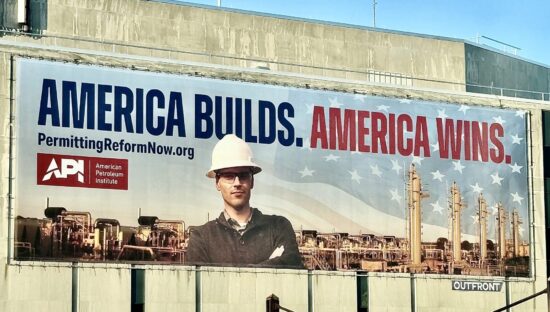
Permitting gridlock threatens America’s energy future
Renewables are overlooking opportunity at the county fair
Rescuing Environmental Data: From Preservation to Practice
Mapping Agency Authority in Environmental Law Post-Loper Bright
Fossil-fuel firms out-sponsor renewables at county fairs
IMPACT
For many U.S. communities – from towns in West Virginia to Tribal Nations in the Pacific Northwest – the clean energy transition is changing everything. This Harvard-led initiative is conducting new research and working with stakeholders to better understand the social and political dimensions of the shift from fossil fuels and develop playbooks for effective, equitable, and community-driven energy development.
By the numbers
-
- Nearly 900 state, local, tribal, stakeholders and researchers convened
-
- 3 major reports released
-
- 2 national surveys conducted on energy issues
-
- 384 federal environmental justice actions tracked
Developing a clearer picture of the energy transition
The impacts of the clean energy transition are complex and poorly understood. The cluster has generated new, comprehensive analyses and data that demystify the transition’s drivers and implications – from the dynamics that are slowing down infrastructure development to practical, bipartisan policy options that would benefit communities.
Among the cluster’s research findings to date:
-
- To meet growing electricity demand, the U.S. will need to increase the capacity of its long- distance transmission lines by 25 percent over the next two decades. Taking full advantage of wind, solar, and hydroelectric power resources will also require doubling the nation’s network of long-distance trans- mission lines. Read more.
-
- Public engagement in the planning and siting of long-distance transmission lines, and other energy transition projects, happens too late in the process. This limits the ability of companies to learn from communities and receive public input about the design of transmission lines. Companies and state governments can address this problem, but it will require changes to how they approach and engage with impacted communities and the broader public. Read more.
-
- Current legislation allocating revenue from fossil fuel energy projects on federal land to states and local communities contrasts with renewable energy projects, where revenue is retained by the federal government, captured by non-local firms, or negotiated to levels far below traditional energy in inter-community competition. This discrepancy represents a missed opportunity to support local economies through renewable energy revenue – and there is overwhelming national support to change this policy to treat renewable energy equitably. Read more.
Making clean energy a better deal for communities
Through direct engagement with policymakers, communities, and Tribal Nations, the cluster is ensuring that the research insights will translate into updated policies and practices that protect and improve quality of life for those affected by the energy transition.
For example:
-
- Cluster researchers worked alongside the Lowlander Center in Louisiana to develop local microgrid solutions, winning a SOLVE IT Prize.
-
- In response to a report assessing barriers and unmet needs for coastal Pacific Northwest Tribes severely impacted by climate change, cluster researchers are researching legal and policy pathways to address unmet needs.
-
- Cluster researchers are publishing insights that will help advocates utilize the Uniform Relocation Act to defend the rights of individuals displaced by climate change.
-
- Cluster researchers are working with groups on Cape Ann to develop regional approaches to planning for the energy transition and climate resilience.
-
- Co-Investigator Jason Beckfield provided insights directly to the US Department of Transportation as Senior Advisor to the Climate Change Research & Technology Program and the DOT Climate Change Center.

start your Research Initiative
With the Salata Institute for Climate and Sustainability, Harvard University is mobilizing to meet the global climate challenge.