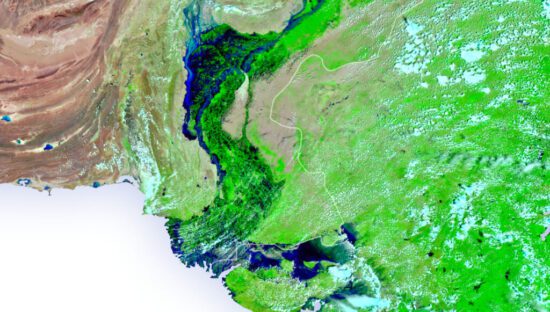
Researchers from the Climate Adaptation in South Asia Cluster examine how the economic costs of extreme heat are distributed across workers, households, firms, and governments — and how these costs cascade to disproportionately burden disadvantaged populations.
A new white paper from the Salata Institute's Climate Adaptation in South Asia research cluster brings together perspectives from climate science, public health, labor, agriculture, design, and finance to examine how extreme heat is reshaping life and livelihoods across India.
Global climate experts gathered in Italy to mark the 250th anniversary of methane's discovery, discussing current research and advancing strategies for reducing its impact.
A new nationwide study of more than 73 million older Americans finds that heat waves are driving a substantial increase in deaths each year, with disproportionate impacts on Black and low‑income communities, while neighborhoods with more green space see lower death rates.
Harvard research group publishes paper characterizing seasonal changes in emissions and longer-term reductions in methane intensity in the U.S. Permian Basin.
The study examines the effect of market incentives and infrastructure constraints on methane emissions from oil and gas production in the Permian Basin of the United States – and then explores potential policy approaches to reducing emissions.