Seawalls and other hard choices on the shore
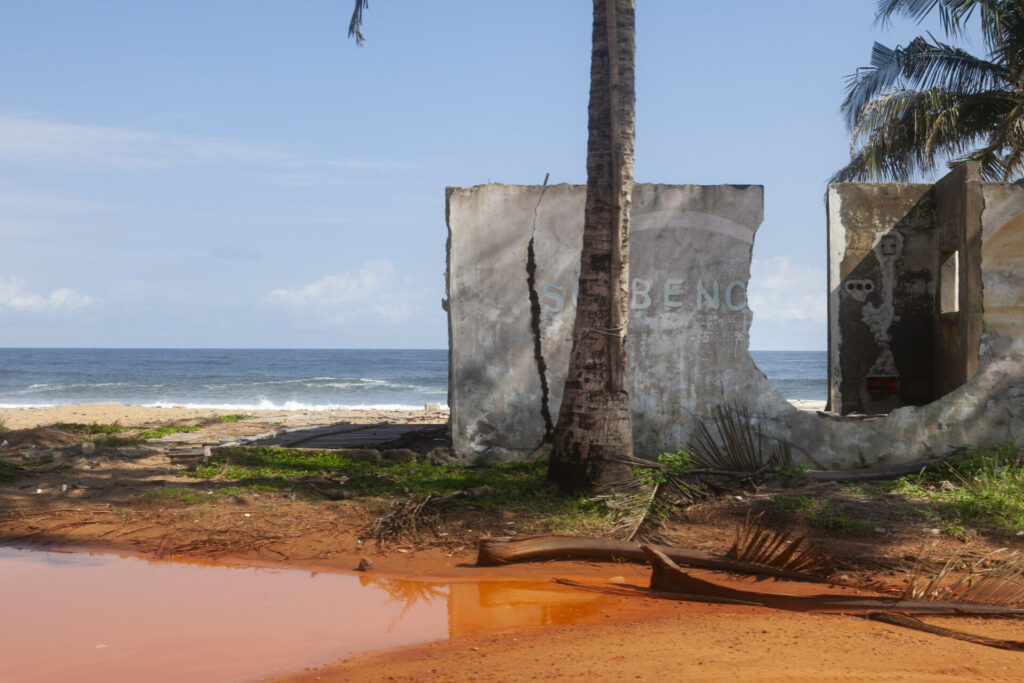
“Every year, the sea advances. And what it takes, it does not give back.”
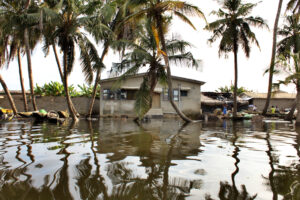
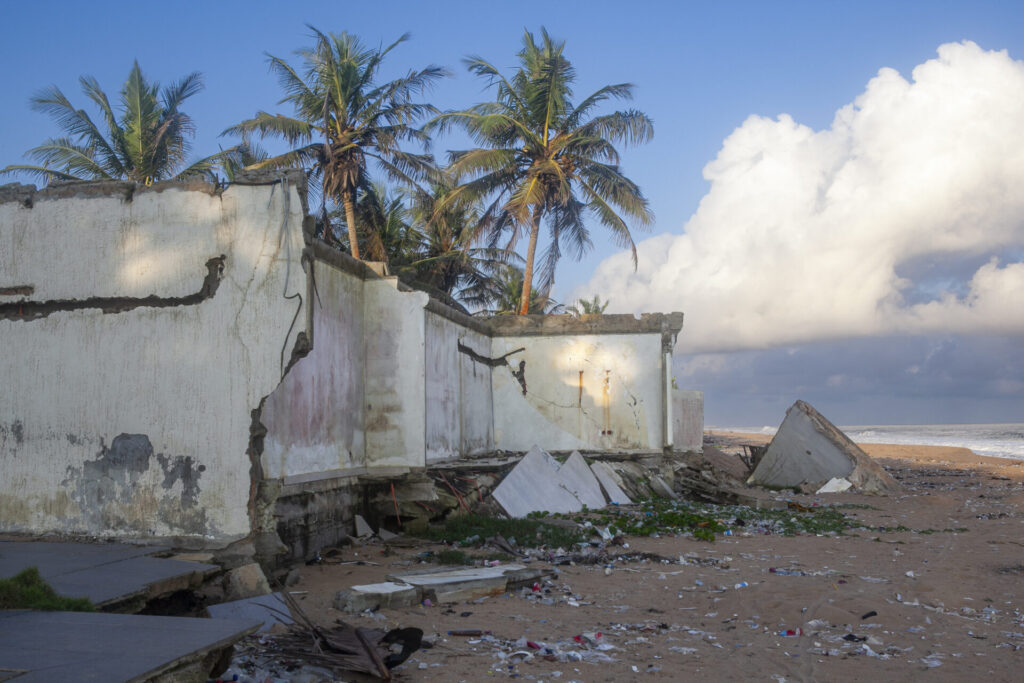
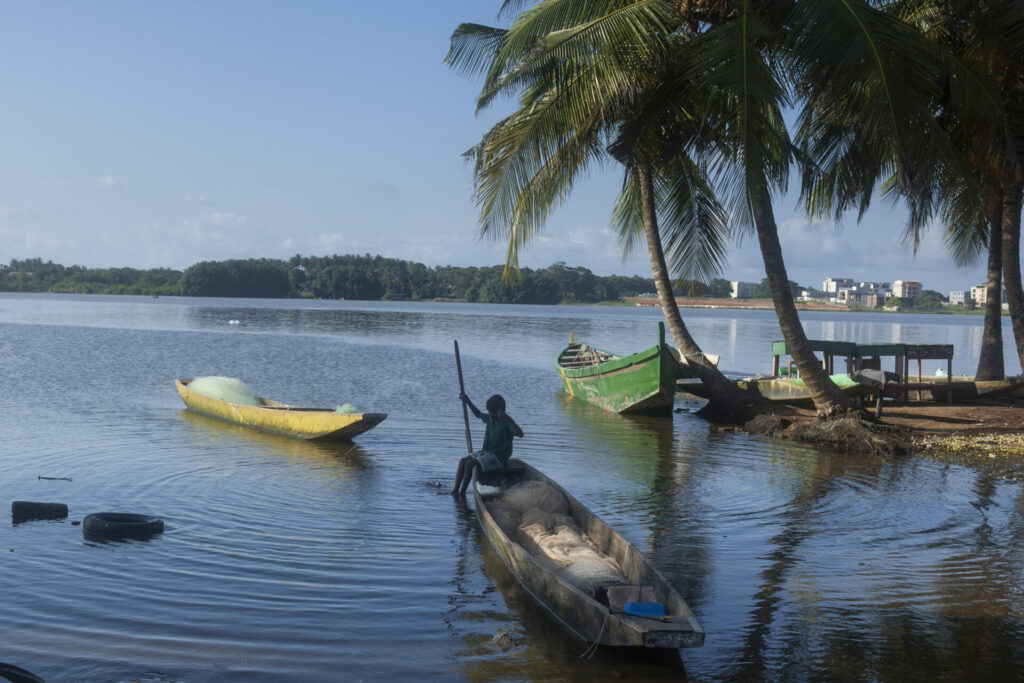
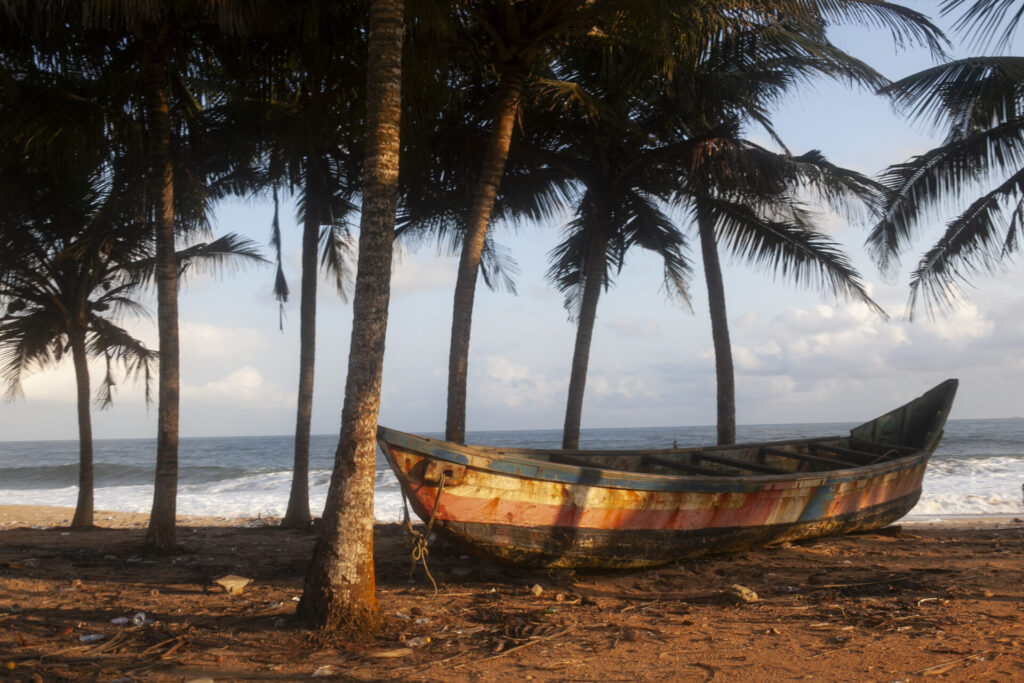
Koffi Atche, a retired healthcare worker, is describing his village’s predicament. Just three decades ago, the pockmarked beach road where he is standing, about an hour from Côte d’Ivoire’s commercial capital, was three blocks from the water. Now, at high tide, the sea sometimes washes across it and leaves sand in the cemetery. Behind him, a lagoon rises in the rainy season and seeps into homes.
“In a very short period, our village will not be here,” Atche says of Azuretti. “We have no power to do anything about it. We hope the government will come and help us, maybe build a seawall.”
Across the Gulf of Guinea, coastal communities face the same brutal choice. Stay, and the sea keeps taking land, homes, roads, cemeteries, fishing beaches, and income. Build walls, and the government spends heavily to hold the line. Move, and families lose work, neighbors, and history.
But do nothing, and the bill comes anyway.
A forthcoming cost-benefit analysis by Ivorian economists puts hard numbers to those choices in Azuretti and nearby Port-Bouët, two communities facing existential threats from the Atlantic Ocean. Tite Beke of Université Félix Houphouët-Boigny, the country lead on the Salata Institute’s Gulf of Guinea climate adaptation project, and Kadio Angaman, a postdoctoral fellow in environmental economics at Harvard, find that hard defenses may look like a good buy in the near term. But over time, especially after 2050, a broader strategy makes more economic sense.
Their analysis compares two practical options. The first is rigid protection: seawalls, groynes, and other hard infrastructure to hold back the water. The second combines those defenses with planned relocation, stronger permitting regulations to prevent construction in floodplains, and nature-based solutions such as restoring mangroves.
“The local authorities are looking for a place to move people,” Beke said. “But jobs and land are scarce.”
Taking action to enhance resilience delivers a stream of benefits over time from reduced sea-level damages, but requires costly initial investments in gray or green infrastructure. To properly identify the strategy that maximizes the well-being of the people in Azuretti and Port-Bouët, Beke and Angaman calculate the net present value, or NPV, of these choices through 2050 and 2100. In plain terms, NPV puts today’s spending and tomorrow’s savings on the same ledger. It asks whether money spent now – on seawalls, relocation, or mangrove restoration – is outweighed by the future losses it prevents: flooded neighborhoods, eroded land, damaged roads, lost livelihoods, and emergency repairs. By that measure, both adaptation options can pay off. But spending more now on the best set of resilience investments could yield a much higher net return later.
First, consider the cost of doing nothing. In Azuretti, the coastline has retreated more than 150 meters since the 1990s. In Port-Bouët, the sea is eating away roughly a meter a year, and much more during extreme storms. To estimate the damage, the researchers identify areas likely to flood, then use World Bank formulas to translate that exposure into losses to land, buildings, and economic activity. For erosion, they use satellite imagery to measure disappearing land, classify it as urban or rural, and assign a value based on the assets on it and the activity it supports.
And now the costs of action. Rigid protection is not cheap; it requires major upfront construction and regular maintenance. The combined option costs more at the start because it does more: It adds some protection, but also relocates the most vulnerable families and restores natural buffers that can absorb some of the sea’s force.
That is why hard engineering wins the early math: Through 2050, rigid protection has the higher net present value. After 2050, the math changes. The benefits of the broader strategy take longer to appear, but by 2075, this combined approach has pulled ahead. By 2100, its net present value – the future benefit measured in today’s dollars – is about $175 million, compared with about $25 million for rigid protection alone.

The long view
Walls buy time. But they must be maintained, and over time they can push damage downdrift or onto the edges of the protected area. Those costs eat away at the early gains. The broader approach is slower, messier, and harder, but it protects more of the coast over more time. Seawalls may be necessary where valuable infrastructure is immediately at risk. They are not, by themselves, a plan for the rest of the century.
“Either option will deliver a net benefit over doing nothing,” said Robert Paarlberg, a co-investigator on the project. “One mostly pays off early, but the other pays off more in the long run.”
Back on the beach road, Atche says the community recognizes the next five to 10 years will be decisive: “Some people want to leave, other people to stay. But anyone who counts on the ocean is in trouble.”