get the brief in your inbox
Subscribe
Climate migration is already reshaping American cities
The concept of the climate haven – a place seen as safer from extreme weather – has increasingly gotten a bad rap. After a supercharged Hurricane Helene devastated large swathes of Asheville, North Carolina, in 2024, the term became an easy target. Lifestyle media had promoted Asheville as relatively safe from climate risk. Helene also raised doubts about efforts to cast northern cities like Buffalo and Duluth as future havens for their cooler climates and redevelopment potential.
Some of that criticism is fair. Yet climate-related relocation is already happening in the United States. Major storms are displacing people. Others move because heat, smoke, flooding or other conditions make daily life harder. Given this reality, dismissing the idea of a climate haven altogether may shut down a more useful conversation: How should cities prepare for climate migrants?
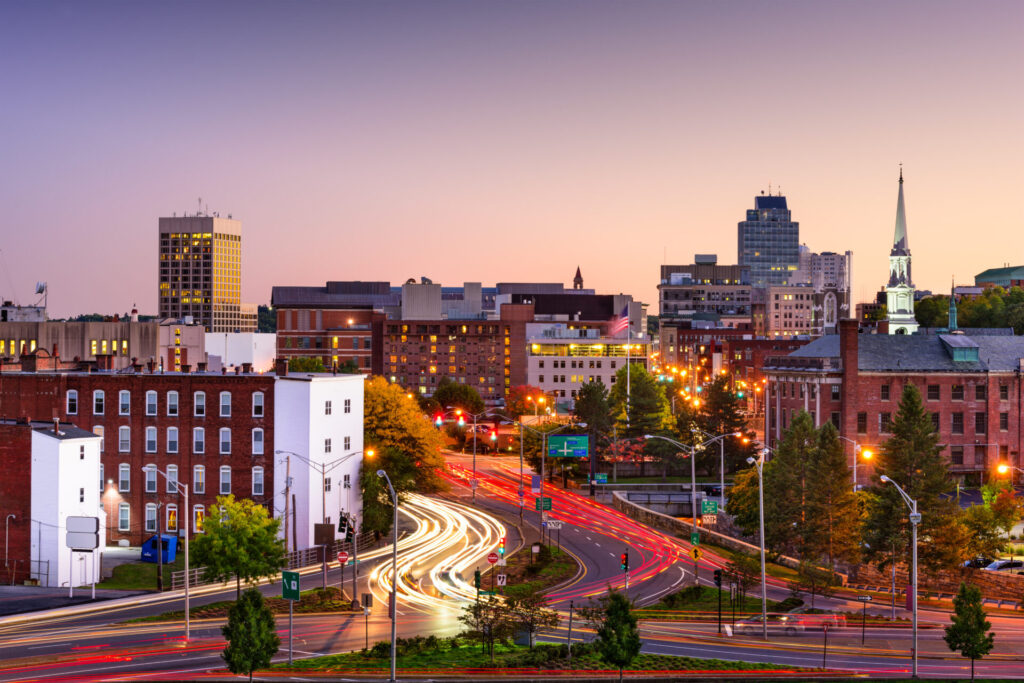
Some local governments and advocacy groups – including in Worcester, Massachusetts, where I have written a case study – have started to think seriously about that question. Their approach is broader than emergency response alone. It links climate planning to housing, transportation, and energy.
A report from the nonpartisan National League of Cities, for example, argues that local governments should protect and expand affordable housing, reassess infrastructure needs, and learn from cities that have experience welcoming newcomers. Other groups have argued for local planning that treats climate adaptation and newcomer integration as connected challenges. I call this “inclusionary adaptation” – preparing for climate change in ways that also help new residents settle into a community.
Worcester, one of the few American cities to describe itself as a climate refuge in an official plan, helps show how this can work in practice. It has received less media attention than some other cities, making it easier to study what local officials are doing rather than what outsiders are saying.
An economic upside
Like many older industrial cities, Worcester spent decades in economic decline. But since the 1980s, Worcester’s population has been growing again. It recently exceeded its 20th century peak – an exceptional reversal making Worcester a useful example of the pressures that come when a city shifts from decline to growth.
Cities that embrace the climate haven label often see economic upside. Worcester did, at first, but the picture was complicated. The city had recently received newcomers from Ghana, Afghanistan, Ukraine, and Haiti. It had also taken in people displaced by climate-related disasters, including some who arrived after Hurricane Maria in 2017 with help from the local Puerto Rican community.
Local planners were also thinking about movement within Massachusetts. Residents of coastal areas facing repeated flooding, they believed, might prefer to move somewhere nearby rather than far away. Worcester could be such a destination.
Ultimately, in its climate plan, the city said that by preparing for climate change, Worcester could become “the climate refuge city of choice” in Massachusetts. The plan outlined strategies to strengthen infrastructure resilience through stormwater management and urban heat mitigation, social resilience through better emergency communication with vulnerable populations, and environmental resilience by expanding the urban tree canopy. The approach recognized that adaptation is just as necessary in the places where people resettle as in the places they leave behind.
So far, that vision has not been fully carried out through city government. Even so, several community-led efforts show what this kind of planning could look like.
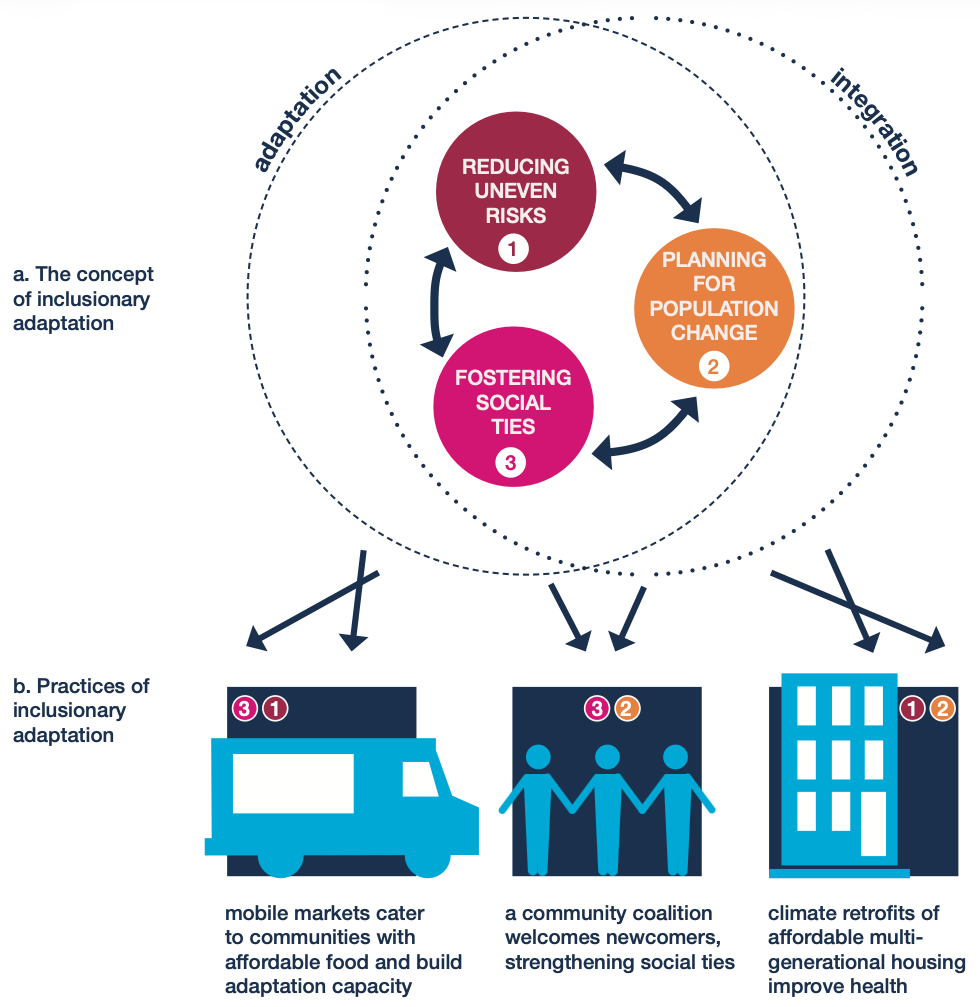
One pilot program upgraded older houses. The improvements made those homes more energy efficient and resilient, and in some cases better suited to multigenerational households. A mobile farmers’ market improved access to food while also connecting immigrant farmers, immigrant communities, and longtime residents. And a coalition of community-based organizations that first came together in response to Hurricane Maria stayed active through the Covid-19 pandemic and beyond. That gave Worcester more capacity to welcome newcomers and strengthen local ties.
These efforts face obstacles. Worcester is still recovering from decades of economic strain. City leaders have been reluctant to require developers to include affordable housing or climate adaptations in new projects. Many non-profit leaders indicated that a housing shortage is already causing displacement and must be addressed as the city contemplates welcoming additional newcomers. Community networks have helped make Worcester more resilient, but that kind of support can be uneven. It may depend on which neighborhoods, ethnic groups, or social networks a newcomer can access. Alleviating this burden requires a stronger commitment from local and state government.
The case for planning ahead
Many people still ask why climate-related resettlement deserves more attention.
Worcester suggests one answer. No place is automatically safe. Places become viable destinations only when they invest in housing, infrastructure, and social support that can absorb change. Used carefully, the idea of the climate refuge can help focus attention not only on the people who may have to move, but also on what receiving communities must do to prepare.
All perspectives expressed in the Harvard Climate Brief are those of the authors and not of Harvard University or the Salata Institute for Climate and Sustainability. Any errors are the authors’ own. The Harvard Climate Brief is edited by an interdisciplinary team of Harvard faculty.