

Booxhibition: Climate futures for West Africa’s vanishing coast
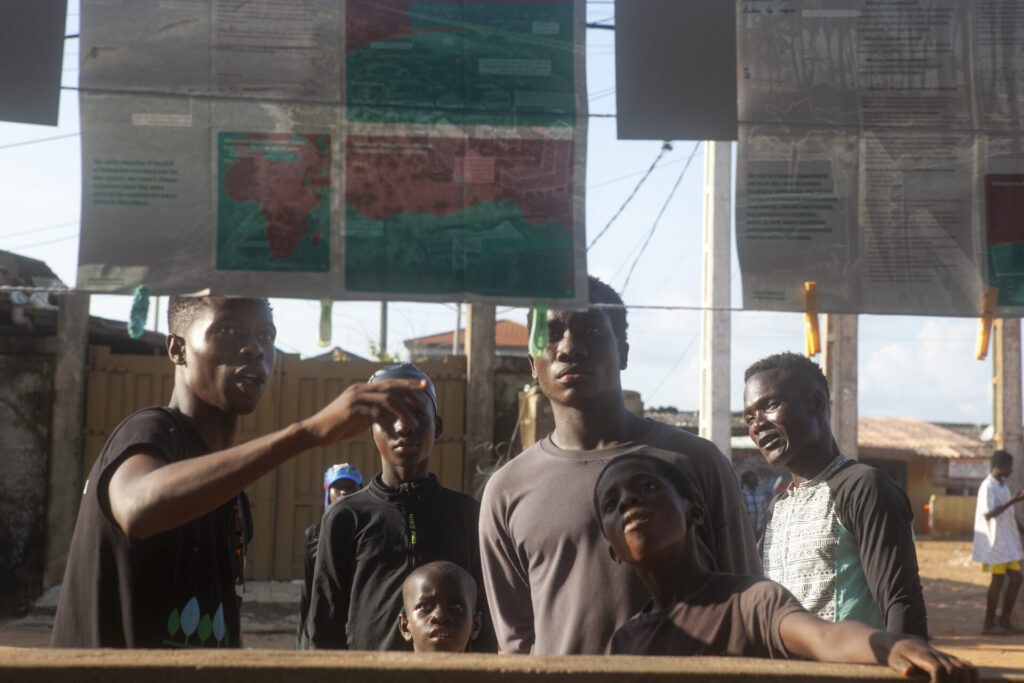
Climate futures for West Africa’s vanishing coast, now on view at the Salata Institute’s Center for the Environment through the 2026-27 academic year, is an exhibition about what comes next for coastal communities already being reshaped by rising seas, flooding, erosion, and declining fisheries. Instead of merely documenting what is being lost, the exhibition asks viewers to imagine what these places could become – and what governments and communities can still do now to shape that future.
The exhibition grew out of a three-year Salata Institute project in which researchers at universities in Ghana, Côte d’Ivoire, and Nigeria worked closely with six coastal communities confronting rapid change. Together, they documented how homes, fishing grounds, cemeteries, businesses, and public spaces are being lost or transformed, drawing on social science, sea-level modeling, and landscape design.
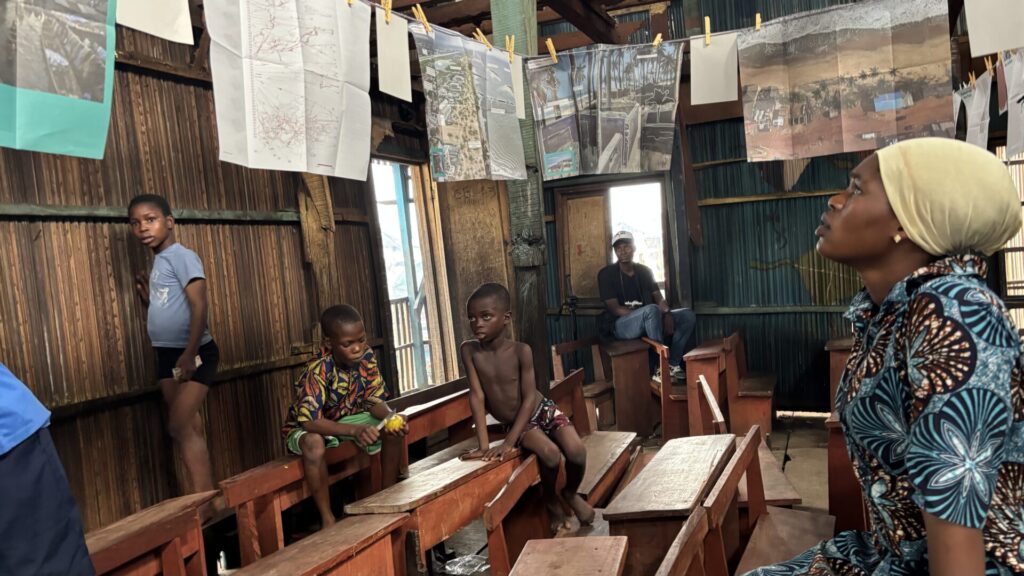
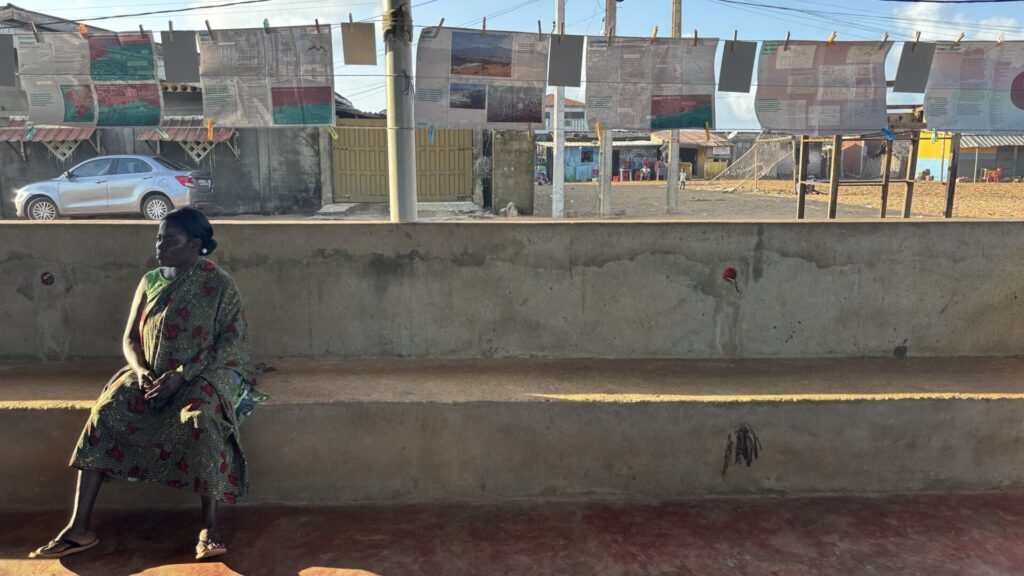
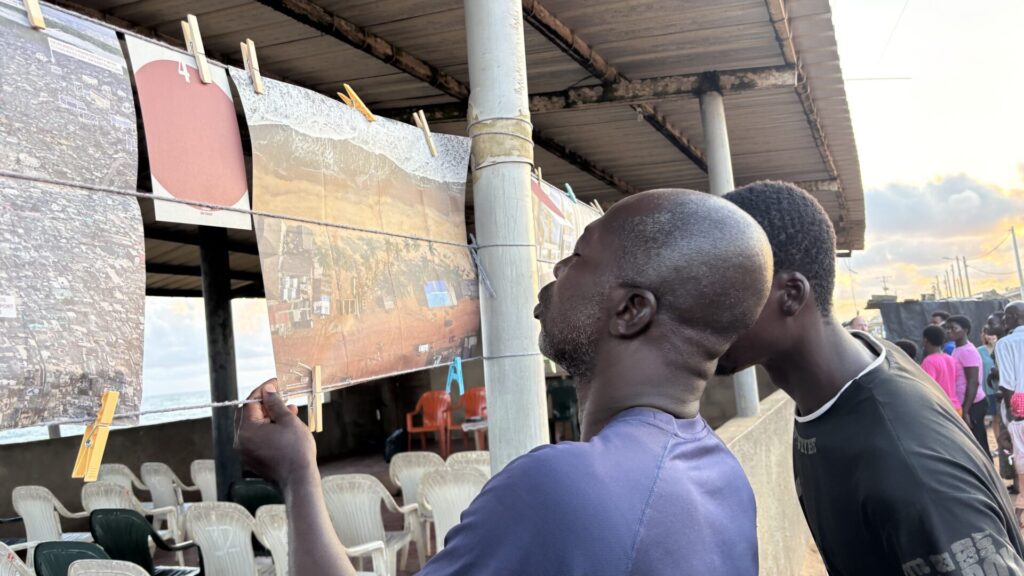
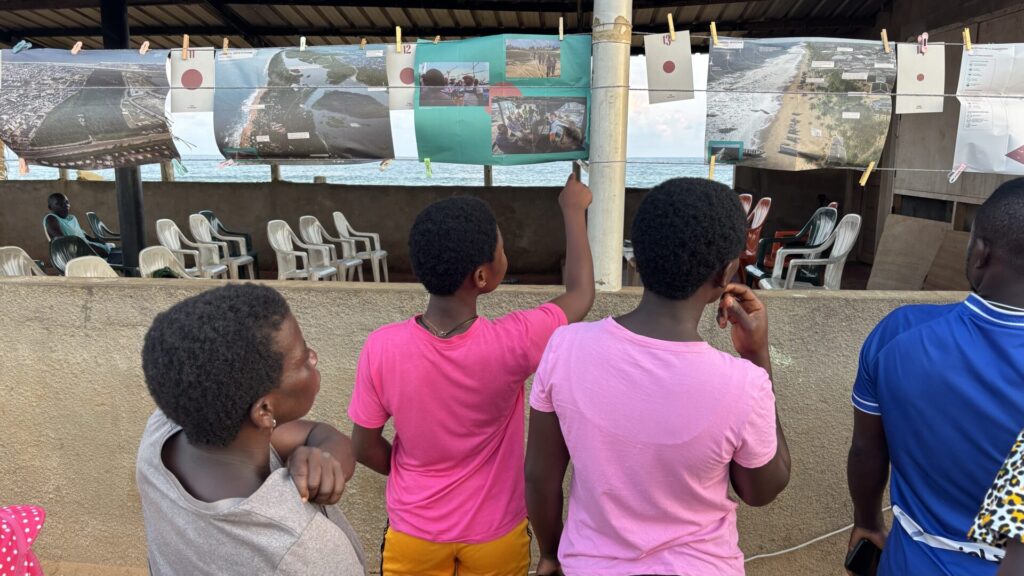
The exhibition has already been shown in those communities, where residents could respond to the futures imagined for the places where they live.
“We did not arrive with science and tell people, in many elaborate ways, that they are in trouble,” said Emmanuel Akyeampong, director of the project and the Ellen Gurney Professor of History and Professor of African and African American Studies. “Our project instead asked what can be done with the resources actually available. Communities are eager to feel that they are not helpless.”
Researchers and designers translated that question into imagined scenes from 2050, showing how combinations of hard coastal defenses, restored wetlands and mangroves, and managed retreat might reshape these places. The scenes are not predictions or prescriptions. They are exercises in what the team calls “actionable hope.” These are ideas that residents and policymakers can test, challenge, and use to think through different futures.
“If we don’t imagine what the future could look like, we’re going to struggle to get there,” said co-investigator Supriya Ambwani. “It feels like a hopeless situation. But once you start thinking of solutions, it creates something to work toward.”
The format is itself an experiment in making climate research more accessible. The team calls it a “booxhibition”: a hybrid book and exhibition that can be read as a publication, then unfolded into posters and hung almost anywhere. Its portability has allowed the work to travel to teachers, policymakers, and the coastal communities whose futures it depicts.
“We designed the exhibition hoping that all the communities that the project has engaged with can have access to it,” Ambwani said. “There is a lot of text on one side, but the other side is just images, and anybody can engage with an image.”
The exhibition now brings those images, research findings, and questions to Cambridge after their presentation in West Africa. It asks who gets to imagine the future of places most exposed to climate change, and what adaptation can look like when local experience helps shape the response.
For more information:
Laura Hanrahan, laura_hanrahan@harvard.edu
For press inquiries:
David Trilling, david_trilling@harvard.edu