‘A meteorologist of the soul’: Monet’s changing atmosphere
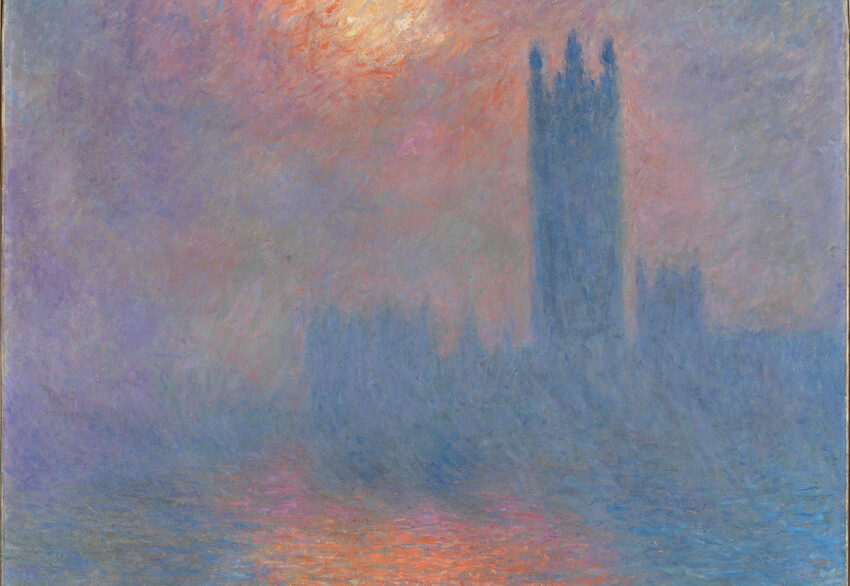
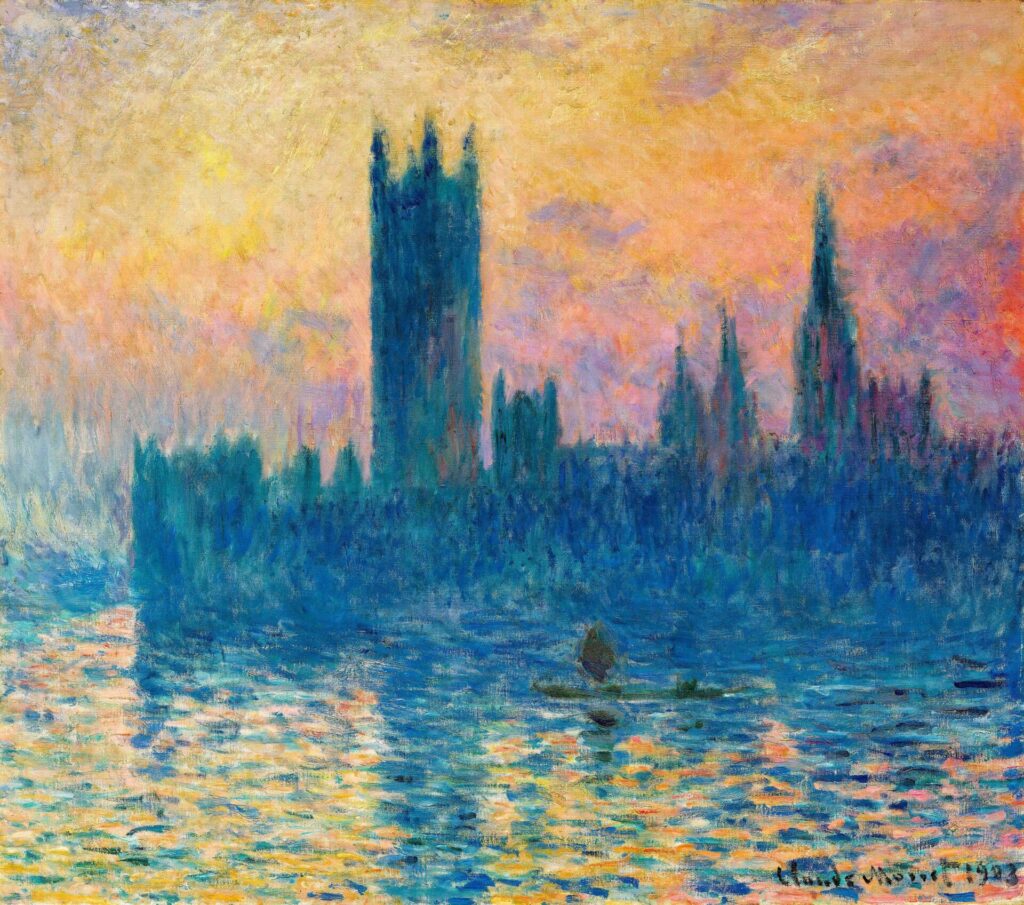
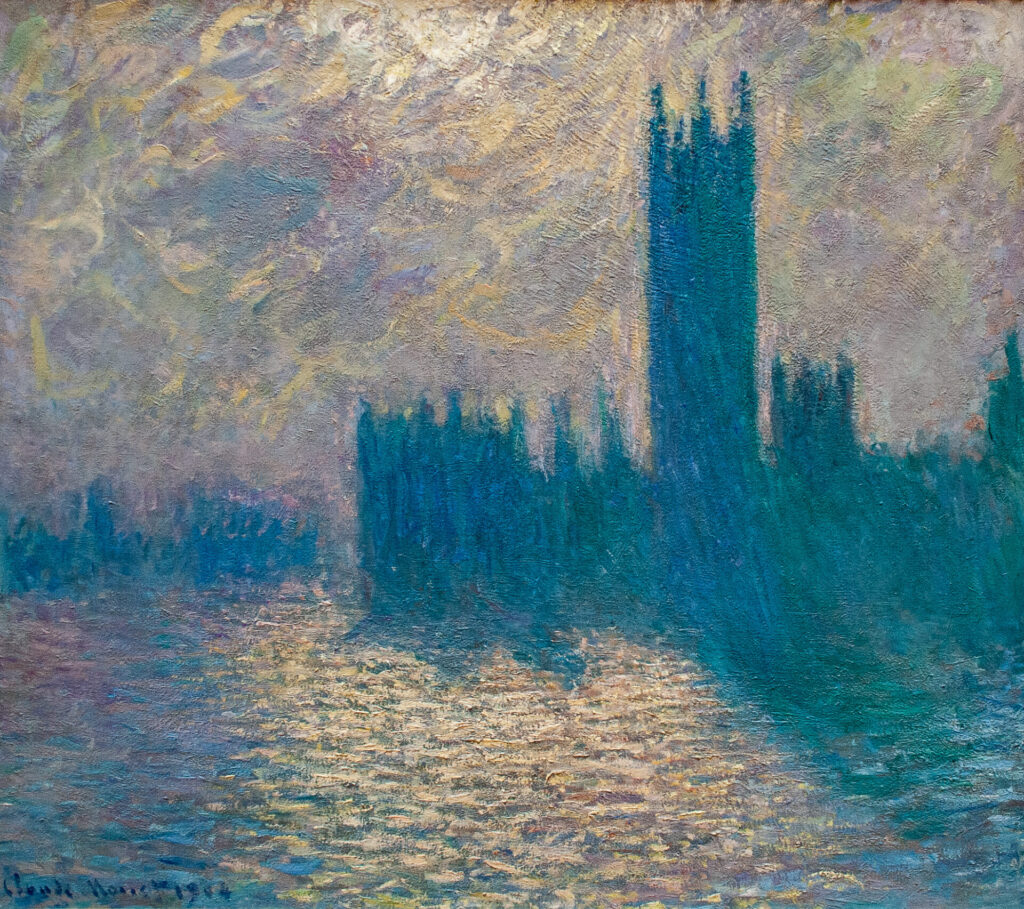
Claude Monet woke up one morning in February 1900 “terrified” to find London without fog. Later in the day, as smoke from coal fires softened the skyline, he was relieved to see his subject had returned.
The painter was a “meteorologist of the soul” (météorologue de l’âme), his great-grandson, the art historian Philippe Piguet, said last month to mark a new exhibition. “He seized the instant […] capturing what was happening, trying to translate it and transcribe it onto the canvas.”
As environmental scientists and meteorologists, we are struck by how often the medium through which Monet saw the world was an atmosphere rapidly changing with industrialization. His meteorology of the soul was a response to the world around him: of smoke and haze, fog and sunlight, freezing rivers and thawing ice. Monet painted both the physical atmosphere and his experience of it.
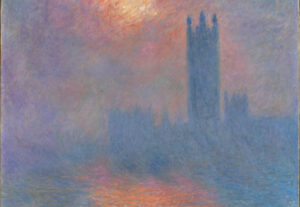
In a 2023 paper, we analyzed contrast and palette in 98 paintings by Monet and J.M.W. Turner made over the 19th-century. As air pollution increased in London and Paris, paintings from later in the century grew hazier, with lower contrast and whiter tones. The pattern is evident in Monet’s London paintings, begun in the winter of 1899–1900, when emissions were exceptionally high; they appear to reflect the air as industry transformed it.
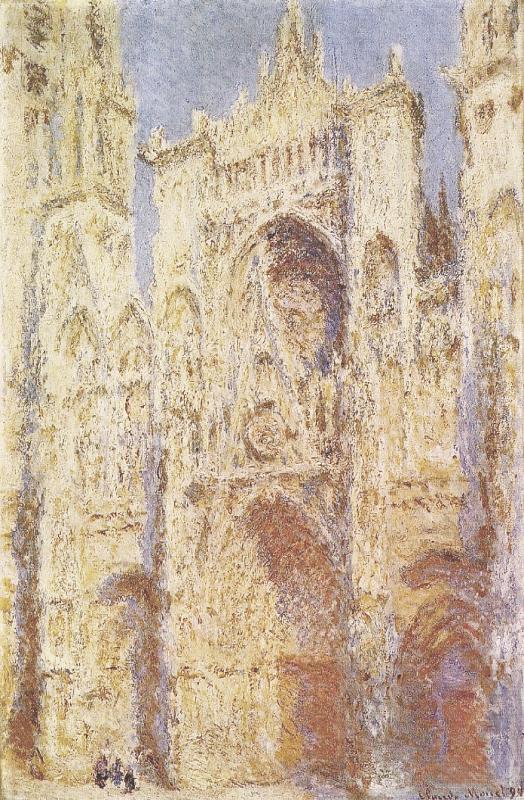
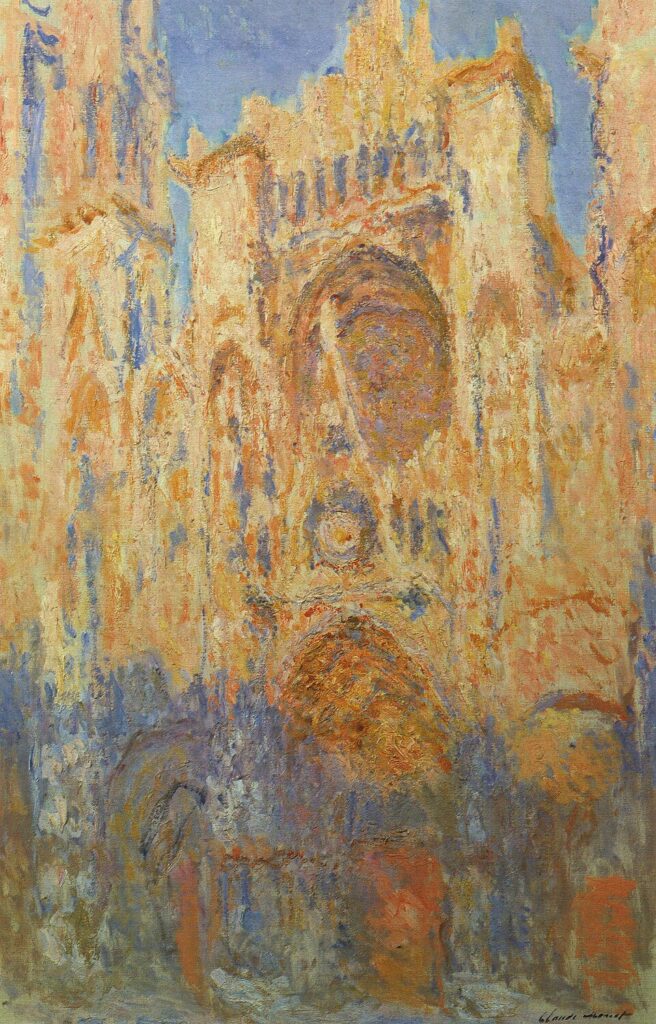
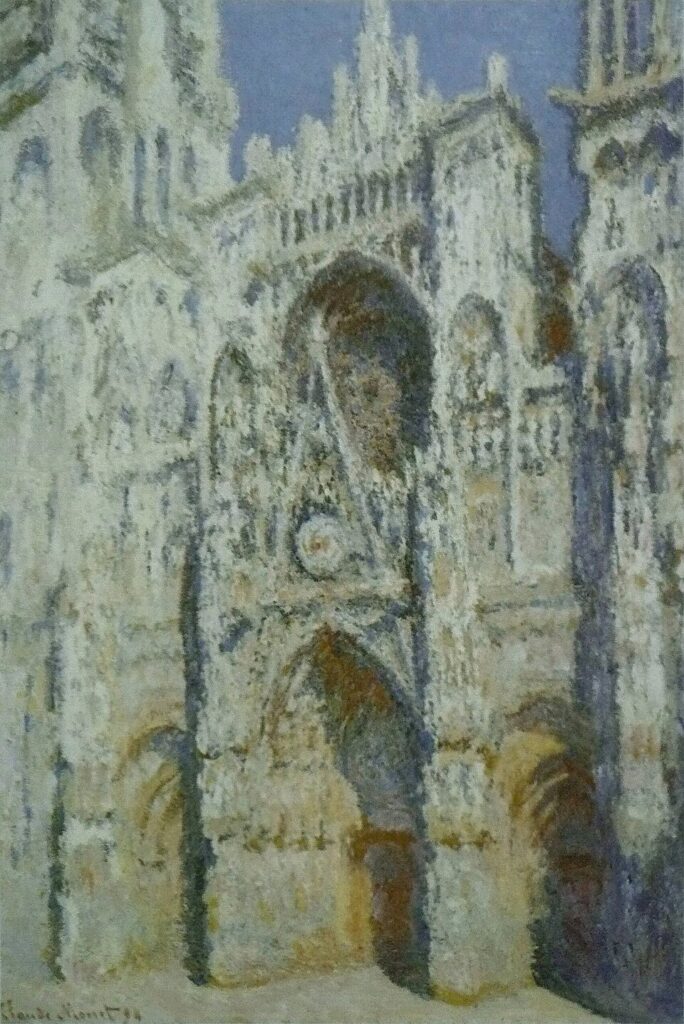
Several of these works are now on view in an exhibition at the Musée de l’Orangerie in Paris, which brings together paintings from series that are normally dispersed across the world, including Monet’s views of Rouen Cathedral, Saint-Lazare Station, the Houses of Parliament in London, and the water lilies of Giverny. Seen together, they show an artist repeatedly returning to the same subjects as the conditions around them changed.
The exhibition’s title—Monet, peindre le temps—plays on the French word for both time and weather. As co-curator Cécile Girardeau says of the Rouen Cathedral series, Monet painted “the time that passes” but “also the weather”; the cathedral itself is “ultimately only a pretext to capture the changes.”
Pollution changes how we see
For decades, London was known as the “Big Smoke.” Coal fires released enormous quantities of soot and sulfur dioxide into the air; when the air was damp, the sulfur dioxide formed fine droplets of sulfuric acid, and together with the soot, these thickened the city’s fogs into what would later be called smog. This severe public-health problem also produced optical effects that fascinated Monet.
Air pollution changes how we see. On a clear day, a distant object stands out sharply against the sky. As aerosol concentrations increase, they scatter light between an object and the viewer, reducing contrast and softening contours. Because this in-scattered light contains all visible wavelengths, which together appear white, the scene also takes on a whiter tint.
In his letters, Monet describes his sadness when he wakes up to find no smog, “nothing to excite the imagination.” On the same days, London’s daily weather reports record weak winds, high pressure, and little rainfall—conditions that favored the accumulation of pollution.
The atmosphere was not merely obscuring Monet’s subject. It was part of the subject.
A subject in its own right
Monet was not alone in trying to capture such fleeting changes. A generation earlier, J.M.W. Turner had provoked a similar question: when a painting dissolves into light, haze, rain, or smoke, is it invention, or observation? In 1844, The Times wondered whether Turner’s pictures were “dazzling unrealities” or “realities seized upon at a moment’s glance.”
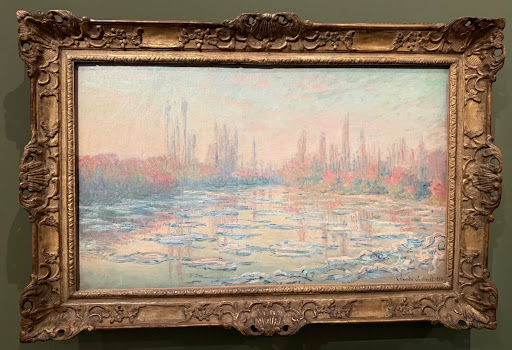
Smoke is not the only fleeting presence in the exhibition. December 1879 remains the coldest month on record in Paris: the Seine froze some 30 centimeters deep, then thawed abruptly around the new year, sending slabs of ice downstream. Monet’s wife Camille had died that September. “Here we had a terrible break-up of the ice [débâcle],” he wrote to the collector Georges de Bellio, “and of course I tried to make something of it.” The distinction between physical atmosphere and personal experience becomes difficult to separate. Monet was observing an extraordinary winter, but he was doing so at an extraordinary moment in his own life.
Making change visible
For much of history, art and science have mutually enriched each other. As the exhibition notes, Monet seems to have shared his era’s fascination with “meticulous and almost scientific observation of the world.” We can now read the records that his careful looking left as proxies of past atmosphere.
Today, art and science are often treated as distinct pursuits. But climate change is again altering the environment around us in ways that are real and measurable, yet not always immediately perceptible. Both disciplines begin, in different ways, with careful observation: noticing change and finding ways to make it visible.
Monet reminds us that the atmosphere is never merely a backdrop. It is the medium through which we see the world: something whose physical properties can be measured with instruments, but whose effects are also registered through perception, memory, and emotion.