

Climate change is straining insurance and raising risks for the wider economy
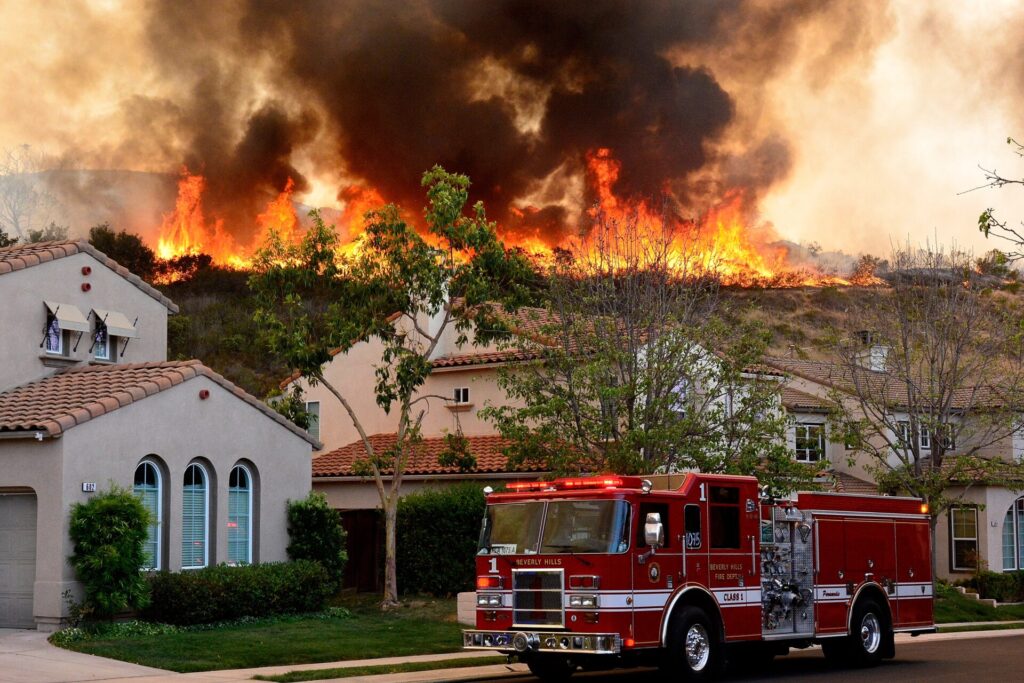
For some American homeowners, the first clear sign of climate change in the household budget has been a higher insurance bill. Others have lost coverage altogether.
The costs could spread well beyond those households, experts warn. Banks may face losses if property values fall; governments could face larger bills after disasters.
Insurers are raising rates, narrowing coverage, and withdrawing from some markets as they confront wildfire, hurricane, and flood risks. In California, insurers had already pulled back from wildfire-prone areas before the 2025 Los Angeles fires.
In the five years through 2022, home-insurance premiums rose faster than consumer prices overall, according to figures cited by Harvard Business School.
Insurance is “definitely the front line of climate risk,” said Bob Litterman, a former head of risk management at Goldman Sachs, at a recent panel organized by Resources for the Future as part of the joint RFF-Salata Climate-Related Financial and Macroeconomic Risk Initiative (CFMRI). Pricing that risk becomes harder as the odds change.
“We’re no longer able to rely on historical probabilities,” he added. “Calling something a 100-year flood is no longer a statement about frequency, but it’s a statement about magnitude – and it’s happening more and more often, maybe every five years or every 10 years.”
From insurance to property values
Regulators must weigh affordability against the risk that insurers will leave, said Billy Pizer, president of Resources for the Future. Capping premiums can protect homeowners from steep increases. But if insurers cannot make money, they may stop offering policies. Letting rates rise can put coverage beyond homeowners’ reach.
Mortgage lenders generally require insurance. Without affordable coverage, a home can become harder to finance or sell.
Pizer warned of “a lot of unpriced risk” in real estate – prices that may not fully reflect a property’s exposure. A major disaster could force buyers and lenders to reassess those values. If prices fall, banks could be vulnerable. That’s especially the case for banks that lend heavily in one region, he said, compared with those that are more diversified.
Pizer also pointed to a mismatch in timing: Buyers borrow for the long term, but insurance covers much shorter periods. The debt can remain after coverage disappears.
Mispriced risks can magnify a disaster’s damage, said James Stock, director of Harvard’s Salata Institute for Climate and Sustainability.
That puts the issue within central banks’ responsibilities, he said.
“Central banks need to be on top of this, and monetary authorities need to be thinking through the consequences,” Stock said. “It’s certainly going to result in price pressure. The question is, does it turn into inflation? That depends what central banks do.”
Who pays after a disaster
As private insurers retreat, more homeowners are turning to state-managed FAIR plans, which provide coverage as a last resort. Changing the insurer does not remove the danger to a home, however. Pizer said communities also need investments that make buildings less vulnerable to damage.
When households and insurers cannot pay, the federal government can end up bearing the risk, Pizer said.
After a disaster, insurance payouts and public money often help communities rebuild, said Kevin Stiroh, an RFF senior fellow and former executive vice president at the Federal Reserve Bank of New York. But in some places, he added, people may want to leave after repeated disasters.
And, in others, it may no longer make economic sense to rebuild.
“We’re going to have to start talking about managed retreat,” Litterman said, “and that has implications for the values of land and infrastructure and so on.”