What war and climate change mean for staple food prices
War with Iran is pushing up global energy and fertilizer costs. A strong El Niño is raising the odds of harvest losses in the months ahead. Grain stocks look thinner than they should. Together, these pressures threaten global markets for staple food crops.
Staple crops – especially corn, wheat, rice, and soybeans – account for two-thirds to three-quarters of the calories that humans consume. They depend on fuel, fertilizer, and open trade routes. This integrated system buffers shocks, offsetting losses in one country with surpluses in others.
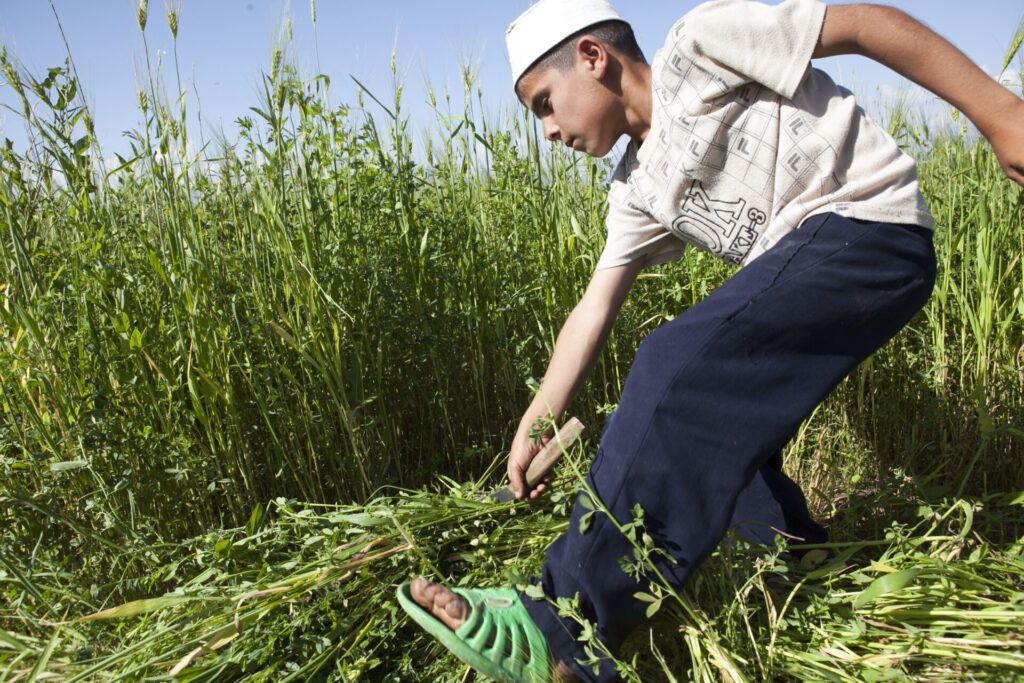
But fuel and fertilizer shocks do not hit everyone the same way. In the United States, higher input costs may reduce farm profits and reshape planting decisions. In poorer countries, the danger is greater. Many farmers already use little fertilizer, rely on local harvests, or cannot afford expensive food imports. There, the same shock can cut yields, raise prices, and sharpen food insecurity.
Agricultural economist Wolfram Schlenker says the danger is not one bad event. It is the compound risk: war-driven input costs, climate-driven weather shocks, and thin grain reserves. The likelier outcome is not one global food crisis, but a series of local crises, hitting hardest in places with the least room to absorb them.
The Harvard Climate Brief spoke with Schlenker about what climate change is already doing to staple crop yields, why trade matters for food security, and why 2026 may bring local food shocks with global consequences.
For farmers far from the conflict, how might higher fertilizer and fuel costs affect planting decisions? Are farmers likely to switch crops, use fewer inputs, expect lower yields?
It looks very different depending on where you are. In the U.S., higher fertilizer and fuel costs mostly squeeze farmers’ margins. Farmers here already tend to use a lot of fertilizer, so if they cut back a bit, it probably will not have a big effect on yields. Moreover, many farmers locked in fertilizer contracts before the recent price spikes and are somewhat insulated.
But in parts of Africa, where farmers already use much less fertilizer, these increases are much more severe. There, cutting back even a little can cause large yield losses. We saw some of that dynamic after Russia’s invasion of Ukraine, when prices for natural gas – a key fertilizer feedstock – rose and pushed fertilizer prices up sharply.
What are some ways climate change is already affecting agricultural production? And what does that mean for staple food prices?
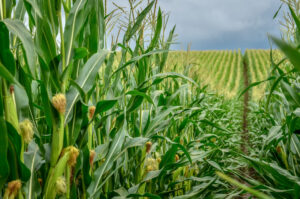
For commodity crops, the pattern is clear: They do best at moderate temperatures, and extreme heat is much more damaging than cooler-than-average conditions. For corn, for example, you can see it in the data since 1980. Yields fell sharply in very hot years like 1983, 1988, and 2012. In the U.S. Midwest in 2012, corn yields fell by about 25 percent.
That said, the temperatures that constitute extreme heat vary by crop, with wheat being less heat tolerant than rice. And the effects of temperatures on rice yields vary by growing stage. Irrigation can offset some of the damage of extreme heat.
Warming also does not affect every place equally. Developing countries tend to be hotter to begin with, so an extra degree of warming does more damage there because they are already closer to the point where heat becomes harmful. The baseline climate matters a lot in determining whether warming helps or hurts agricultural production.
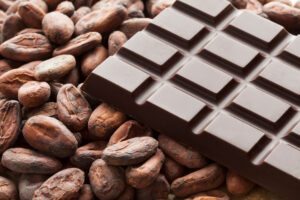
The more weather-sensitive the crop, the more volatility you are likely to see in output, which can feed through into food prices. In some years, certain markets may see big price swings – coffee or cocoa, for example, are both weather-sensitive and predominantly grown in a few areas, so local shocks can translate into global shocks. While these are important commodities – lots of us like a cup of coffee in the morning – shortages would not cause famine.
Some people argue that the buildup of atmospheric carbon dioxide from burning fossil fuels could help crops grow faster, even as it drives global warming. How persuasive are claims about CO2 fertilization?
There is some evidence that higher CO2 can help crops. My colleague Charles Taylor and I link local CO2 fluctuations to crop yields and do find that CO2 drives higher yields, especially for wheat. We see less of that effect for corn.
But the larger picture is still negative. When you compare the potential benefits of CO2 fertilization with the damage from more extreme heat, the heat effect is bigger.
It also varies by crop. In the U.S., corn is the biggest crop, and there the net effect looks clearly negative, because the CO2 benefit is relatively small while the damage from extreme heat is large. Wheat may benefit somewhat more from CO2, but only up to a point. It is also a cooler-weather crop, so if temperatures get too high, that benefit disappears.
So climate change may not just affect how much we grow, but also what we grow and where.
Looking at this year specifically, how important are large-scale weather patterns – like an expected strong El Niño – as another risk to yields and food prices?
El Niño matters because it shifts climate patterns in uneven ways. Even within the United States, the effects are not uniform – it is known for bringing more rain to California, while the effects in the northeast are less clear. Globally, the impacts vary even more.
In some places, especially parts of Africa and Australia, the El Niño signal is very strong. That matters a lot for agriculture. If a country is highly exposed to El Niño and farmers are already using very little fertilizer because prices are high, that is a real double hit – especially in countries that rely heavily on their own harvests.
So even if El Niño does not create a huge effect in the global aggregate, it can still produce very severe outcomes in particular countries. If you combine high fertilizer prices, low fertilizer use, and an El Niño pattern that brings more extreme heat or less rainfall, the local effects on yields and food security could be quite serious.
What would a more climate-resilient food system look like? Would that mean farmers are able to switch crops, use inputs more efficiently, diversify fertilizer supply?
This may be a standard economist’s answer, and I am not the first to make it: In food systems, free trade is one of the most important forms of resilience.
Agricultural shocks differ across places within a given year, but at the global level production is often much more stable than people think. If one region is hit badly, another may do well. That is why trade matters so much. It allows the world to smooth local shocks.
For me, a more climate-resilient food system is one with highly integrated global markets. Lately we have been moving away from that, and I think that is self-inflicted pain. The more autarkic countries become, the more exposed they are to their own weather shocks, and the more price volatility they face. In agriculture, resilience depends heavily on keeping trade open.
Does climate change make disruptions like the Iran war more dangerous than they would have been a decade or two ago?
In the near term, I do not think the global food system is especially strained. Production of staple commodity crops has been strong in recent years and prices are still relatively low.
For the year ahead, for staple crops at least, the bigger concern is poorer countries that cannot afford expensive food imports and may also see their own production fall. That is where I would worry most.
Over the longer term, though, climate change does make these kinds of shocks more dangerous. Most modeling suggests that food systems will become more stressed as warming continues. So, in principle, yes – climate stress and geopolitical conflict can compound one another.
What else are you watching as you think about food security this year?
I am less worried about aggregate global supply than about who gets hit. In principle, we produce enough staple crops to feed the world if they are distributed efficiently. The bigger problem is that some countries do not have the means to import expensive food, and at the same time their own production may be falling. That is where the real food security risk is.
The other thing I am watching is storage. Prices are low right now, but storage levels do not look especially high. Normally, when prices are low, you would expect more grain to be stored. But we have had some unusual policy responses in the last few years that might dissuade people from storing, including export restrictions that limit price upswings. The official inventory numbers are not perfect, but they do suggest stocks may be thinner than you would want. China is holding a very large share for food-security reasons – more than 50% of the global stockpiles of corn, wheat, and rice – and these are not easily accessible by the rest of the world.
The real risk is a compound one. If you combine a strong El Niño, high fertilizer prices, and low storage levels, then markets could move very sharply. What worries me is that some places could be hit very hard, especially places that can least afford a bad harvest or a spike in food prices.
-As told to David Trilling