
The legal weaknesses in Trump’s war on offshore wind
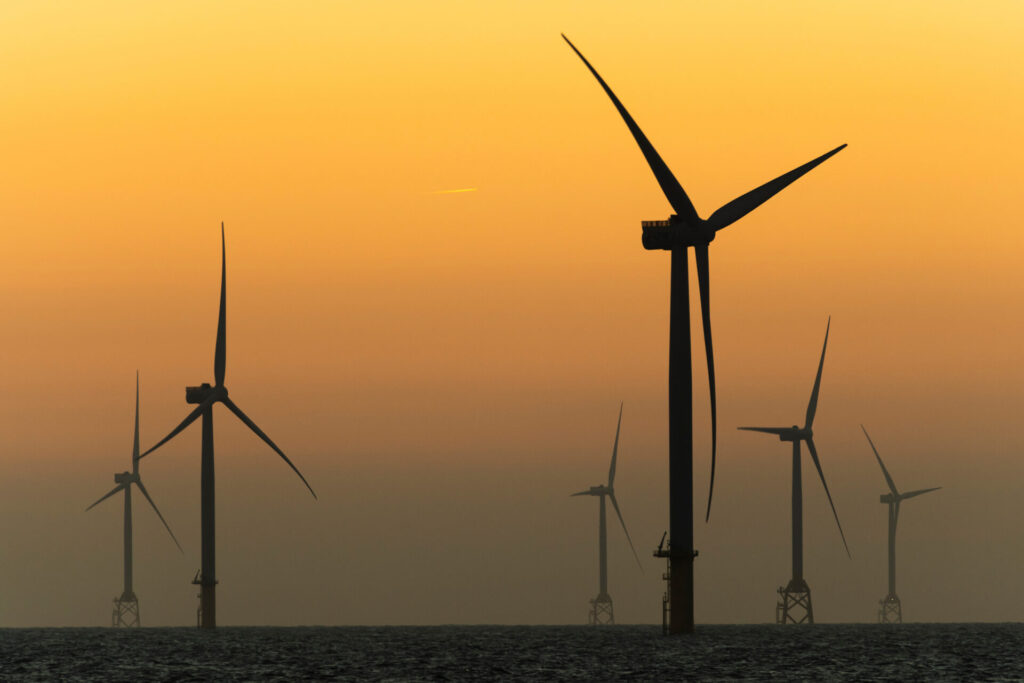
In one of his first acts after returning to office last year, President Trump froze all offshore wind projects. The same day, he declared an “energy emergency,” directing federal agencies to speed fossil fuel development. Courts are pushing back, but the litigation is still in its early innings.
For energy planners and the business community, the stakes are enormous. From Massachusetts to Virginia, five multibillion-dollar projects are deep in construction after years of permitting – some past 90 percent complete. The freeze has thrown the budding industry into uncertainty and is costing developers tens of millions of dollars per day. Together, the projects would generate nearly 6 gigawatts – enough to power about 5 million homes at a time when electricity demand is rising – and support thousands of jobs.
Andrew Mergen has spent decades in the legal thick of federal energy policy. For 33 years in the Justice Department’s appellate section, he defended agency decisions on oil and gas leasing, offshore wind, transmission, and pipelines – among the most contentious fights in Washington. Now a clinical professor of law, Mergen sees a familiar problem in Trump’s wind campaign: Offshore wind has always drawn opposition, but this looks less like a policy dispute and more like a personal vendetta, shaped by Trump’s long-running battles over wind turbines near his Scottish golf course. And because that hostility is so well documented, Mergen explains in the conversation below, it leaves the administration legally exposed.
Trump is not the first president to use executive powers to shape energy policy. Biden issued an early moratorium on oil and gas leasing. Is Trump’s approach to offshore wind different?
Republicans like to say that they’re just doing to renewables what Biden did to fossil fuels. But there’s a false equivalency in that narrative.
Trump’s Presidential Memorandum is harming wind in a far greater way than anything Biden did with oil and gas. The whole time that Biden was working on the margins of oil and gas leasing, oil was still being pumped. Biden put a moratorium on issuing new leases. He was not holding up business activity with companies that had already secured a lease; he was simply limiting firms from initiating new activity on federal lands. In contrast, Trump is stopping ongoing projects on grounds that had been resolved in previous government decision-making.
Presidents have been increasingly aggressive in using executive power for years and Trump does it on steroids.
What makes this different is the apparent pretext. In my experience defending the government, you can usually see a lawful, reasoned rationale driving a change in policy – that’s the precedent courts expect to see – whereas here Trump’s well-known antipathy to wind makes the whole posture look like, “I don’t like wind, I want it to go away,” with the justifications built afterward.
Two tracks of lawsuits are moving through the courts in response to Trump’s offshore wind orders: one, a coalition of 17 state attorneys general challenging the blanket suspension, which won in federal court in December (with an appeal still possible); two, five separate company cases where developers have recently won preliminary injunctions to keep work moving. Can you explain the different approaches?
With the 17 states, the key hurdle is that executive orders are usually just the president directing his agencies, which can be hard to challenge. What made this case different is that the court said the states are being harmed right now because federal agencies have effectively put their pens down on permitting – with knock-on effects for state revenue and electricity planning. The court also treated the agency action as potentially arbitrary and capricious, a departure from past practice without a real explanation. It’s a big win, and if it holds it could have ripple effects on how Trump does business. These wins can build on each other. Many of Trump’s orders propping up coal, for example, might also be found arbitrary.
The five company cases are narrower but, in some ways, stronger. The injuries are concrete and project-specific. The government has offered rationales, including invoking national security more recently, but given Trump’s record with wind, that reads like pretext. And that matters because the government usually benefits from a presumption of regularity and good faith. Here, it’s litigating under a cloud of skepticism.
Trump is using his energy emergency to bypass standard permitting laws for fossil fuels. And yet the frozen wind projects would provide much-needed energy. Is there a tension here that Congress could address?
The “energy emergency” is about speeding fossil projects by effectively bypassing the usual environmental guardrails: permitting review, Endangered Species Act compliance, Clean Water Act processes. At the same time, on wind it’s the opposite posture: pens down, slow-walk permits, add hurdles by disrupting normal processes.
All of this sits inside the broader permitting reform debate – whether we’ve made it too hard to build energy and housing and whether we can cut bureaucracy without doing something reckless. There are smart reforms on the table. We could be having a more robust conversation about how we get abundance, or how we get permitting reform.
Even when Trump loses in court, the delays inject massive uncertainty for investors. Could that be the administration’s strategy – winning by losing, using litigation to drive up costs until developers walk away?
I think that’s right. Offshore wind is expensive to build. The logistics are extraordinarily difficult. All this uncertainty makes it really hard. I think for offshore, in particular, if the administration wants to dry up momentum, then it doesn’t matter that they’re losing, because it makes it harder for the industry to get off the ground. It’s tough for this industry, even as it continues to win.
Remember, we’re not at the end of the road with these five cases and the coalition of states case. The legal system moves very slowly. There could be appeals here, and that could drag it out further.
Speaking of appeals, Interior Secretary Doug Burgum has suggested the administration might appeal its losses to the Supreme Court. How do you see the Court responding?
It would be hard to interest the Court in the particulars of the five cases. But the 17-state, big-picture case is about whether the government is acting arbitrarily and capriciously. And in that, Trump may have already hurt himself.
A template here is the census case in Trump’s first term, where he ordered the Commerce Department to add a question on citizenship to the U.S. census. The Court saw through the stated rationale as pretext and basically said, “you haven’t offered good enough reasons.” That’s a lodestar for litigants now, because you can see the same dynamic creeping in here – suddenly Trump is a bird-and-whale protector, and now there’s a national security rationale too? The risk to the administration is that it all reads like post hoc justification for a predetermined outcome.
-As told to David Trilling