West African officials link climate threats to rapid growth
Officials from Ghana, Nigeria and Côte d’Ivoire told Harvard Climate Action Week audiences that climate change is colliding with explosive urban growth in West Africa – and that the fixes must be local.
The discussion dovetailed with a three-year Salata Institute project on climate adaptation in the three countries.
“Our coastal communities are literally sandwiched between the Atlantic Ocean and the barrier lagoon,” said moderator Emmanuel Akyeampong, the Ellen Gurney Professor of History and Professor of African and African American Studies at Harvard. Consider Lagos: from 325,000 residents in 1950 to more than 17 million today, with Accra and Abidjan on similar trajectories.
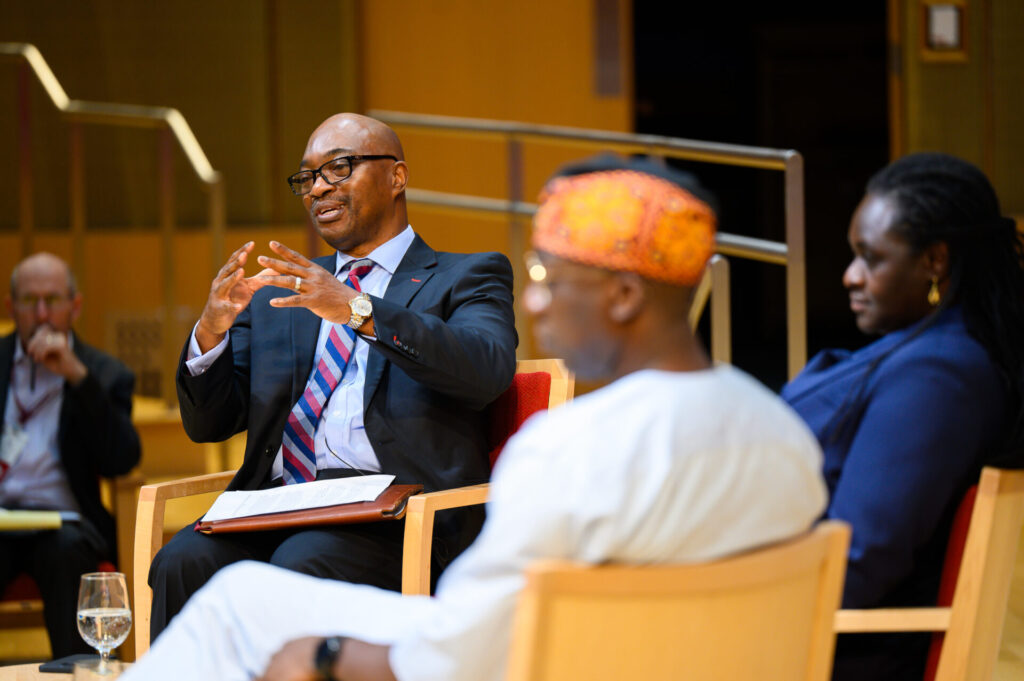
Against that backdrop, speakers said adaptation to rising seas is inseparable from two forces reshaping the coast: population growth and land use.
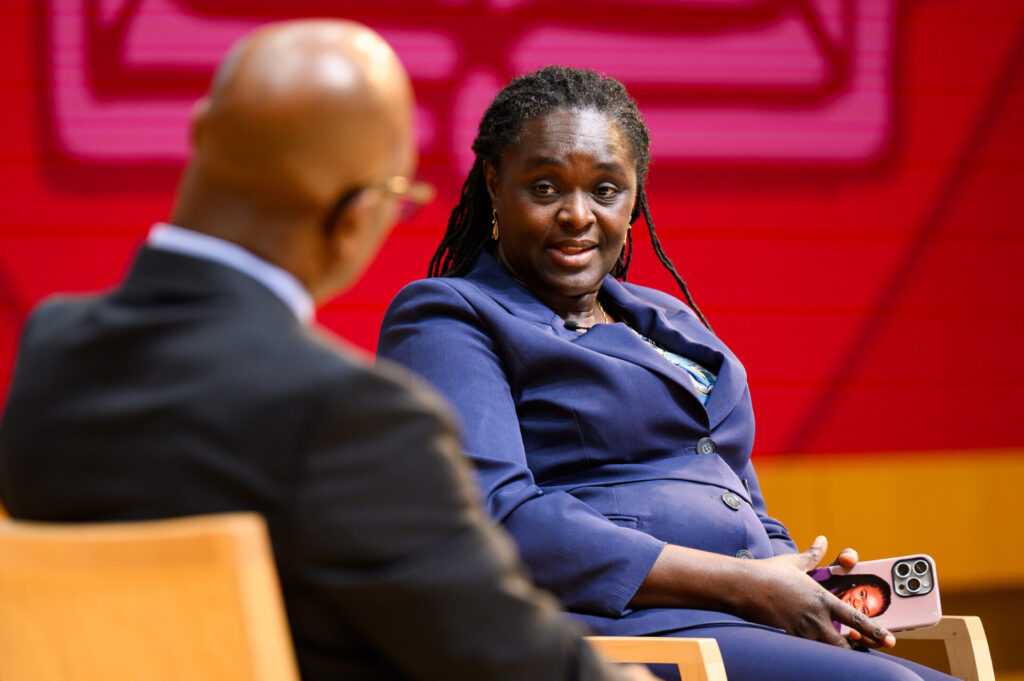
“We have to look at things holistically,” said Nana Ama Klutse, an atmospheric physicist and acting director of Ghana’s Environmental Protection Agency.
She sketched a densely settled coast slipping under rising seas and an interior stripped of trees, as displaced coastal communities move inland and clear what remains of forests and wetlands for space. The population, she warned, continues to surge.
“If there were measures in place for Africans to understand that we have to reduce our population, I would be very happy,” she said, returning several times to Ghana’s high birthrate. “This population is impacting our ecosystem, our land resources, and every other resource as well.”
From Lagos, Tokunbo Wahab, the state’s commissioner for the environment and water resources, described a megacity battered by tides and sudden storms – and by “human elements […] destroying the ecosystem […] taking out wetlands to build real estate.”
Even so, he said, there are workable fixes. Lagos has tapped a Ghanaian waste-management firm to convert part of the roughly 13,000 tons of trash the city produces each day into compost and energy, an effort to keep refuse out of drains and landfills.
But good ideas can falter if they ignore local habits. A European program that distributed clean-cooking stoves, he noted, failed to dislodge firewood and charcoal. “People need a lot of education and a lot of showcasing” before changing behaviors, Wahab said, observing that policy must be as carefully designed as the technology itself.
Building on the panel’s theme of shared challenges, another speaker insisted that West Africa’s climate adaptation hinges on cross-border cooperation and grassroots education.
Speaking by video link from Abidjan, Georges Kouame Kouadio of Côte d’Ivoire’s Ministry of Environment and Sustainable Development said West Africa’s adaptation efforts will fail without cross-border cooperation and patient, ground-level education. “You don’t have a national solution… it is important to collaborate,” Kouadio said, urging governments to work through regional bodies to confront coastal erosion and other risks that ignore borders.
Owning the crisis
Africans have contributed little to the planet’s warming. The continent’s per capita emissions are a fraction of America’s. Yet the panelists showed no interest in blame or absolution.
“We, as a people, must take ownership,” said Wahab, the commissioner from Lagos. “Climate change issues are real-life issues. We can’t play the ostrich with them.”
Across the panel, the through line was clear: rapid population growth, unplanned urban expansion and degraded ecosystems are amplifying the damage of climate change. The remedies, panelists argued, lie in targeted local policy, smarter land use and stronger regional cooperation. As Klutse of Ghana’s EPA, put it, adaptation plans must fit “peculiar challenges” and “very specific solutions.” What will not work: “cut-and-paste” fixes from elsewhere.