

West African youth turn their lenses on climate change
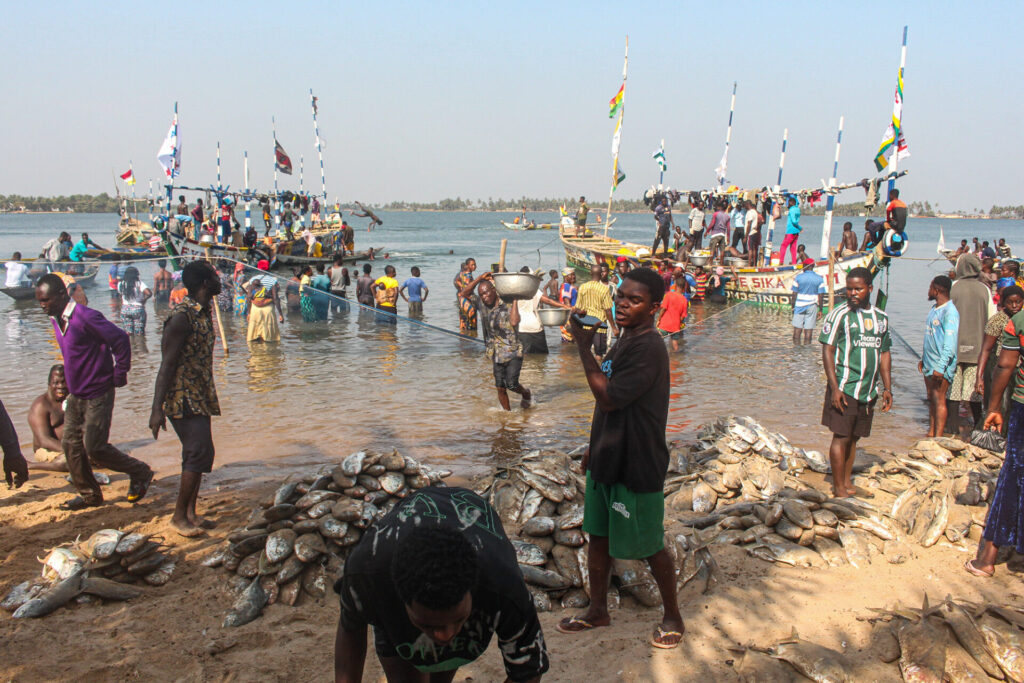
When the Nigerian photographer Adolphus Opara went looking for the next generation of climate storytellers, he did not begin in art schools or journalism faculties. He went to fishing communities. He joined WhatsApp chats.
With support from the Salata Institute for Climate and Sustainability’s interdisciplinary West Africa climate research cluster, Opara has built a small training program that turns young people from Côte d’Ivoire, Ghana, and Nigeria – many of them women and first-time photographers – into visual chroniclers of coastal change. Their assignment is both intimate and urgent: to document how their communities are responding to rising seas, eroding shorelines, and an uncertain future along the water’s edge.
“The idea was to train two photographers from each country,” Opara said, explaining that he deliberately chose “one from a rural area, another one from an urban area” in each, to bridge communities that often experience climate impacts differently.
Most of the trainees did not arrive thinking of themselves as artists. One is a fisherman, another an architecture student. Several are young women from flood-hit coastal settlements.
Among them is Mariam Véronique Kouassi, a trainee from Azuretti, a coastal village in Côte d’Ivoire losing meters of land every year to an encroaching sea. Kouassi wants her images to carry the weight of what residents are facing, hoping “that people see the daily realities and the threats from nature that these communities face.”
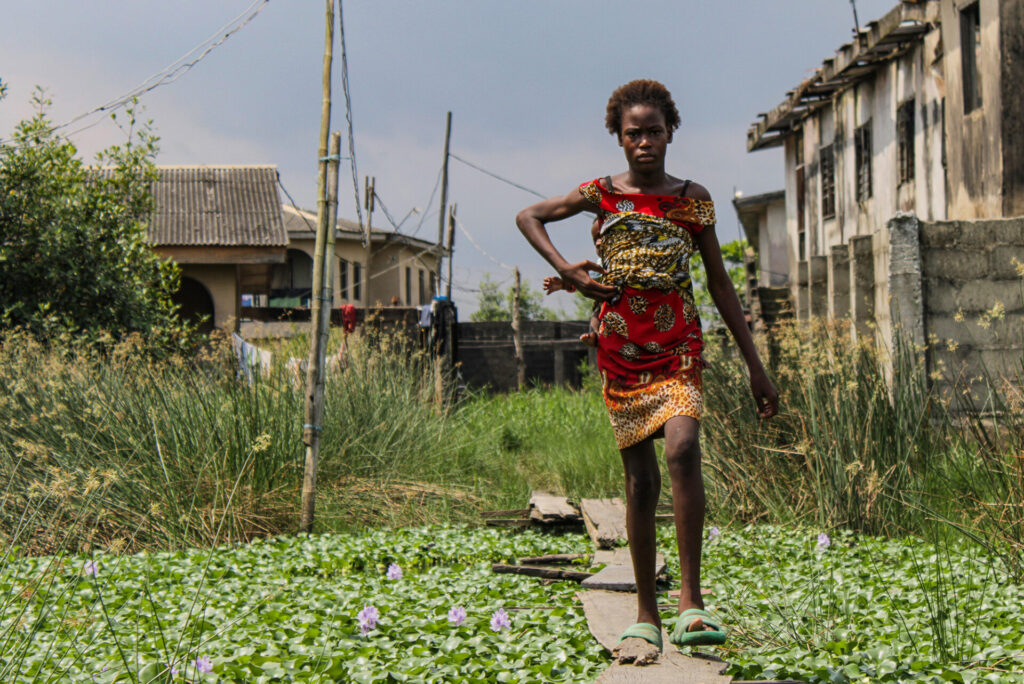
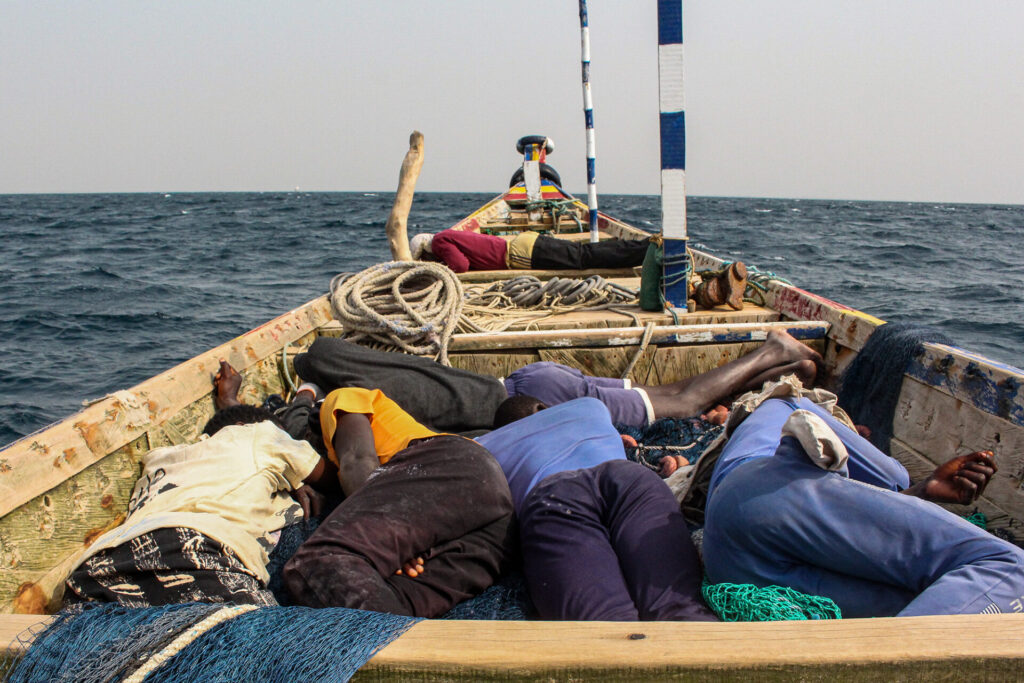
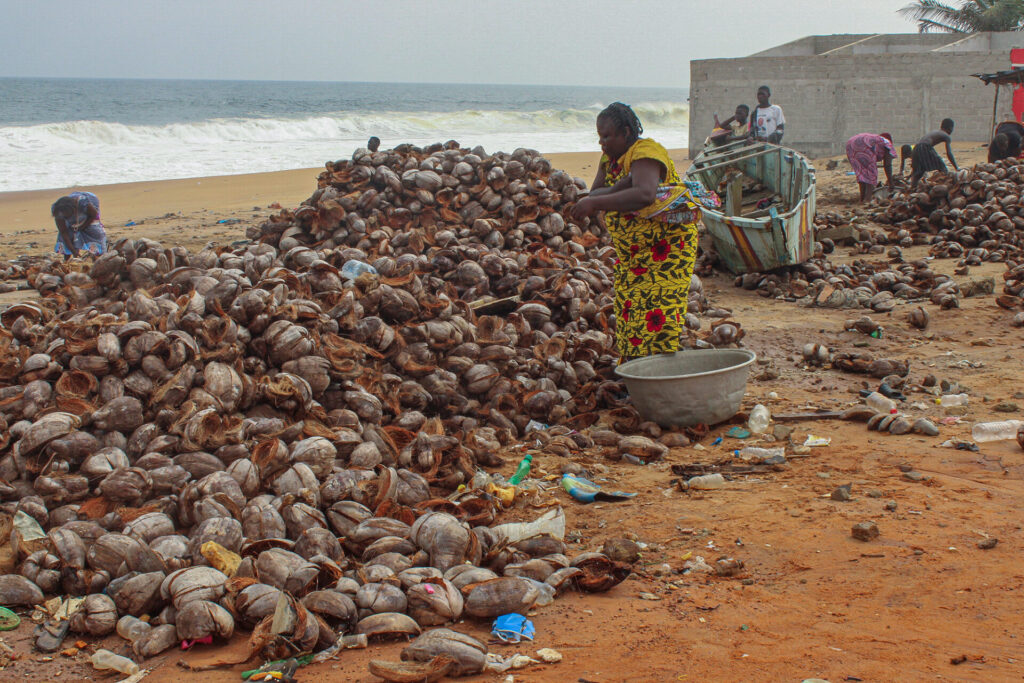
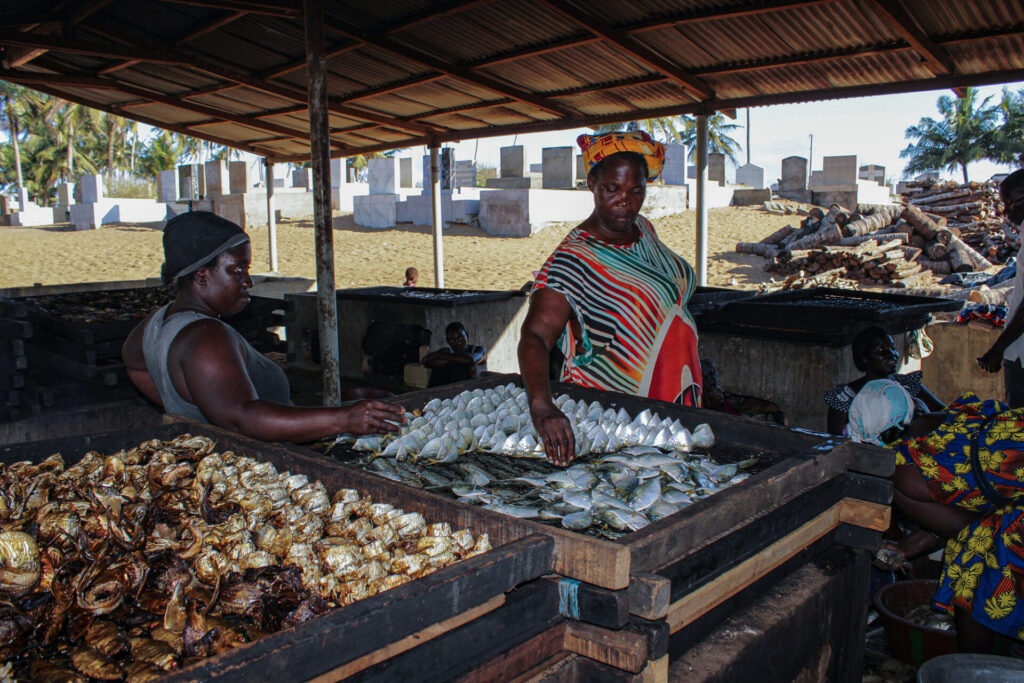
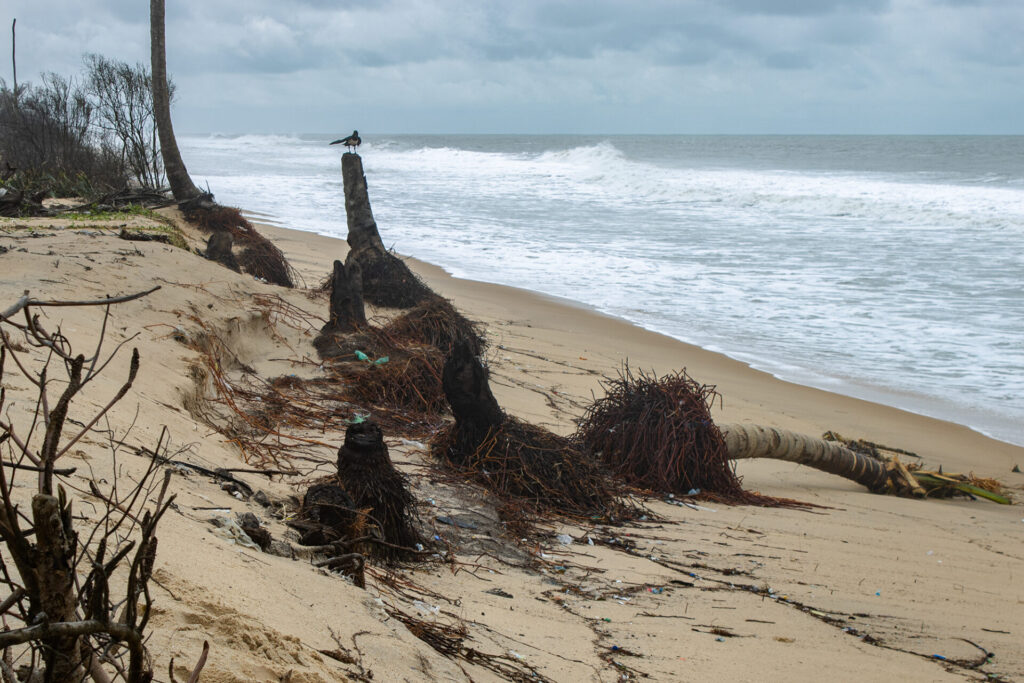
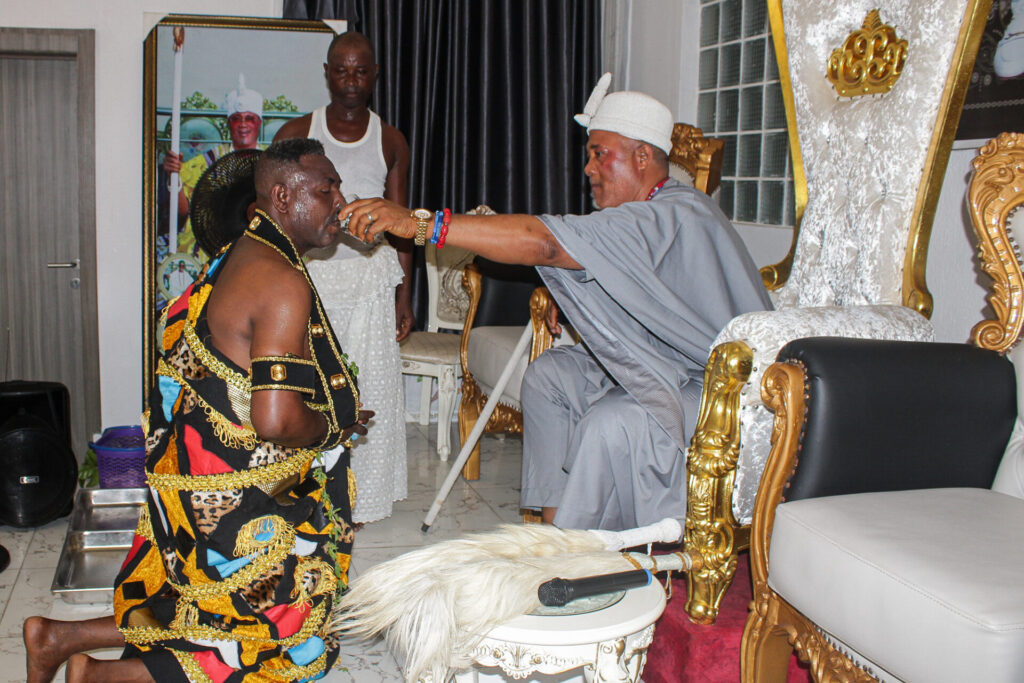
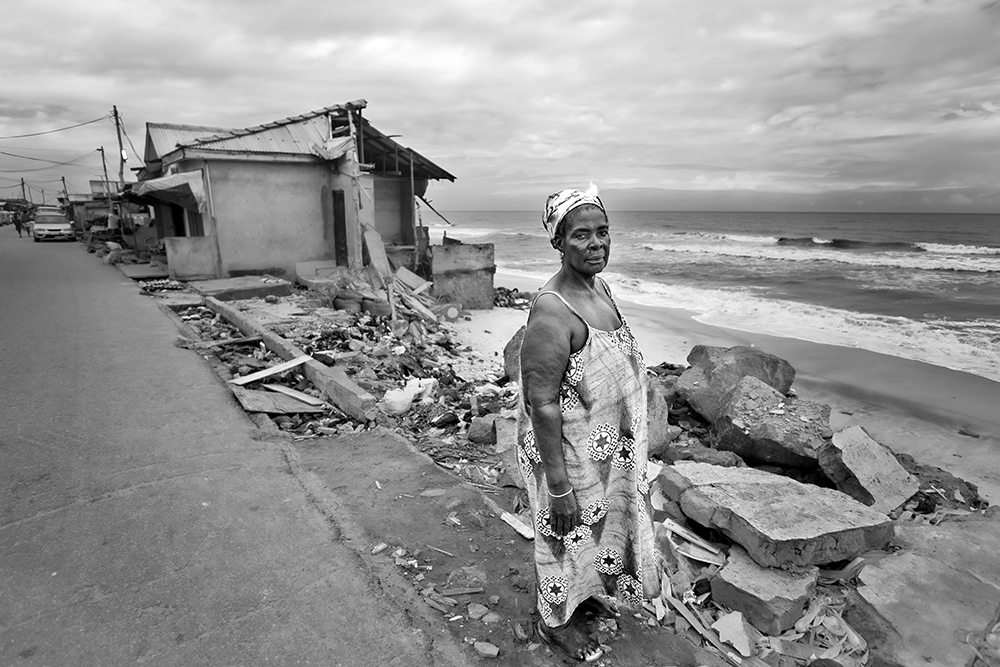
Over the first month, Opara led the group through six hours of classes each week on WhatsApp video. He built a syllabus starting with fundamentals: composition, color, texture, light. The point was not simply to get them taking pictures, but to teach them to make images that could carry a reader into someone else’s daily life.
“The goal is to actually craft pictures that tell the story of climate impact and adaptation on individuals, locals,” he said, in a way that “will appeal to anybody.”
The Salata Institute supplied Nikon DSLR cameras for each trainee. Opara taught them how to handle lenses, work with RAW files, and manage memory cards.
The logistics are rarely simple. Internet connectivity is uneven across the region, and the program’s early plan – a Google Drive workflow for sharing and critiquing full-resolution images – quickly gave way to something more basic. The trainees began sending low-resolution files over WhatsApp, with occasional trips to partner institutions to upload full-resolution photographs.
A climate story, told in everyday life
Opara pushes students to think in narratives anchored in ordinary scenes: a market day, a shoreline ceremony, a family moving belongings after a flood.
Simon Okoe Kwao, a trainee from a coastal district near Accra, Ghana’s capital, has worked as a fisherman for 20 years and knows the communities being reshaped by declining stocks and changing seasons.
“Life depends on nature for its survival,” he said, explaining what drives him to photograph and stressing that climate adaptation requires teamwork.
Sarah Essiem, who sells and prepares fish in Orimedu Ibeju-Lekki, on the edge of Nigeria’s megacity, has watched livelihoods shrink as the coast becomes less predictable.
“A great photograph doesn’t just show what you saw – it reveals what you felt,” she said.
The threats can be both slow and sudden. Parts of Lagos are sinking, a problem accelerated by unchecked real estate development, informal construction and drainage systems clogged with plastic waste. Along the coast, residents watch the shoreline shift in increments – until a bad storm or high tide takes what remained.
Opara grew up watching a favorite Lagos beach erode and, eventually, disappear under luxury development, even as sand mining and poorly planned development weakened shorelines and put communities at risk. Years of photographing coastal change have clarified what drives him: “For me, first of all, it’s protest” aimed at “the system that refused to build for the future.”
The harder search
Recruiting women, especially in rural communities, has been one of the project’s most difficult tasks. In many coastal settlements, young women have limited time and limited mobility, mostly due to traditional expectations placed on them.
Opara asks youth leaders to recommend young women. He looks for signs of curiosity and persistence more than formal credentials, recalling meeting a student with 1,500 images on her phone. She could not explain what drove the collection, but knew she loved making pictures.
In Opara’s view, that instinct is the raw material. The training provides technique, but also permission: to see one’s own community as worthy of documentation, and to treat the coastline not as background scenery but as a changing, contested space.
He is not trying to turn his students into activists in the conventional sense. Instead, he is giving them tools to make their own arguments. Already, they are producing thousands of images of shifting shorelines, damaged homes and resilient daily rituals – evidence of loss, and of the ingenuity required to endure.
“I’m not a politician,” Opara said. “But I realized I could do something. I could talk, I could write, I could shout with my images.”