Observing the Carbon Cycle from Space
Friday, Mar 06, 2026, 12:00 pm - 1:00 pm
Pierce Hall 100F, 29 Oxford Street, Cambridge
Abstract:Much of what we know about our planet is derived from space-based observations. Over the past decades, national space agencies and commercial enterprises have launched more and more sophisticated sensors into various orbits around the Earth. This has expanded our understanding from hand-drawn weather maps to ever more accurate 7+ day global weather forecasts as well as deepening our understanding of the drivers of change in the Earth system. This is particularly true in regions that are difficult to study directly or are highly heterogeneous like the Tropics and polar regions as well as the global oceans. Underpinning these advances are carefully planned and implemented sensor technologies that are designed with a specific set of science questions in mind.
The carbon cycle is a globally connected system that is also heterogeneous across spatial and temporal scales. Ecosystems are complex interactive systems where members compete for resources while also responding to weather and climate variations and human activities. The sum of these activities determines the long term radiative forcing of the planet. Making things more complex is the fact that the seemingly most fragile ecosystems exist where we have the least traditional measurements: the Tropics and the Arctic.
In this talk, I will present the way that we use satellite remote sensing and models to infer sources and sinks of carbon as well as what we have learned about the terrestrial carbon cycle from missions like the Orbiting Carbon Observatory-2. I will also cover the fundamental uncertainties of remote sensing measurements and the models used in this inference.
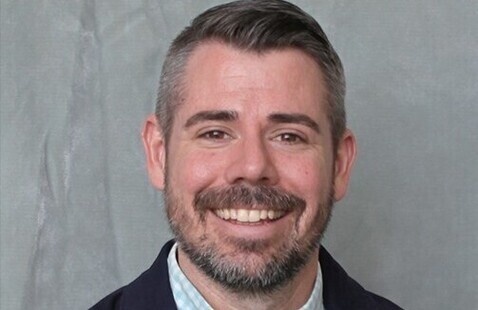
Bio:Sean Crowell is an atmospheric scientist that uses trace gases to better understand the carbon cycle. He received his PhD in Mathematics in 2011 from the University of Oklahoma with a focus on synthesizing data and models to understand tornado dynamics. After working on improving forecasts of severe storms with data assimilation of thermodynamic profilers as a postdoc with NOAA, he changed gears and began focusing on how satellite measurements of greenhouse gases like carbon dioxide and methane can be used to constrain sources and sinks. He became the Deputy Principal Investigator of the GeoCarb Mission in 2016 and helped lead that project to a successful instrument delivery in 2023. Following the completion of the GeoCarb effort, Sean left the University of Oklahoma and started LumenUs Scientific, a consulting firm dedicated to helping energy companies use remote sensing observations to mitigate their methane emissions as well as planning the next generation of satellite missions. Sean joined the University of Rochester in 2026 as an assistant professor in Earth and Environmental Sciences, where he has begun building a group focused on remote sensing instruments, algorithms, and applications to the terrestrial carbon cycle.
Learn More
The carbon cycle is a globally connected system that is also heterogeneous across spatial and temporal scales. Ecosystems are complex interactive systems where members compete for resources while also responding to weather and climate variations and human activities. The sum of these activities determines the long term radiative forcing of the planet. Making things more complex is the fact that the seemingly most fragile ecosystems exist where we have the least traditional measurements: the Tropics and the Arctic.
In this talk, I will present the way that we use satellite remote sensing and models to infer sources and sinks of carbon as well as what we have learned about the terrestrial carbon cycle from missions like the Orbiting Carbon Observatory-2. I will also cover the fundamental uncertainties of remote sensing measurements and the models used in this inference.
Bio:Sean Crowell is an atmospheric scientist that uses trace gases to better understand the carbon cycle. He received his PhD in Mathematics in 2011 from the University of Oklahoma with a focus on synthesizing data and models to understand tornado dynamics. After working on improving forecasts of severe storms with data assimilation of thermodynamic profilers as a postdoc with NOAA, he changed gears and began focusing on how satellite measurements of greenhouse gases like carbon dioxide and methane can be used to constrain sources and sinks. He became the Deputy Principal Investigator of the GeoCarb Mission in 2016 and helped lead that project to a successful instrument delivery in 2023. Following the completion of the GeoCarb effort, Sean left the University of Oklahoma and started LumenUs Scientific, a consulting firm dedicated to helping energy companies use remote sensing observations to mitigate their methane emissions as well as planning the next generation of satellite missions. Sean joined the University of Rochester in 2026 as an assistant professor in Earth and Environmental Sciences, where he has begun building a group focused on remote sensing instruments, algorithms, and applications to the terrestrial carbon cycle.
ADD YOUR EVENT TO THE SALATA CALENDAR
Are you hosting a Harvard-affiliated event that is related to climate change and/or sustainability? Please submit your event to the Salata Institute event calendar using this quick form! We look forward to sharing your event with the Harvard community.
Submit Your Event