From Coordination to Collaboration in Multi-Robot Systems: Lessons from Ecology
Thursday, Oct 15, 2026, 2:30 pm - 3:30 pm
Science and Engineering Complex (SEC), LL2.224, 150 Western Avenue, Allston
Abstract: The standard approach to multi-robot systems is to divide the team-level tasks into suitable building blocks and have the robots solve their respective subtasks, such as forming shapes or covering areas, in a coordinated manner. However, by bringing together robots of different types, it should be possible to arrive at completely new capabilities and skill sets. In other words, the whole could become greater than the sum of its parts. Inspired by the ecological concept of a mutualism, i.e. the interaction between two or more species that benefit everyone involved, this idea is formalized through the composition of barrier functions for encoding collaborative arrangements in terms of expansions and contractions of relevant safe sets. Contextualized in a long-duration setting for robots deployed over long time scales, where optimality has to take a backseat to “survivability”, example scenarios include robotic environmental monitoring, safe learning, and remote access in the Robotarium, which is a multi-robot lab that has been in (almost) continuous operation for over eight years.
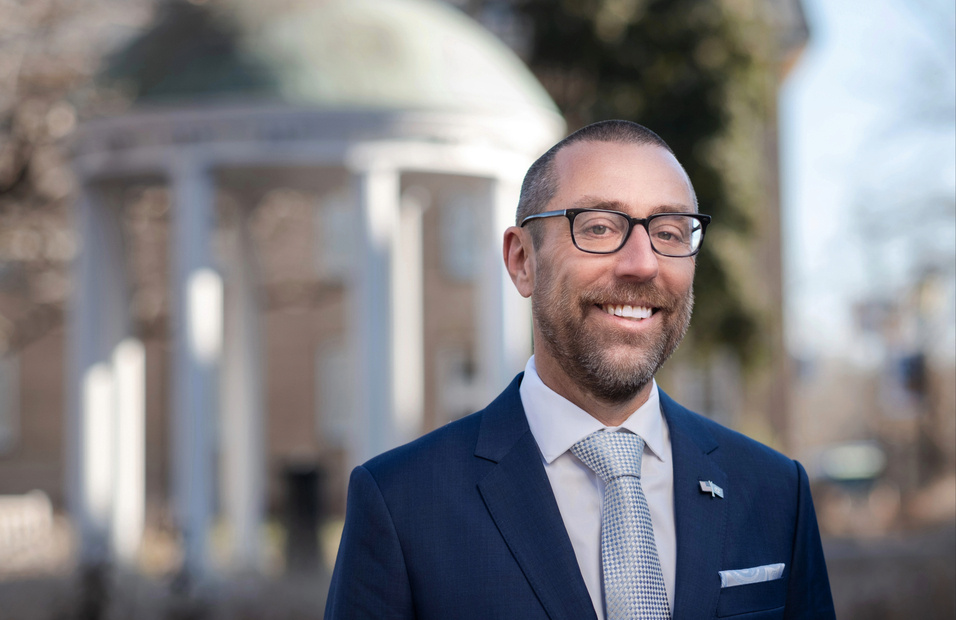
Speaker: Magnus Egerstedt, Harry Watson Distinguished Professor and Executive Vice Chancellor and Provost at the University of North Carolina
Learn More
Speaker: Magnus Egerstedt, Harry Watson Distinguished Professor and Executive Vice Chancellor and Provost at the University of North Carolina

ADD YOUR EVENT TO THE SALATA CALENDAR
Are you hosting a Harvard-affiliated event that is related to climate change and/or sustainability? Please submit your event to the Salata Institute event calendar using this quick form! We look forward to sharing your event with the Harvard community.
Submit Your Event