The Salata Institute Funds Four New Collaborative Student Initiatives
The Salata Institute’s Climate Collaboration Grant Program (CCG) supports student organizations across Harvard University in launching joint, climate-focused initiatives. Designed to foster collaboration among groups with a shared interest in climate change, the program aims to promote interdisciplinary learning and advance innovative solutions to the global climate challenge. Selected projects may receive funding of up to $7,000.
Read more about the 2024-2025 Climate Collaboration Grant initiatives:
- Early Graduate Eco‑Engagement Series
- The Green AI Summit
- The Garden Stewardship Initiative
- Food4Thought Festival
Early Graduate Eco‑Engagement Series Fosters New Models of Interdisciplinary Dialogue
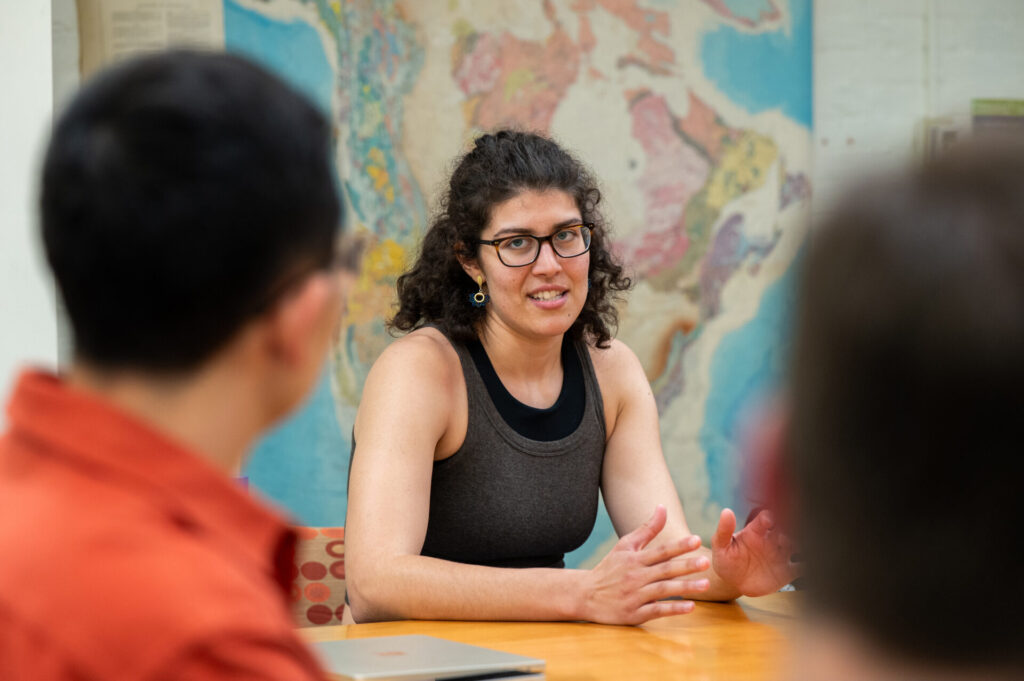
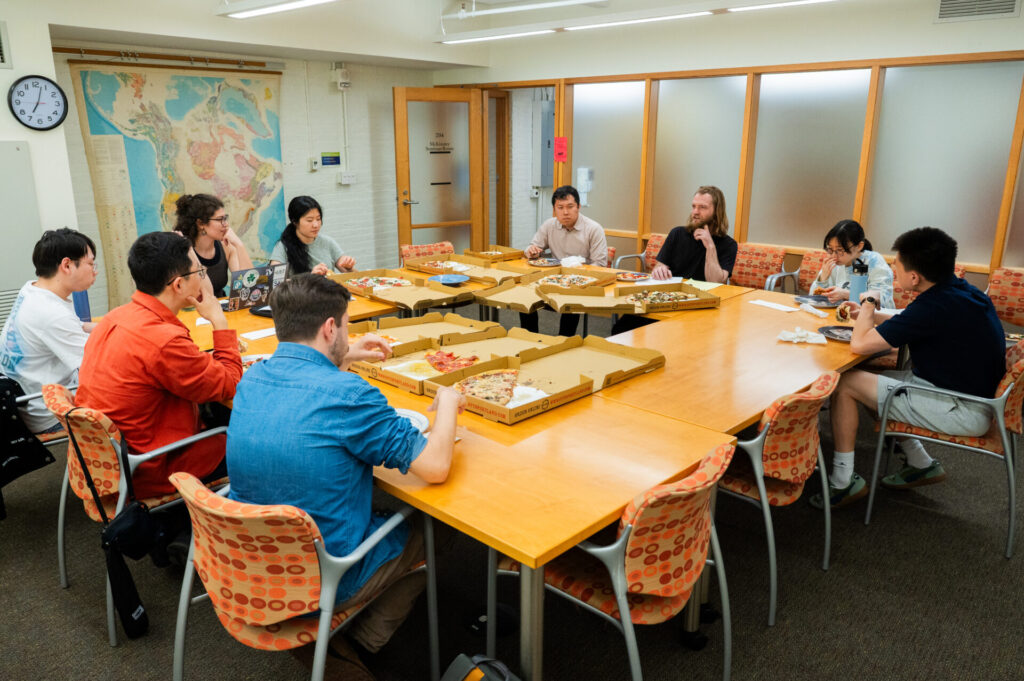
The Early Graduate Eco‑Engagement (EGEE) Series, funded by the Salata Institute’s Climate Collaborations Grant, brought together graduate students across Harvard to explore climate through the lenses of humanities, social sciences, and STEM. But its real innovation was structural: EGEE didn’t just invite cross-disciplinary conversation—it built a space where it could happen meaningfully and repeatedly.
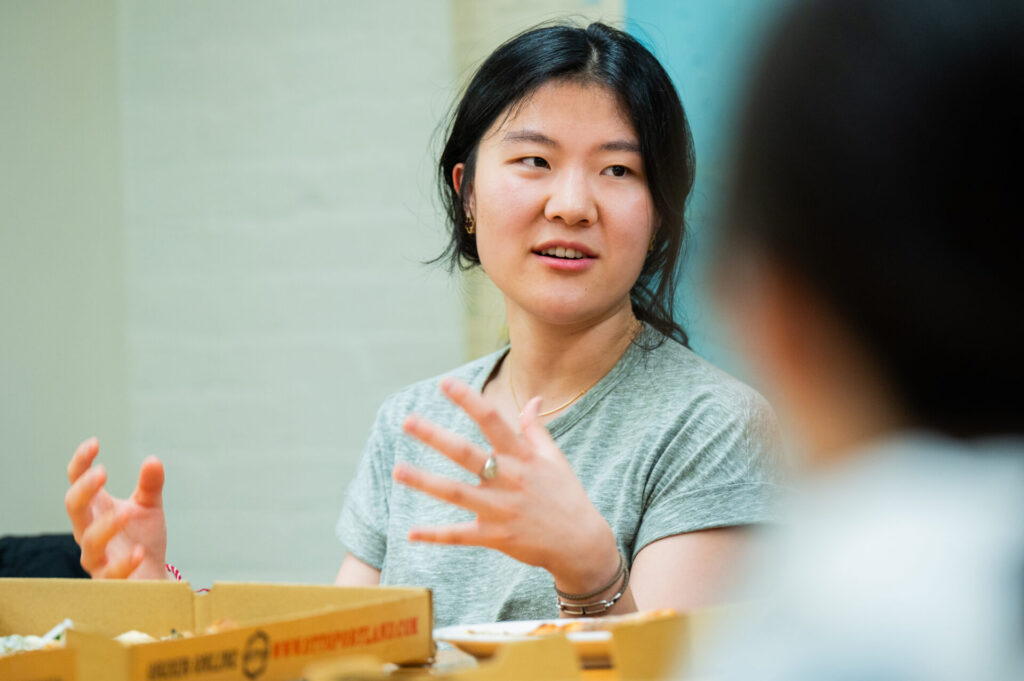
Held over five informal dinner gatherings in diverse campus locations, each session began with short provocations—such as “Technology can save the world. Discuss.”—and opened into free-flowing discussion. Participants came from fields including geology, history of science, STS, classics, architecture, and planetary sciences. Many discovered they were studying the same case studies—like geothermal energy or crater imaging—but from entirely different angles.
The series revealed just how siloed climate scholarship can be, and how rare it is to hear others explain shared challenges using different methods, assumptions, and vocabularies. Despite small attendance (6–12 per session), the quality of discussion was consistently high—helped by participants’ generosity in translating their disciplinary language and explaining unfamiliar concepts to one another.
One participant noted how their thinking shifted during a session on technology: what had once seemed a purely technical question became one entangled with “social machinery” and power structures. These moments of realization—“people are really working on this?”—were common, and central to what made EGEE valuable.
Still, the format revealed a tension: the richness of interdisciplinary exchange often required simplifying disciplinary depth. Participants expressed strong interest in more frequent meetings, possibly in mixed formats—smaller discussions, larger panels, and curated faculty-student conversations.
What EGEE made clear is that there is a real hunger for thoughtful, well-facilitated interdisciplinary space—not as one-off panels, but as recurring, evolving forums. Its success was not just in the questions explored, but in proving that with the right structure and spirit of curiosity, Harvard students are eager to think together across boundaries.
EGEE was moderated by Ana Luiza Nicolae, with support from Phoebe, Jesse, Ailish, Adil, Anny, and others.
2025 Second Green AI Summit Bridges AI Innovation and Sustainability Leadership
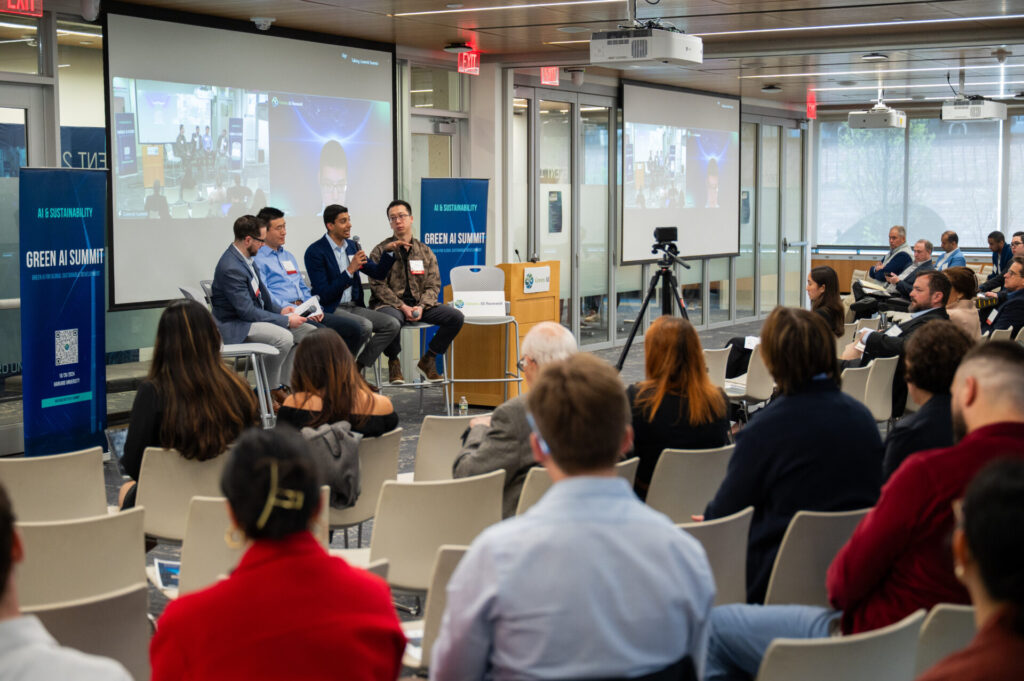
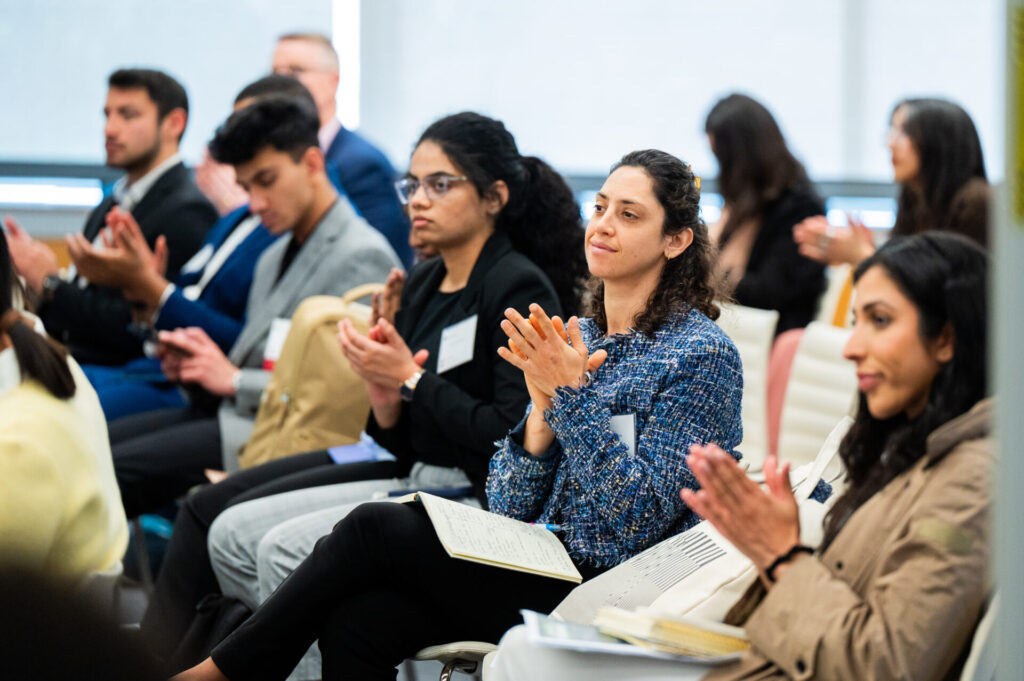
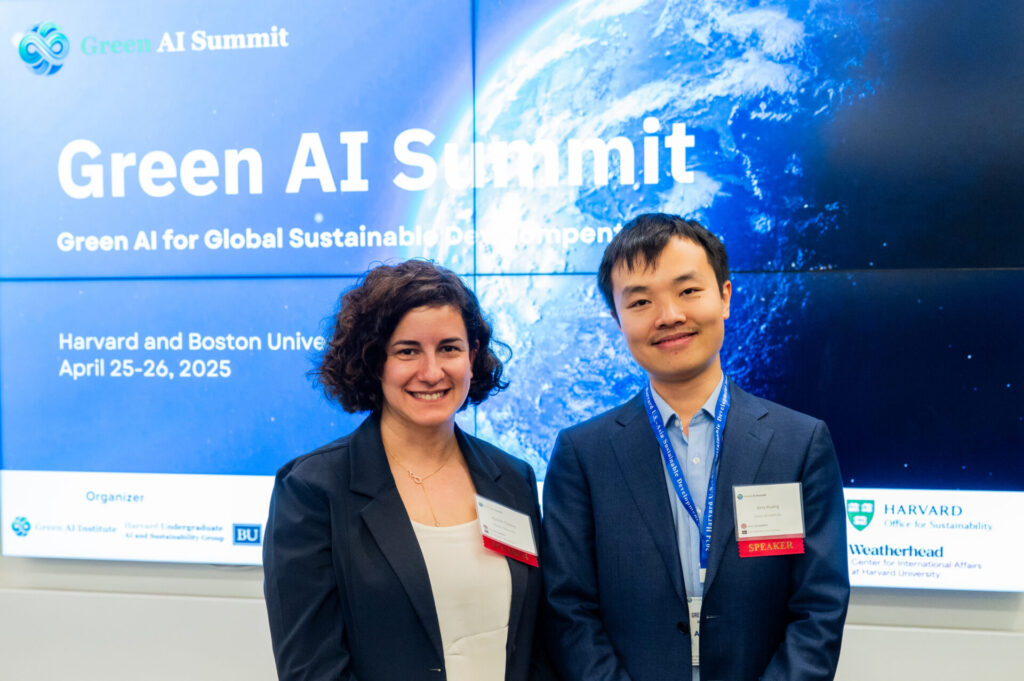
April 25–26, 2025 — Cambridge and Boston – The Second Green AI Summit, organized with leadership from the Harvard Undergraduate AI and Sustainability Group, drew more than 400 in-person attendees and over 6,000 online participants to Harvard University and Boston University. Supported by the Harvard Salata Institute, the Harvard Office for Sustainability, the Center for International Development, BU’s Center for Information and Systems Engineering, and several other campus and industry partners, the summit brought together leaders from government, academia, and industry to examine how artificial intelligence can be aligned with global sustainability goals.
The student organizing team began laying the groundwork for the event months in advance. They designed an ambitious Interview Series that featured pioneers in green computing, including the Massachusetts Green High Performance Computing Center, the Harvard Quantum Initiative, researchers at ARM and the University of Cambridge developing photosynthesis-powered microprocessors, and innovators at Jiva Materials creating fully recyclable circuit boards. These conversations, coupled with a series of “Green AI Lunches” with faculty experts, informed the summit’s panel topics and speaker invitations, which included prominent climate voices such as Senator Edward Markey and ITU Deputy Secretary-General Tomas Lamanauskas.
The first day of the summit, hosted at Harvard, opened with remarks that underscored both the urgency and opportunity of embedding sustainability into AI development. Panels examined the environmental footprint of data centers, the design of next-generation sustainable hardware, and the intersection of technology policy and climate action. One highlight was the launch of the Open Power AI Consortium, a collaboration aimed at creating efficient AI models for the power sector, alongside the introduction of Harvard’s Power and AI Initiative.
On the second day, at Boston University, speakers from Meta, Oracle, Hitachi, Eversource, and leading universities explored responsible AI design, AI-grid integration, and global sustainable development. Discussions ranged from AI-enabled grid forecasting to equitable access to green technologies. Closing reflections emphasized that meaningful progress at the intersection of AI and climate will require long-term, cross-sector partnerships and a commitment to youth leadership.
By the close of the summit, three major initiatives had been launched: the Green AI Index, the Open Power AI Consortium, and the Power AI Initiative at Harvard SEAS. Organizers also introduced a prototype data center carbon monitoring tool and set in motion collaborations that will extend well beyond the event. Participant feedback praised the summit’s high-quality discussions, cross-disciplinary networking, and tangible contributions to both research and policy directions.
The Second Green AI Summit demonstrated that student leadership, when paired with institutional support and global expertise, can catalyze not only dialogue but also action. With a foundation of strong partnerships and a clear vision, the student organizers are poised to continue advancing the role of AI in building a sustainable future.
The Garden Stewardship Initiative, Cultivating Connection: Community and Land-Based Learning at Harvard
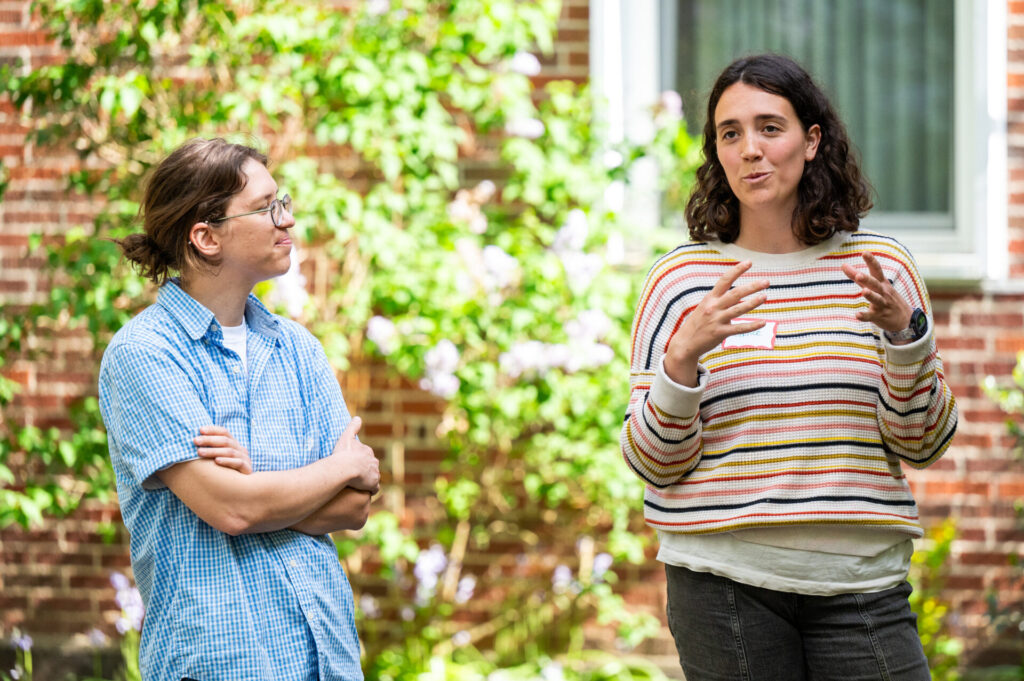
This spring, a new collaboration supported by the Salata Institute for Climate and Sustainability’s Climate Collaboration Grant Program brought Harvard students into deeper relationship with land, community, and Indigenous knowledge. Through hands-on workshops and reflective conversations, the Environmental Action Committee (EAC) at Phillips Brooks House Association (PBHA), in partnership with Harvard Divinity School (HDS), led a campus-wide initiative on gardening and land-based learning—inviting students to see sustainability not just as a policy, but as a relationship.
The initiative grew out of a Fall 2024 Salata Institute Climate Connections where Hailey and Oliver, rising juniors and EAC members, met Grace, a first-year Master of Divinity student. Together, they envisioned a space where students could learn from the land and each other, grounded in Indigenous traditions of stewardship. With Salata support, their vision quickly took root.
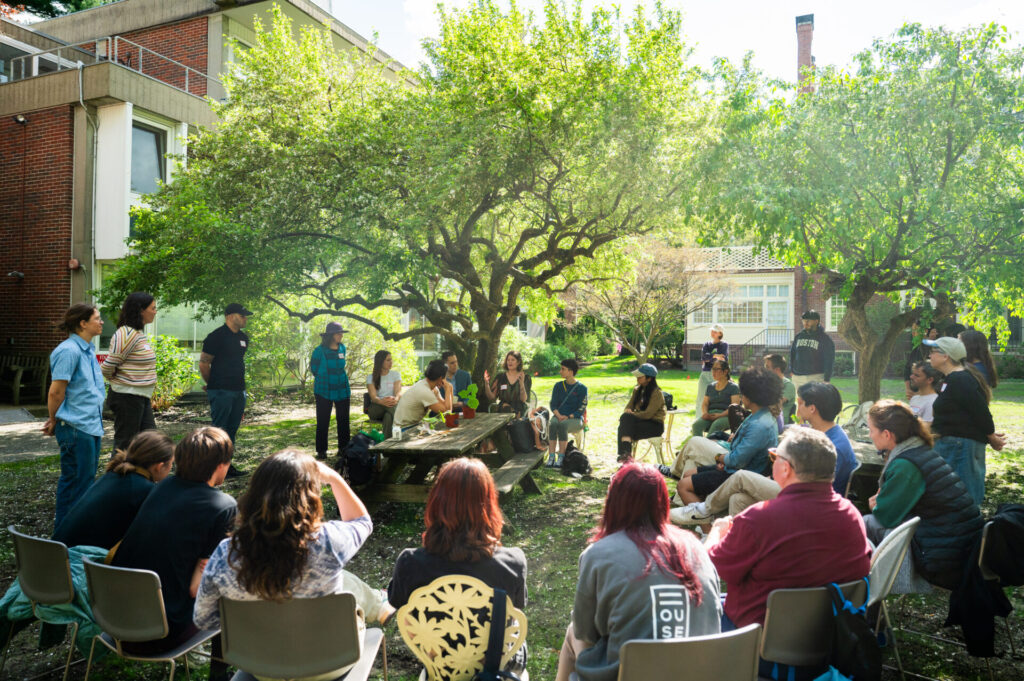
The series opened with a Native Teach-In featuring Anca Wilkening, a Ph.D. candidate in North American Religions, and Tyler White, a master’s student at the Graduate School of Design, who spoke on ancestral land and intentional care for place. A walking tour led by herbalist and Ph.D. candidate Natalia Schwien introduced students to the native and absent plants of Harvard’s campus, urging reflection on what it means to inhabit and know a place.
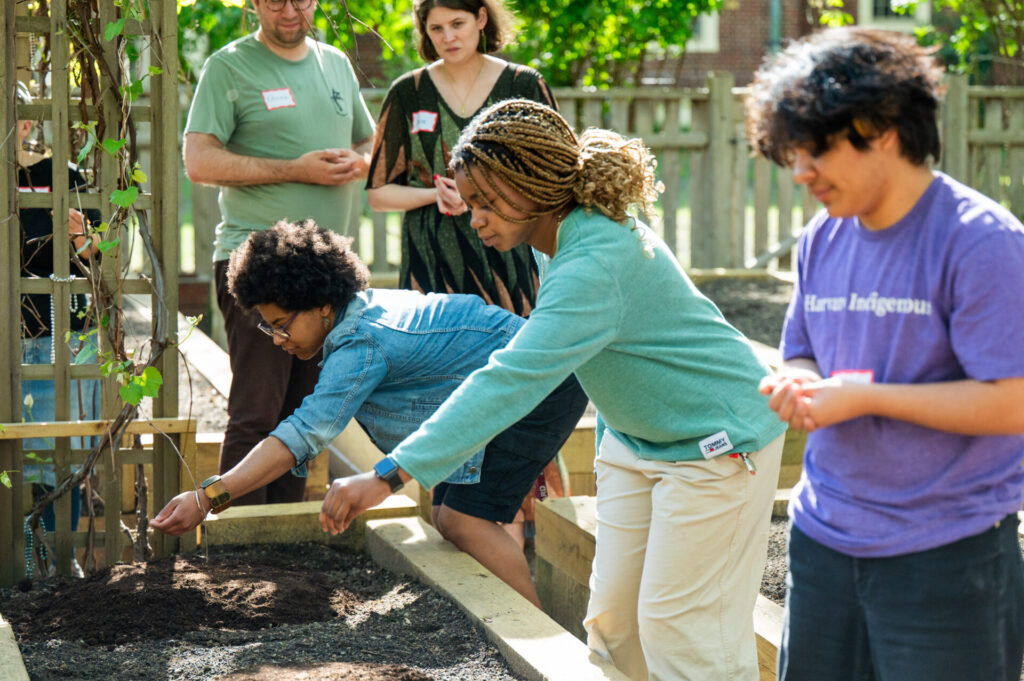
In later workshops, students worked the soil, composted, crafted biodegradable planters, and made “seed bombs” to take home. Over the course of the semester, the garden became a space of community, joy, and discovery—where students could slow down and dig in. The series culminated in a seed blessing co-hosted with the Harvard University Native American Program (HUNAP), where students planted corn, beans, and squash—the “Three Sisters”—from seeds gifted by local Indigenous communities. Before planting, each participant scattered tobacco over the soil, honoring Indigenous traditions of gratitude.
The HDS garden became more than a site of food—it became a site of care, learning, and reciprocity. Organizers noted new interest and support from students across schools, and expressed hope for continued cross-campus and community engagement. As Grace reflected, “So many people didn’t know [the garden] existed, but we’ve inspired people to be outside and offer reciprocity to Indigenous folks.” What began as a chance meeting now lives on as a growing community of practice, rooted in place and sustained by relationship.
Food4Thought Festival: A Global Catalyst for Food System Transformation
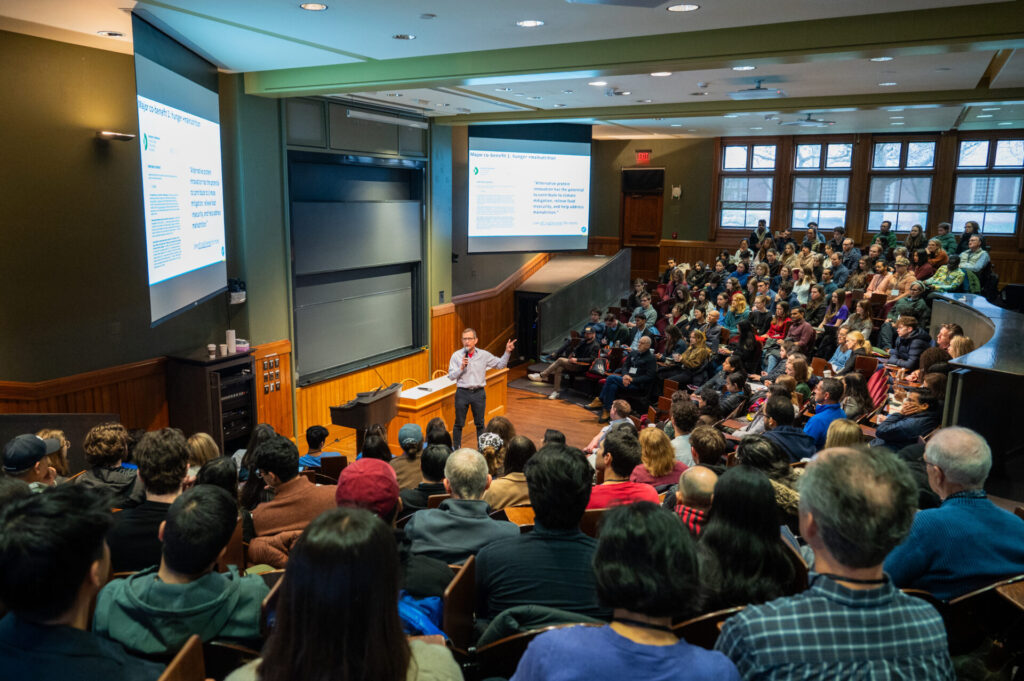
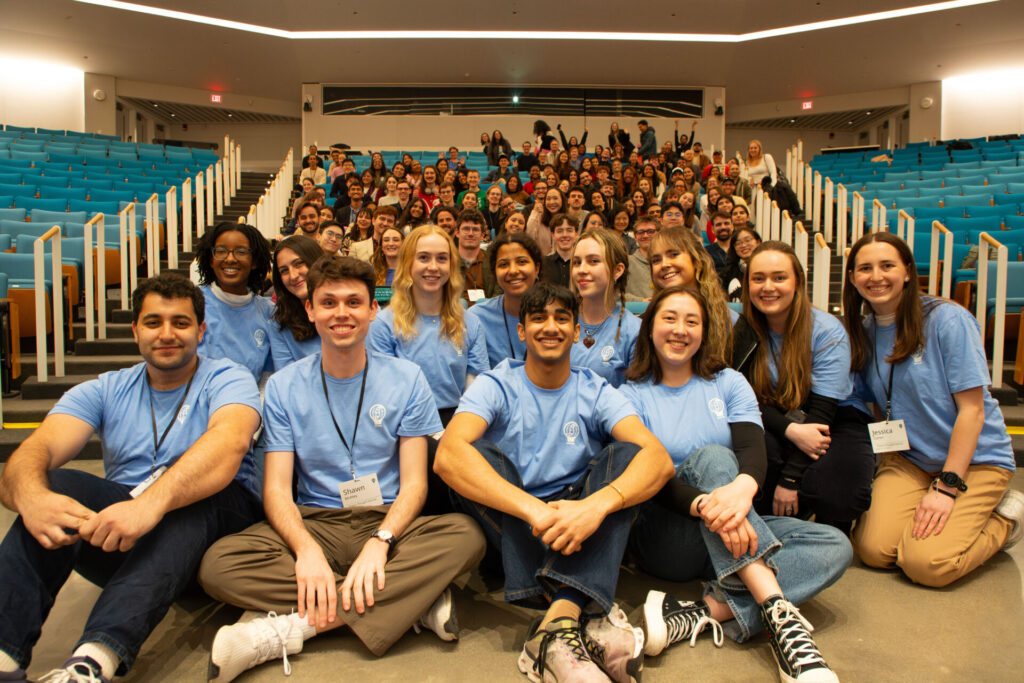
The Food4Thought Festival, hosted at Harvard University from April 11–13, 2025, brought together over 500 students from more than 60 universities and 10 countries to reimagine the future of food. With its bold mission to address the urgent challenges of climate change, public health, and environmental justice through food system reform, the student-led festival became a hub of learning, networking, and innovation.
Now in its second year, the festival centered around four key pillars: animal welfare, food security, environmental justice, and public health. Attendees engaged in a packed lineup of over 20 panels, workshops, and keynote sessions featuring 75+ global experts—from pioneering researchers to entrepreneurial leaders—exploring how to reduce animal-based food consumption and improve food system sustainability.
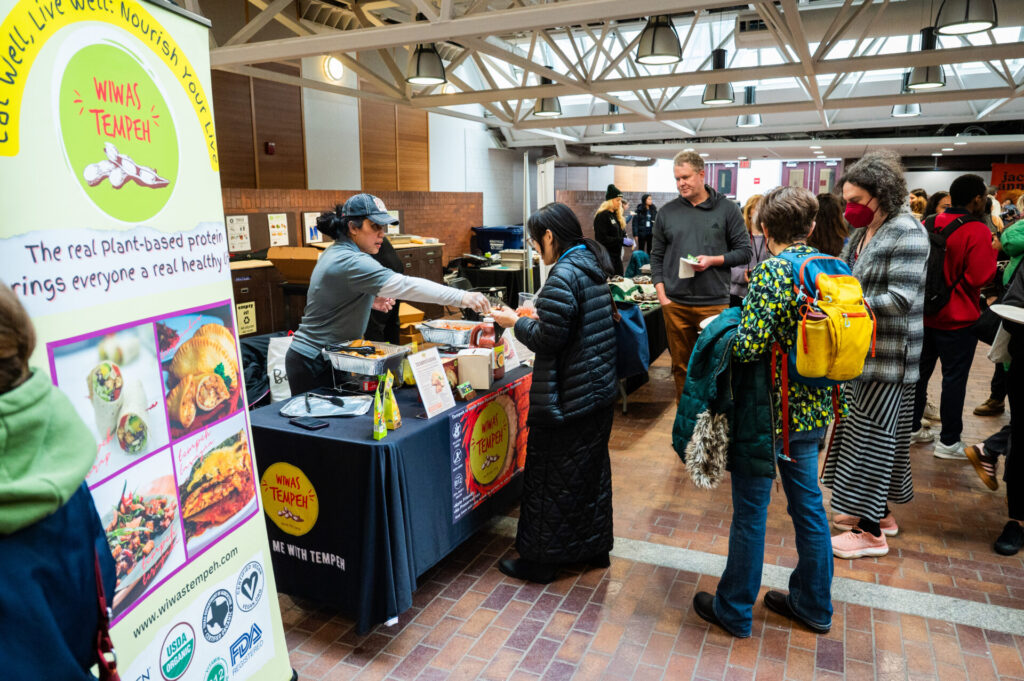
Unique to Food4Thought was its deeply interactive structure. The event featured a food expo with 10+ vendors, a research fair with over 40 student posters, and a career fair with 20+ organizations. Two innovation-focused challenges—the Cultivated Meat Technology Challenge and the Aquatic Foods Consulting Challenge—showcased student solutions to industry problems. Complementing these were the Idea Lab and Research Incubator, which supported over 200 students in developing their own sustainable food ventures and research projects.
Feedback from participants underscored the festival’s success in delivering high-impact experiences. Attendees reported deepening their understanding of food system challenges, building personal and professional connections, and gaining motivation to pursue sustainable food initiatives. Harvard students especially benefited from increased awareness of local and campus-specific opportunities to effect change.
With rising food-related emissions threatening global climate targets, Food4Thought aims to empower the next generation of leaders to push for bold and equitable transformation—on campus and beyond.