

Thu, Jul 23, 2026

Salata Transportation Labs
The Salata Transportation Labs convenes faculty, researchers, and professionals from across the University who are working at the intersection of climate, mobility, infrastructure, and equity. This interdisciplinary community draws participants from fields as diverse as business, economics, engineering, urban planning, and public policy, with a shared interest in advancing research and practice that supports a low-carbon, more accessible transportation future.
Through regular gatherings during the academic year, the group fosters connection across Harvard’s schools and units, encourages knowledge-sharing, and cultivates opportunities for collaboration. By building a stronger internal network of transportation-focused scholars and practitioners, this initiative also aims to strengthen Harvard’s engagement with external stakeholders—public agencies, private firms, and civil society organizations—who are shaping the future of sustainable transportation.
Summary
Transportation Research at Harvard
- Driving Toward Seamless Public EV Charging
- A team of researchers from Harvard and the MIT Center for Energy and Environmental Policy Research will work to accelerate progress on public EV charging as a gating requirement to achieving widespread EV adoption.
- Strengthening Communities
- The Cluster examines the social costs and benefits of changes in the energy system and proposes concrete ways communities, firms, and governments can navigate the wide range of fiscal, legal, regulatory, and development choices they face.
- Urban Mobility and Climate Change
- This cluster will examine how to optimize public transportation and electrify super polluters like two-stroke motorcycle engines; measure and reduce co-pollutants; and propose adaptation strategies to climate shocks such as flooding, heat, and storms.
- Sustainable Aviation Fuel
- A research group focused on developing and evaluating policies to advance the use of sustainable aviation fuels (SAFs) and other low-carbon solutions in the aviation sector. Recent studies include major policies’ effects on the production of biofuels and how new technologies can support the sector’s transition to cleaner, more sustainable energy sources.
Convened by the Climate Action Accelerator of the Salata Institute for Climate and Sustainability at Harvard University
Launched in spring 2025, the Harvard Climate Change and Transportation Systems Webinar Series is a monthly, virtual convening designed to explore how climate change intersects with the design, operation, and governance of transportation systems. Hosted by Professor Carole Voulgaris of Harvard's Graduate School of Design and Professor Jason Beckfield of Harvard’s Department of Sociology and the Salata Institute Research Cluster on Strengthening Communities, the series invites researchers, policymakers, and practitioners to engage with timely topics at the forefront of climate and mobility.
Each session is introduced and led by a Harvard researcher with guest speakers from across academia, government, and the transportation sector.
Goals of the Series:
- Equip state Departments of Transportation (DOTs), Metropolitan Planning Organizations (MPOs), and other infrastructure stakeholders with actionable tools and insights to support transportation planning for climate change mitigation, resilience, and adaptation.
- Support a growing community of transportation professionals committed to sustainable and equitable transportation systems.
- Create an avenue to bring practitioner-informed questions into academic research and dialogue, helping align real-world challenges with scholarly inquiry.
The recorded webinars are available here.
This series reflects Harvard’s ongoing commitment to bridge academic research with public impact in support of sustainability.
Fall 2026 webinar program coming soon.
The U.S. National Blueprint for Transportation Decarbonization (fact sheet) is a strategy for federal leadership to decarbonize the entire U.S. transportation sector. Published in 2023 and developed in collaboration by the Department of Energy, Department of Transportation, Department of Housing and Urban Development, and Environmental Protection Agency, these strategy guides offer actions that continue to be relevant to decarbonizing the transportation sector. Mode specific action plans are listed below.
- Aviation Climate Action Plan
- Convenient Transportation Action Plan Report (fact sheet)
- Efficient Transportation Action Plan Report (fact sheet)
- Maritime Action Plan Report (fact sheet)
- Medium- and Heavy-Duty Vehicles Action Plan Report (fact sheet)
- Rail Action Plan Report (fact sheet)
- U.S. Department of Transportation Webinar: Action Plans for Implementing the U.S. National Blueprint for Transportation Decarbonization
Other National Strategy Resources
- Transportation Briefing Book by the National Caucus of Environmental Legislators.
- U.S. Department of Transportation Readout: Workshop on Crafting a National Climate Change Research Agenda for Transportation
- U.S. Department of Energy, U.S. Department of Transportation, and U.S. Department of Agriculture Sustainable Aviation Fuel Grand Challenge Roadmap
- U.S. Department of Transportation Webinar: Advancing Climate Change Research and Technology at DOT
- U.S. Department of Transportation Webinar: Climate Equity and Environmental Justice
- U.S. Department of Transportation 2024-2027 Climate Adaptation Plan
Transportation systems are vulnerable to extreme weather and climate disasters. The resources below provide actionable techniques to assess vulnerability and increase resilience to natural hazards. Many resilience projects additionally have climate mitigation co-benefits.
Facility Specific
- Climate Change Adaptation for Pavements from the Federal Highway Administration.
- Pavement Resilience from the Federal Highway Administration.
- Trails as Resilient Infrastructure from the Federal Highway Administration.
- Airport Climate Adaptation and Resilience from the Transportation Research Board (TRB) Airport Cooperative Research Program.
- Rail Resiliency Planning from the Federal Railroad Administration.
- Transit Resilience Guidebook from the Federal Transit Administration.
Planning, Risk Assessment, and Asset Management
- Vulnerability Assessment and Adaptation Framework from the Federal Highway Administration.
- Addressing Resilience to Climate Change & Extreme Weather in Transportation Asset Management from the Federal Highway Administration.
- Building Resilient Infrastructure: How to Create Strong and Adaptable Transportation Systems from the U.S. Department of Transportation.
- Integrating Resilience into the Transportation Planning Process: White Paper on Literature Review Findings from the Federal Highway Administration.
Resilience to Natural Hazards
- Highways in the Coastal Environment from the Federal Highway Administration.
- Highways in the River Environment: Floodplains, Extreme Events, Risk, and Resilience from the Federal Highway Administration.
- Geohazards, Extreme Weather Events, and Climate Change Resilience Manual from the Federal Highway Administration.
- Integrating Natural Hazard Resilience into the Transportation Planning Process from the Federal Highway Administration.
- Nature-based Resilience for Coastal Highways from the Federal Highway Administration.
- Analytical Approach for Transportation Assets Risk and Resilience Analysis from Texas A&M University.
- Transportation Engineering Approaches to Resiliency Study from the Federal Highway Administration.
U.S. Department of Transportation Webinars
- Climate Adaptation and Resilience in Transportation
- Enhancing Transportation Resilience
- Resilient Transportation Infrastructure
- Climate Change and Transportation 101
Analysis Tools
- Resilience and Disaster Recovery Tool created by the U.S. Department of Transportation.
Actions to reduction of transportation sector emissions often leverage interactions between the energy and transportation sectors. The resources below provide actionable techniques and analysis tools focused on greenhouse gas emission reductions and development of electric vehicle infrastructure.
Resources
- Reducing Greenhouse Gas Emissions: A Guide for State DOTs created by the Transportation Research Board (TRB) National Cooperative Highway Research Program.
- Addressing Transportation’s Impact: A Starter Guide to Reducing Transportation Greenhouse Gas Emissions created by the U.S. Department of Transportation.
- Charging Forward includes urban and rural focused toolkits for planning and funding electric mobility infrastructure created by the Joint Office of Energy and Transportation.
- The Federal Highway Administration website and briefing regarding renewable energy in highway right-of-way.
- Integrating GHG Assessment and Reduction Targets in Transportation Planning created by the U.S. Department of Transportation.
- Addressing Greenhouse Gas Emissions through Transportation Planning created by the Federal Highway Administration.
- U.S. Department of Transportation Webinar: Advancing Low Carbon Materials
Analysis Tools
- EVI-Pro is an electric vehicle infrastructure projection tool created by the National Renewable Energy Laboratory and is accompanied by the simplified EVI-Pro Lite.
- The Alternate Fuel Life-Cycle Environmental and Economic Transportation (AFLEET) Tool created by the Argonne National Laboratory allows examination of environmental and economic costs and benefits of alternative fuel and advanced vehicles.
- Market Acceptance of Advanced Automotive Technologies (MA3T) is a market simulation model for the DOE Vehicle Technologies Program created by Oak Ridge National Laboratory.
- The Federal Highway Administration’s Infrastructure Carbon Estimator (ICE) (request access) provides life cycle estimates of energy and GHG emissions based on national emission and energy use factors for materials and construction activities. Minnesota DOT has developed the Minnesota Carbon Emissions Tool to calculate emissions reduction potential of 26 project types, and a Minnesota specific version of the Federal Highway Administration’s Infrastructure Carbon Estimator (ICE).
- The Life Cycle Assessment (LCA) Pave tool created by the Federal Highway Administration can be used to assess environmental impacts of pavement material and design considerations.
- MOtor Vehicle Emission Simulator (MOVES) is an emission modeling system created by the U.S. Environmental Protection Agency that estimates emissions for mobile sources at the national, county, and project level for criteria air pollutants, greenhouse gases, and air toxics.
- The Energy and Emissions Reduction Policy Analysis Tool (EERPAT) created by the Federal Highway Administration is a screening tool to compare, contrast, and analyze various greenhouse gas (GHG) reduction policy scenarios for the transportation sector at a state level. It estimates GHG emissions from surface transportation, accounting for both fuel and electric vehicles.
- The Congestion Mitigation and Air Quality (CMAQ) Emissions Calculator Toolkit created by the Federal Highway Administration provides projections of emissions reductions associated with various types of transportation projects, including pedestrian improvements, electric vehicle and alternative fueling infrastructure, managed lanes, and adaptive traffic control.
- The Aviation Environmental Design Tool created by the Federal Aviation Administration models aircraft performance in space and time to estimate fuel consumption, emissions, noise, and air quality consequences.
MORE NEWS


Simulating Impacts of Trump Policy Changes on Electric Vehicle (EV) Adoption
Harvard economists evaluate the impacts of recent and potential policy changes on EV adoption and carbon emissions, using a joint model of consumer vehicle choice and charging station supply.
Mon, Jul 6, 2026
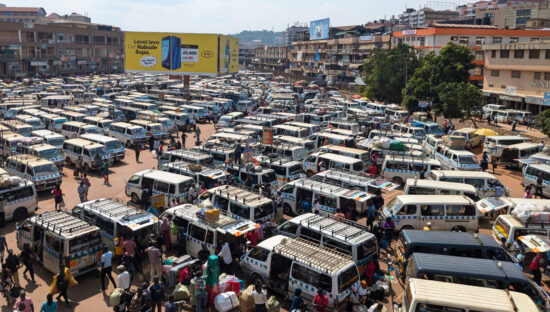
Kampala’s minibuses waste hours in line. A new experiment asks why
An economist goes inside East Africa’s minibus system to test what could make urban transport faster, fairer, and less polluting.
Tue, Mar 10, 2026

How trash could fuel cleaner takeoffs
Turning city waste into jet fuel could trim aviation’s footprint. Unlike other biofuels, it does not use cropland.
Tue, Nov 18, 2025

Want Americans to love EVs? Fix this.
U.S. consumers aren’t thinking about daily needs when buying a car, says former GM chief economist
Wed, Oct 15, 2025
start your Research Initiative
With the Salata Institute for Climate and Sustainability, Harvard University is mobilizing to meet the global climate challenge.