

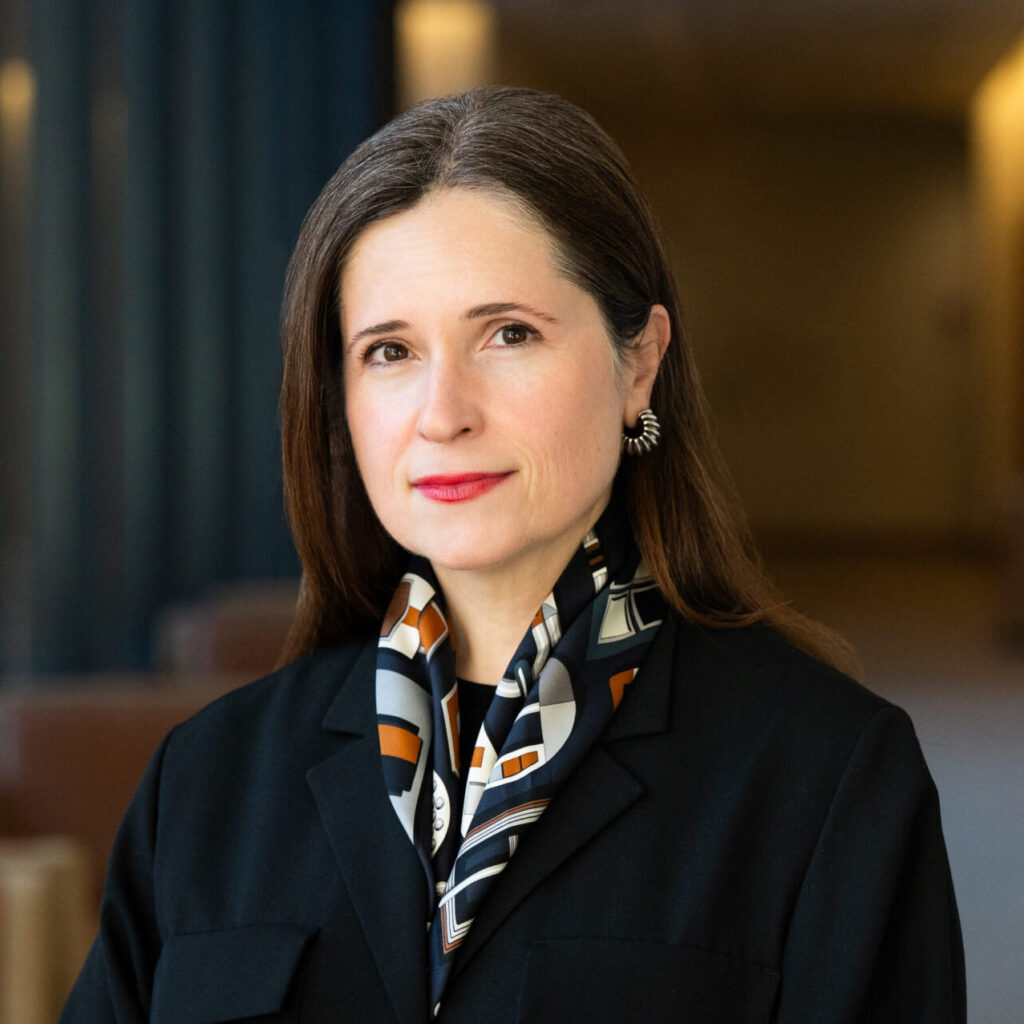
Didem Nisanci is a Senior Fellow with the Global Climate Policy Project at Harvard and MIT, where her work focuses on the intersection of climate policy, geoeconomics, and the global dynamics shaping the clean-energy transition.
From 2021 to 2025, Ms. Nisanci served as Chief of Staff to U.S. Treasury Secretary Janet L. Yellen. As the Secretary’s principal advisor, she oversaw Treasury’s domestic and international agenda across some of the most consequential economic and financial challenges of recent years, including the 2023 regional banking turmoil, multiple debt-limit negotiations, sanctions and price-cap design in response to Russia’s invasion of Ukraine, and the implementation of the Inflation Reduction Act’s climate and clean-energy provisions. She conceived and established Treasury’s first Climate Hub, driving climate policy, research and initiatives across the Department and integrating climate-related financial and economic priorities into Treasury’s domestic and international efforts, cross-agency partnerships, and multilateral engagements. She coordinated Treasury’s engagement with the Federal Reserve, U.S. financial regulators, and the White House, and oversaw the Department’s international outreach with the G7, G20, IMF, and World Bank.
Before her Treasury appointment, Ms. Nisanci was one of the founding executives of the Task Force on Climate-Related Financial Disclosures (TCFD), where she led the Secretariat responsible for mainstreaming climate-related financial risk into capital markets, corporate governance, and investor decision-making. Under her leadership, the TCFD evolved from an emerging initiative into a widely adopted global framework that shaped disclosure regimes and sustainable finance practices across major financial institutions, corporations, and regulators.
Earlier in her career, Ms. Nisanci held senior leadership roles at the U.S. Securities and Exchange Commission, and the U.S. Senate Committee on Banking, Housing and Urban Affairs.
The Salata Institute
The Salata Institute supports interdisciplinary research that leads to real-world action, including high-risk/high-reward projects by researchers already working in the climate area and new endeavors that make it easier for Harvard scholars, who have not worked on climate problems, to do so. Faculty interested in the Climate Research Clusters program should note an upcoming deadline for concepts on April 1, 2024.