

Making room for data centers without derailing the energy transition
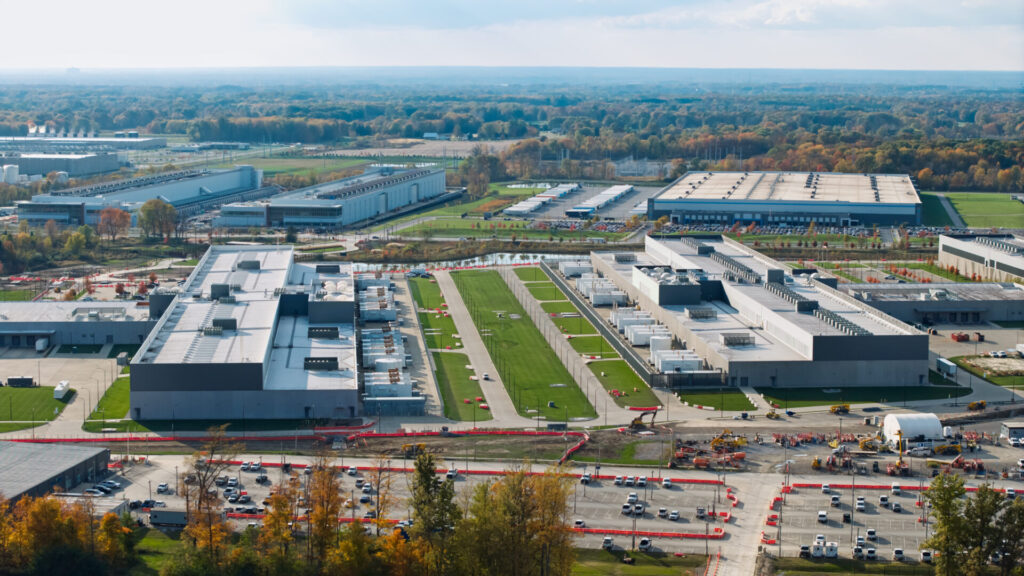
The rapid growth of data centers is adding enormous new demands to power grids already under pressure to connect renewable energy, retire fossil-fuel plants, and electrify transportation and buildings.
A recent paper in Nature Communications proposes a different way to manage that strain: Instead of allowing developers to choose sites and then wait years in an “interconnection queue” while utilities determine whether the grid can handle them, grid planners would identify suitable locations in advance and require large data centers to operate within agreed limits.
Le Xie, the Gordon McKay Professor of Electrical Engineering at the Harvard John A. Paulson School of Engineering and Applied Sciences, and his colleagues tested the approach on a synthetic model designed to resemble a Texas-scale power system. In their model, they stress-tested the grid against the unusually large loads that some of the biggest AI data-center campuses are beginning to demand. They modeled facilities drawing 1 or 2 gigawatts of power – far larger than a typical data center, but in line with some of the largest projects now being planned. A 1-gigawatt facility can draw roughly as much electricity as 800,000 average American homes, and a 2-gigawatt facility twice that.
The researchers found that more locations could accommodate loads of that size if data centers agreed to cut or shift electricity use when the grid was under stress. In the simulation, this flexibility increased the number of viable sites by about 9 to 21 percent without meaningfully raising average power prices.
Former Energy Secretary Jennifer Granholm praised the study’s contribution to grid planning as a “pretty profound shift.”
“If flexibility is considered before projects enter the interconnection queue – not after – we can reduce congestion, lower system costs, and make better use of the grid we already have,” Granholm wrote on LinkedIn.
The authors argue that better siting could make room for some new data-center demand without requiring major transmission upgrades that could compete with the broader needs of the energy transition, while potentially cutting connection times from roughly five to eight years to 12 to 18 months. The results remain a proof of concept based on a simulated grid rather than the real Texas system.