

Landscapes of Methane: Photographs from Southwestern Pennsylvania
The site constitutes a stunning piece of photojournalism in which Julian explores the history of place, drawing upon his studies at Harvard and upon data acquired primarily from airborne methane detectors.
Julian posted an essay providing background to the project in January 2026.
Julian’s senior thesis at Harvard documented the history of the Cumberland Mine, in southwestern Pennsylvania — one of the primary sites featured in “Landscapes of Methane.” Combining archival research with video footage and oral history interviews, the project was the first “multimedia thesis” accepted by Harvard’s History department.
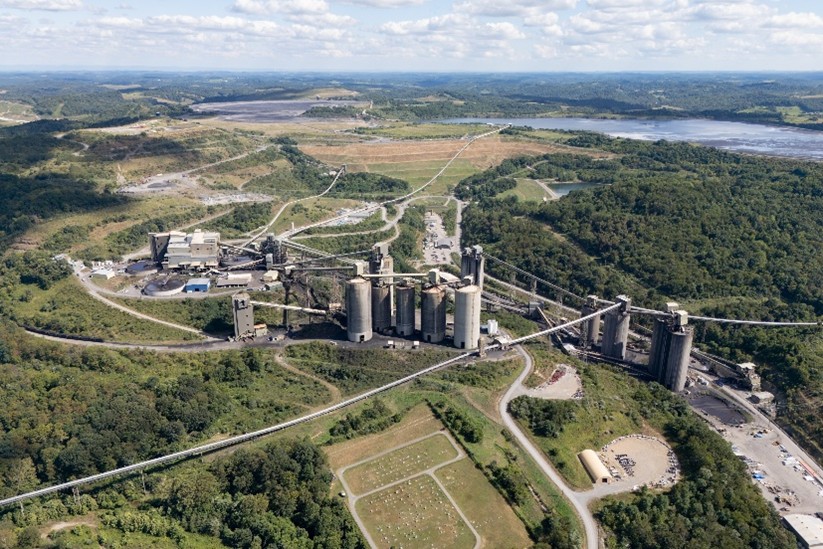
Printed versions of Julian’s photographs were exhibited as part of Harvard Climate Action Week in September 2025. They will remain on display at the Harvard University Center for the Environment (located on the 4th floor of the Harvard Museum of Comparative Zoology) through August 2026.
On the website, Julian thanks teachers and associates at Harvard and “…the people of Greene and Washington Counties [Pennsylvania] who welcomed me to their communities and generously shared their time and knowledge with me…” In particular, he acknowledges Emma Rothschild, Jeremy and Jane Knowles Professor of History and Director of the Harvard Center for History and Economics, his mentor and thesis advisor; and Steven Wofsy, Abbott Lawrence Rotch Professor of Atmospheric and Environmental Science, who provided help with generating images of methane emissions based on remote sensing data. The remote sensing data was acquired by aircraft and satellite sensors (MethaneAIR and MethaneSAT, developed at Harvard and deployed by the Environmental Defense Fund) and by the TROPOMI satellite (European Space Agency).
The Harvard Initiative on Reducing Global Methane Emissions, a research cluster of the Salata Institute for Climate and Sustainability at Harvard University, provided support for Professors Rothschild and Wofsy to incorporate remote-sensing data into historical studies of methane-emitting sites.