

From waste wool to building insulation
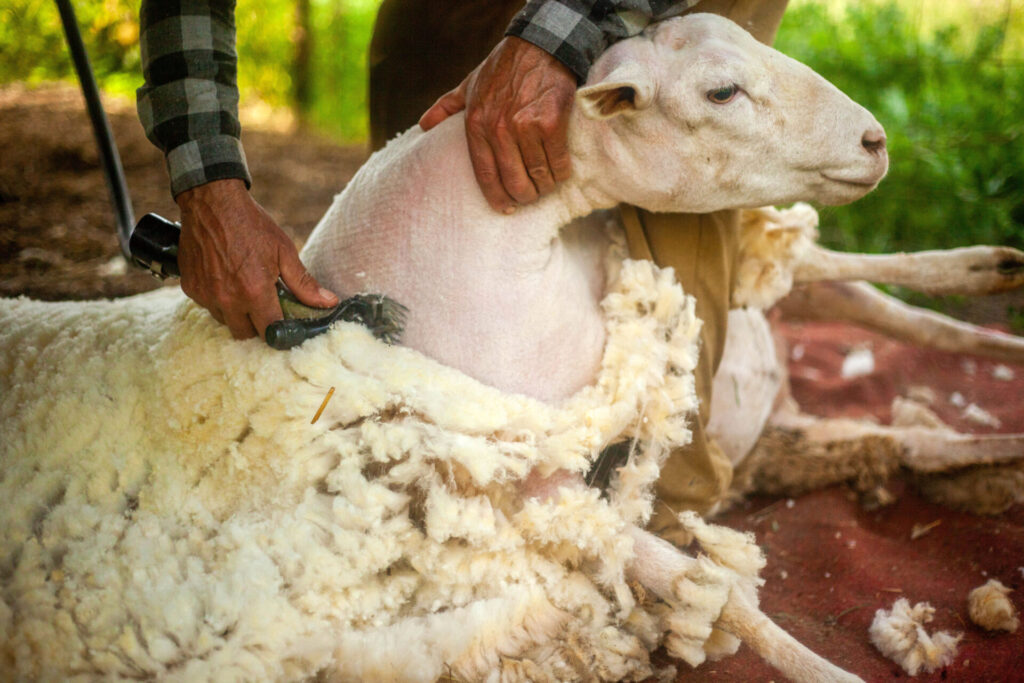
Wool waste is a large, underused resource. Nearly half of the roughly 2 billion kilograms of wool produced each year is discarded. Harvard researchers are turning that waste into an insulating building material. Their work upcycles pre-consumer scrap wool into rigid panels designed for exterior retrofit cladding – a use that could cut demand for carbon-intensive foams and fiberboards.
The project is led by Jonathan Grinham at the Harvard Graduate School of Design, with support from a Salata Institute seed grant.
As the team outlines in a new paper in Resources, Conservation & Recycling, the panels are still a research-stage material, but the early results are promising. Tests showed stiffness in the range of medium-density fiberboard, insulating performance relevant to building envelopes, and high water-resistance in some formulations. The carbon case depends on the source of the wool: Panels made from dedicated raw wool carry a much higher footprint, but panels made from waste wool show far lower embodied carbon.
The team is now scaling the process for the upcoming Oslo Architecture Triennial.