
get the brief in your inbox
Subscribe
New tool lets anyone audit a country’s methane claims
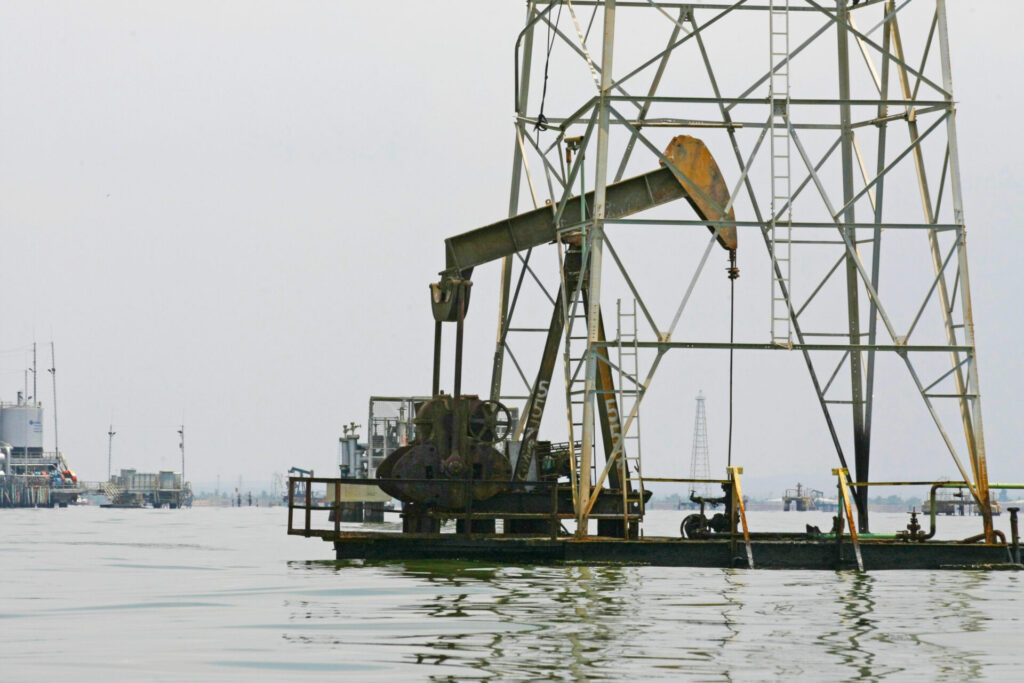
For years, countries have told the United Nations how much methane they emit using a kind of bottom-up bookkeeping: Count the cows and oil barrels, estimate the volume of trash, and multiply by standard emission factors.
Those ledgers can miss the mark, suggest measurements from aircraft and satellites. But the tools to translate that data into national emissions estimates have largely remained the domain of specialists.
A team at Harvard is changing that. In a recent Nature Communications paper, the researchers describe their Integrated Methane Inversion, or IMI, an open-access system designed to let governments, researchers and civil society independently evaluate national methane claims against what satellites detect in the atmosphere, year after year.
“This is totally open source, totally transparent, and it’s user-friendly,” said James East, the lead author. “It makes the data much more accessible and reproducible – for someone without a Ph.D. in the area.”
The team’s first global run of the system, for 2023, found large mismatches between official inventories and what atmospheric observations imply. In about a quarter of the 161 countries examined, emissions appeared more than 50 percent higher than reported. In Venezuela’s oil-and-gas sector, for example, they find emissions 4.8 times higher; in Turkmenistan, 3.8 times higher; and in the United States, the largest absolute emitter, about 1.55 times higher.
Venezuela stood out for more than the size of the revision. The researchers estimate that as much as 29 percent of the gas produced there may be escaping to the atmosphere, a level far higher than average. The figure – known as “methane intensity” – is 2.1 percent in the U.S. and 0.1 percent in Qatar, a country with modern and concentrated infrastructure to capture gas. “The findings show emissions from the oil-and-gas sector varying by two orders of magnitude between countries,” said Daniel Jacob, a co-author. “Some countries are doing emissions abatement right. If others followed suit, then we would really have negligible emissions from the sector.”
Methane has become a key climate target because cutting it is one of the fastest ways to slow near-term warming. The gas traps far more heat than carbon dioxide in the first few decades after it is released, and it is responsible for roughly 30 percent of the rise in global temperatures since the Industrial Revolution. Methane is the main component of natural gas and a byproduct of oil, gas, and coal extraction; it is also emitted by livestock, rice production, and decomposing organic matter in landfills.
IMI is built around a top-down approach that starts with methane measured in the air and works back to the emissions that most likely produced it. The system begins with national estimates reported under the U.N. Framework Convention on Climate Change (UNFCCC) as a baseline, adds sources often missing from national accounts – like hydroelectric reservoirs – and blends observations from multiple satellites that correct one another’s biases. It also incorporates high-resolution point-source detections to emphasize known hotspots. Those inputs are then run through an atmospheric transport model that simulates how methane moves and is removed, and the system repeatedly adjusts emissions in different places to see what best matches what satellites observe.
In the end, IMI produces updated emissions maps along with country and sector totals – and uncertainty ranges that show how confident the system is in each estimate. The researchers’ global 2023 results suggest anthropogenic methane emissions of about 375 million metric tons, roughly 15 percent higher than official figures. They also report sharp sector-by-sector differences: Global estimates rose for oil and gas (by 32 percent), livestock (17 percent), waste (16 percent) and rice (26 percent), while coal-mine emissions were revised downward (23 percent). Hydroelectric reservoirs, often omitted from national inventories, contributed about 6 percent of global anthropogenic methane.
East and Jacob argue that the paper’s most lasting contribution is not a single year’s emissions tally, but a repeatable system for accountability.
IMI can flag where national inventories appear too high, too low, or out of date – consistently, across countries and sectors – giving governments a way to revisit activity data and emission factors, improve their submissions to the UN, and track whether emissions are moving in the direction promised in their climate plans. The researchers add that the system is meant to keep working even when politics shift: If a country withdraws from the UNFCCC, as the U.S. has just done, the method can still draw on other public bottom-up data and satellite observations to update emissions year after year, supporting independent accounting outside the treaty process.
-As told to David Trilling