

A pond, a city, and a century-old water conflict
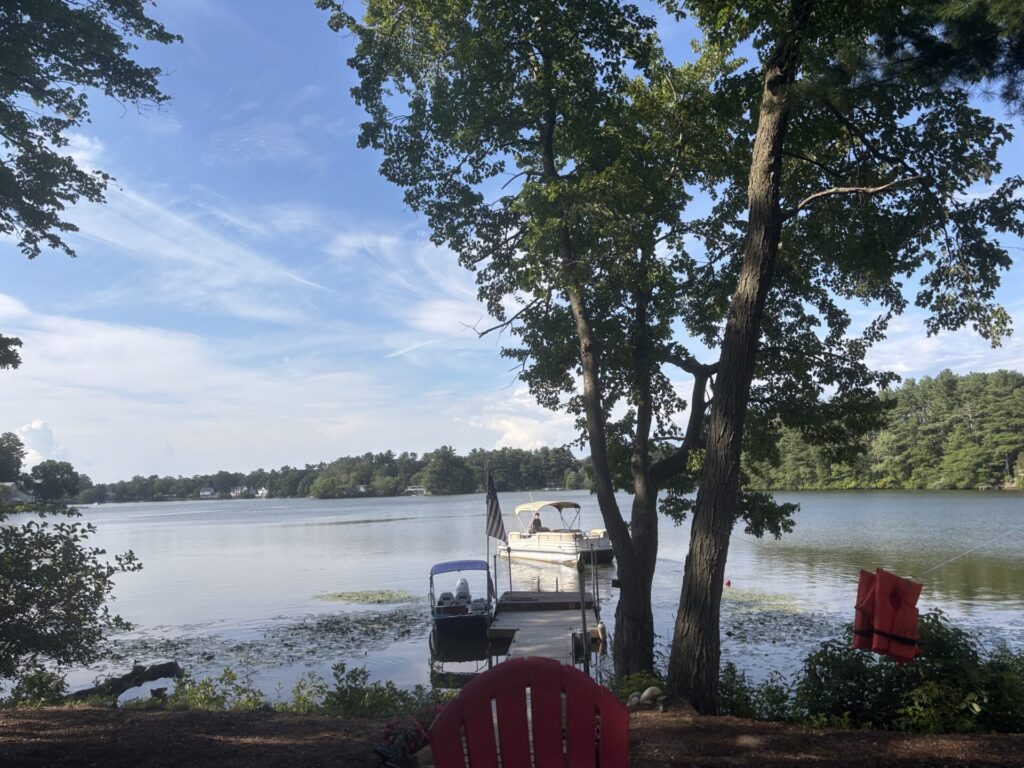
Drive 30 miles south of Boston and you’ll find Furnace Pond, a modest, tree-lined body of water in Pembroke, Massachusetts. On a summer afternoon it looks like any other small New England lake. But talk to the people who live around it, and a different picture emerges: a pond in decline, quietly drained to supply water to a city 15 miles away.
Since the 1930s, the City of Brockton has drawn water from Furnace Pond to supplement Silver Lake, its primary drinking water reservoir. The arrangement was formalized decades ago in a 1964 state law that set withdrawal limits intended to protect pipes and infrastructure and not the health of the pond itself. Every winter and spring, water flows out of Furnace Pond and into Silver Lake, often faster than it can naturally recharge.
These effects have accumulated. Local fishermen report fewer catches each year. Water quality data collected over the past two summers shows dissolved oxygen levels dropping too low for many fish to survive, and warm and shallow enough to fuel algae blooms more frequently than in neighboring ponds. The pond also sits along an active herring migration route, adding fish passage to the list of concerns tied to its declining health. Pembroke also spends around $50,000 a year on alum treatments for algae blooms, a cost the town bears alone, despite the diversions benefiting Brockton.
Across the Massachusetts South Shore, water scarcity has become a recurring feature of summer with the region having been in some level of drought since September 2024, according to the Massachusetts Drought Management Task Force. Neighboring towns often apply inconsistent restrictions even when they draw from the same aquifer. This patchwork, watershed advocates say, undermines conservation efforts across the board.
This past summer, as part of the Salata Institute’s Climate Policy Summer Internship Program, I worked with the office of Massachusetts State Senator Dylan Fernandes researching water diversions in Furnace Pond. I spent time with members of the Pembroke Watershed Association, boating on the pond and learning about changes that have happened over generations. One recurring frustration stood out: Pembroke does not get notice when Brockton diverts water. One resident showed us nearly three feet of receded shoreline in their yard, which they attributed to a diversion earlier in the spring.
Based on the history of Brockton’s water system and conversations with residents, a few ideas for addressing the problem surfaced repeatedly. One is replacing the outdated 1964 elevation threshold with a real ecological standard paired with Pembroke’s own environmental health studies, including fish-tissue testing to gauge water quality’s impact on local fisheries. Separately, communication has emerged as one of the biggest issues on its own: Pembroke’s Select Board has asked for a more formal role in reviewing future diversions, along with advance notice before any decision is made. This is compounded by inconsistent drought-level standards, with neighboring water bodies reporting different levels despite similar conditions.
Resolving the regional water conflict also requires recognizing that Brockton’s demands are driven by critical public health necessities, an absence of local supply alternatives, and increasingly frequent droughts. Brockton is facing the reality of aging, over-strained infrastructure, making the situation a tragic zero-sum choice for the Pembroke ecosystem.
These are not the first attempts at reform. A 2017 bill, H.2111, and a 2025 bill, H.984, both stalled in the Massachusetts legislature. Neither generated enough momentum to pass, though the 2025 bill made it further due to narrower language, clearing the committee before losing steam.
Furnace Pond is small, and Pembroke is a small town. It would be easy to see this as a local dispute over water rights. But the same tensions show up throughout New England’s aging water infrastructure, much of it governed by laws written before serious attention to ecosystem health. The same is true of drought management across the region, where inconsistent town-by-town rules are now being addressed through a broader regional bill, H.5219.
It has been inspiring to witness local politics in action, especially for a cause so deeply rooted in a region’s human and ecological history. Furnace Pond is a case study for water issues playing out across New England, and a reminder that small, local actions can carry a weight far beyond their size.
Caroline Hana is a master’s student in the Design Engineering program at the Harvard Graduate School of Design and the John A. Paulson School of Engineering and Applied Sciences.