

Faculty and students from across Harvard discuss research on methane-emissions reduction
The Harvard Initiative on Reducing Global Methane Emissions – one of seven University-wide research clusters supported by the Salata Institute for Climate and Sustainability at Harvard University – began conducting research on reducing methane emissions in summer 2023. Directed by Robert Stavins, A.J. Meyer Professor of Energy and Economic Development at Harvard Kennedy School, the Initiative is structured as a portfolio of projects. Most of the Initiative’s 26 projects (as of October 2026) include researchers from multiple academic disciplines and Harvard schools, with a view to facilitating novel, research-based approaches to reducing emissions.
The Initiative’s goal is to achieve meaningful and sustained progress in methane-emissions reductions through research and effective engagement with key stakeholders. The overall theme of the Initiative is to translate science into action. – to deliver research-based insights that facilitate design and implementation of emission-reduction policies and programs.
Further information on each of the Initiative’s projects – and the Initiative as a whole – is in a presentation here.
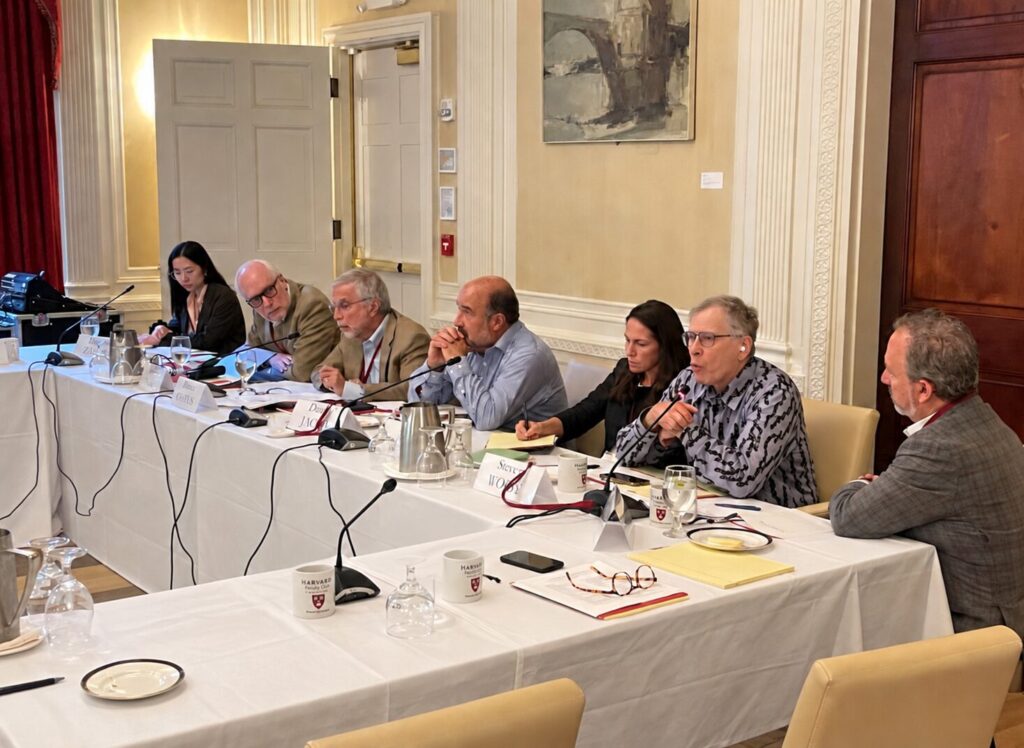
On October 16, 2026, the Initiative hosted a full-day retreat for Harvard researchers addressing methane so that they could exchange insights across the Initiative at the end of its third year. Seventeen faculty members, seven research fellows, five doctoral students, one undergraduate student, and five staff members from the Initiative and Salata Institute participated.
The agenda and participant list are posted at the bottom of this page – along with speakers’ presentations.
The day began with a conversation among several faculty participants for whom methane is the primary – or a very important – focus of their research agenda. Robert Stavins moderated the discussion. Participants were:
- Daniel Jacob, Vasco McCoy Family Professor of Atmospheric Chemistry and Environmental Engineering and the director of several projects supported by the Initiative. Jacob and his group focus almost exclusively on satellite-based detection and attribution of methane emissions.
- Carrie Jenks, Executive Director, Environmental and Energy Law Program (EELP), Harvard Law School. EELP focuses in part on methane-emissions regulation, primarily in the United States.
- Jim Matheson, Senior Lecturer of Business Administration, Harvard Business School (HBS). Matheson and HBS Professor Peter Tufano conducted a day-long convening on May 5, 2026 with representatives of firms developing technology to reduce methane emissions.
- Steven Wofsy, Abbott Lawrence Rotch Professor of Atmospheric and Environmental Science. Wofsy focuses primarily on methane emissions and was Principal Investigator of MethaneSat, launched on March 4, 2024 and managed by the Environmental Defense Fund.
The panel discussed the trajectory of global methane emissions, progress toward the Global Methane Pledge target, technological advances in detection of emissions, business and investment models for advancing innovation in methane abatement technology, and other topics.
There followed three panels in which participants presented research results related to particular sectors emitting methane: agriculture (both cattle and rice production), oil and gas, and landfills and food-waste management. See the agenda and participant list – along with presentations by most speakers – posted at the bottom of this page.
Finally, David Cash – Director of the Salata Institute’s Climate Action Accelerator – discussed the Accelerator’s role in bringing research results to bear on action to forge effective solutions to climate change. The Accelerator identifies critical climate problems, homes in on promising solutions, and convenes the full spectrum of stakeholders who have the authority and the resources to act.
The retreat was a significant opportunity for exchange of research results, methods, and insights across projects. The discussion will surely continue over the course of the 2026-27 academic year.
Resources:
• Harvard Methane Initiative website – research publications and news about the Initiative’s many outreach engagements.
• Research Briefs: Abstracts of all research briefs released by the Initiative, with links to the corresponding posts and publications.