

Methane’s 250th birthday
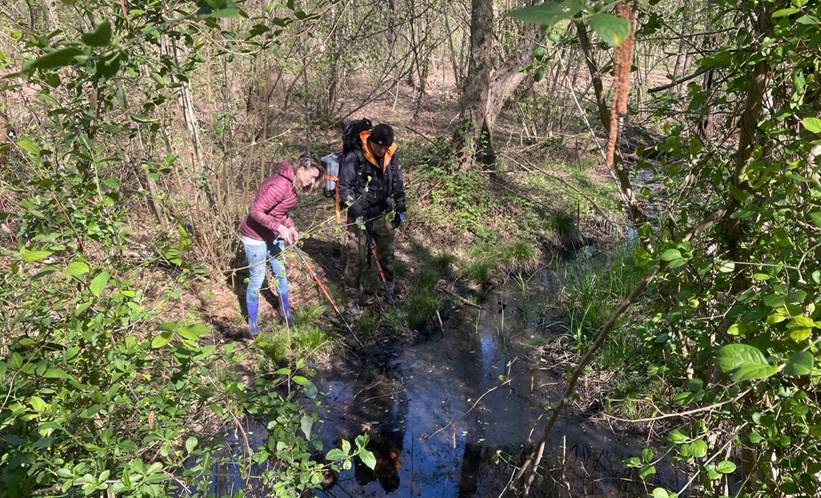
Two hundred and fifty years ago, Alessandro Volta, who is perhaps best known for inventing the electric battery, noticed something curious in the Angera Marshes in northern Italy: bubbling mud. After capturing the fumes escaping from the bubbles, he discovered that the vapors were flammable and surmised that they were the result of decomposing organic matter. What Volta discovered is now known as methane, and this year marks the 250th anniversary of his discovery.
Today, methane has entered the spotlight because of its potential as an “emergency brake” for slowing climate change. Although it is more powerful at trapping the sun’s radiation than CO2 on a molecule-per-molecule basis, methane remains in the atmosphere for only about nine years, versus hundreds of years for CO2. This short residence time means that methane reductions today can lead to climate benefits in just a decade, slowing climate change, and buying time for developing CO2 removal technology.
To mark the 250th anniversary of Volta’s discovery and to brighten the spotlight on methane, members of the global climate science, policy, government, and philanthropic communities gathered in early April 2026 at the European Commission’s Joint Research Center in Ispra, Italy, just a few miles from the original discovery, for a conference titled Methane250. The purpose of the meeting, hosted by a coalition led by Spark Climate Solutions, was to initiate a dialogue among leading voices on methane science and policy, so that cutting edge science can be better used to inform policies that lead to real methane reductions. The three-day meeting featured science talks from experts who use satellite observations and complex models to understand methane’s sources and variability, panel discussions highlighting successes and challenges implementing methane-reduction policies, and poster sessions – and was complete with a 250th birthday cake for methane.
Two major themes at the meeting were quantifying the problem and implementing solutions. There is significant uncertainty in how much methane is emitted around the world and from what sources, and scientists presented their research on everything from the methanogen microbes that create methane to the satellites that measure it from space.
Research from Harvard University was center stage at the meeting. Daniel J. Jacob presented a keynote talk, “Methane Science: Past, Present, Future,” which highlighted his group’s research to improve national emission inventories and clarify the recent trends and global budget of methane emissions. Daniel is the Vasco McCoy Family Professor of Atmospheric Chemistry and Environmental Engineering in Harvard’s School of Engineering and Applied Science. He described the Integrated Methane Inversion, or “IMI,” an open-access software tool developed by the group to enable inverse analysis of satellite observations of methane.
I presented a poster about my recent research, with collaborators, using the IMI to develop and apply a worldwide system for evaluating national methane-emissions reporting under the Paris Agreement using satellite observations. We found that 15% of anthropogenic emissions are missing from national reporting. Reducing the gap between reporting and reality and from local to global scales, especially through improved measurement, monitoring, reporting, and verification efforts, was a common topic in the meeting dialogue.
Daniel Jacob’s and my research is partially supported by the Harvard Initiative on Reducing Global Methane Emissions, a Research Cluster of the Salata Institute for Climate and Sustainability at Harvard University.
A brief summarizing the research on the worldwide system that we presented in Ispra was released by the Harvard Methane Initiative and is available here.
Beyond the science, panel discussions highlighted the logistical challenges associated with implementing potential solutions on a broad enough scale to put a real dent in atmospheric concentrations of methane. For example: specialized cow feed can reduce methane emissions from the enteric fermentation in cows’ stomachs – a scientific success – but implementing policies to distribute new feed to cow herds globally is fraught with logistical, political, financial, and cultural hurdles.
The culmination of the meeting was the presentation of the Angera Declaration, a ten-point call to action on cooperation for methane reductions, to the global community. Currently signed by over 250 scientists, the declaration calls for more action and visibility on methane reduction, and can be signed by both scientists and non-scientists.
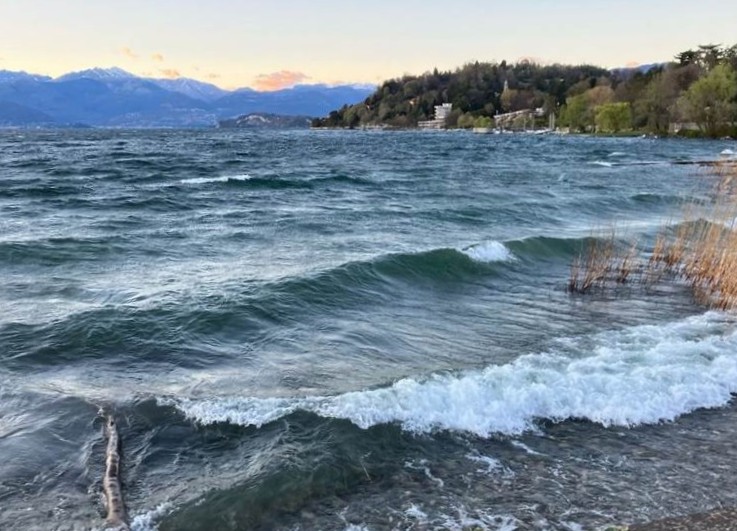
The conference ended with a field trip to the Angera Marshes on Lake Maggiore, after which the declaration was named, and the site where the discovery was made. While there, attendees saw for themselves the same bubbling mud that originally sparked Volta’s curiosity, now armed with knowledge about the gas those bubbles contain and its importance in Earth’s climate system.
James D. East is a Research Associate in the Atmospheric Chemistry Modeling Group at Harvard University, directed by Daniel Jacob, and a Remote Sensing Research Affiliate at the International Methane Emissions Observatory (IMEO) of the UN Environment Programme. His research uncovers drivers of change in the local to global atmospheric environment, using satellite observations of air pollutants and greenhouse gases, models of atmospheric chemistry, and inverse modeling.