

Fri, Jan 17, 2025
Salata Summer Research Funding Program
The Salata Summer Research Funding Program supports undergraduate and graduate students conducting summer research focused on climate, sustainability, or the environment.
The program offers three distinct funding tracks, supporting faculty-led research assistantships as well as independent undergraduate and graduate research projects.
Who: Harvard undergraduate and graduate students
When: Summer 2026
Funding: Up to $6,000 (varies by track)
Applications Open: January 26, 2026
Application Deadline: March 2, 2026 (5:00 PM)
Select the funding track below to learn more and apply.
Summary
Program Overview
The Salata Summer Research Funding Program supports undergraduate and graduate students who undertake summer research focused on climate, sustainability, or the environment. The program is designed to support a broad range of research pathways, from faculty-led research assistantships to independent undergraduate and graduate research projects.
Funding Tracks
The program offers three distinct funding tracks, allowing students to apply for the option that best aligns with their academic goals, level of study, and research interests.
- Track 1: Undergraduate Research Assistant (SURF Program)
- Track 2: Undergraduate Independent Research
- Track 3: Graduate Independent Research
Applicants should carefully review the eligibility criteria, application requirements, and selection criteria for the specific track to which they are applying.
Application Timeline
- Applications Open: January 26, 2026
- Application Deadline: March 2, 2026 at 5:00 PM
- Funding Decisions Announced: April 1, 2026
Program-Wide Requirements
All students who receive funding through any track of the Summer Research Funding Program are required to:
- Submit a mid-summer progress report to the Salata Institute
- Submit a final paper (2–4 pages) by mid-September summarizing the summer research, methods, data collected, and any research conclusions or preliminary analysis
- Participate in a Summer Research Poster Session in early October 2026
Program Considerations
Applicants should note the following program-wide considerations:
- Grant payments may be subject to tax withholding, depending on citizenship status
- Outside internships are not eligible for funding through this program
- All projects must be advised by a Harvard faculty member
- Applicants are strongly encouraged to apply for additional funding sources at other Harvard departments and centers
The Harvard University Center for the Environment gratefully acknowledges the generous support of Bertram Cohn ’47 and the Thomas B. AB 1943 and Joan Herzfeld HUCE Undergraduate Summer Research Fund.
MORE NEWS
Mon, Jan 13, 2025
Undergraduate Research Assistant Positions (SURF Program)
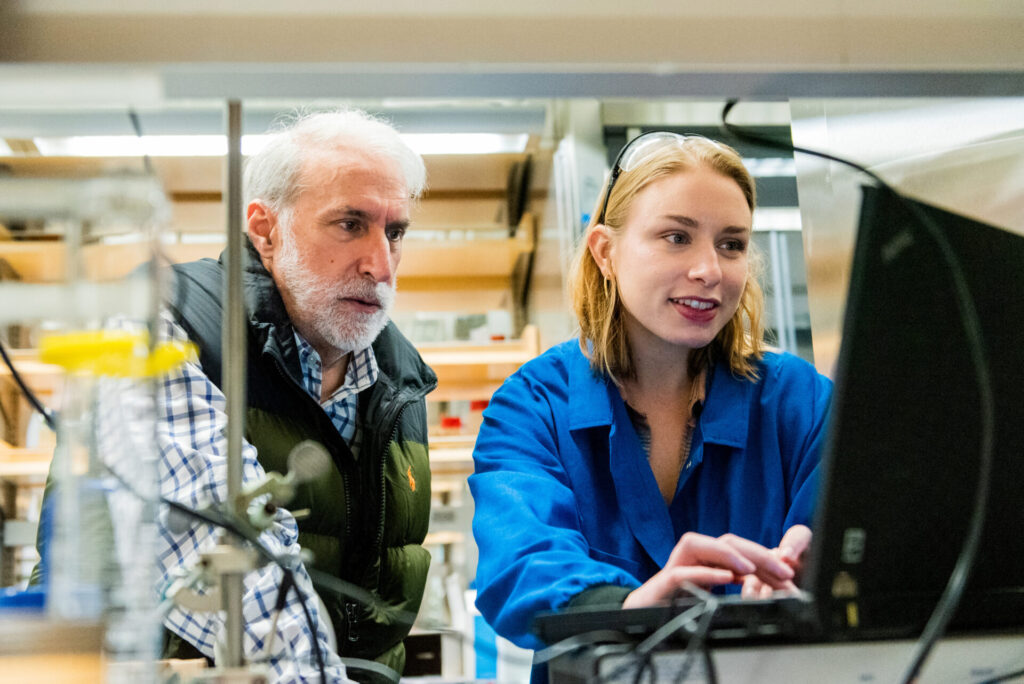
This track allows undergraduate students to participate in faculty-led summer research experience. Students admitted to this track are part of the Salata Institute’s cohort within the Harvard Summer Undergraduate Research Village (HSURV). HSURV is a collection of residential summer research programs for Harvard College students that is run by the Office of Undergraduate Research and Fellowships (URAF) for nine weeks during the summer. This year HSURV will run from June 8, 2026 to August 7, 2026.
Students admitted to the Research Village conduct research under the supervision of Harvard faculty and participate in professional development workshops, cohort meetings, and program-wide and social activities. Students live together in the same River House on campus, creating a robust academic, professional, and social community of undergraduate researchers.
Students will showcase their research during the final week of the program through research presentations.
Funding & Program Structure
Students selected for the Salata Institute’s Undergraduate Research Assistant Positions will receive:
- A $3,000 stipend
- Free on-campus housing
- Meals for the duration of the program
Participation in this track requires a full-time, nine-week commitment and adherence to the residential requirements of the Undergraduate Research Village.
Research Assistantship Opportunities
The Salata Institute will solicit a range of research assistantship opportunities from its faculty associates. Available positions will be posted on this page once they are confirmed.
How it Works:
- Students should contact the supervisor of their preferred project prior to applying to ensure a suitable match.
- During application, applicants will select their top two research assistantship preferences.
- Application reviewers will consider student preferences alongside input from faculty supervisors when making placement decisions.
- Students who receive an offer will have the opportunity to accept or decline the research project to which they are assigned (usually their first or second choice).
Eligibility
Applicants must meet the following eligibility criteria:
- Must be an undergraduate student at Harvard University in good academic standing
- Must be returning as an enrolled student during the Fall term immediately after the summer
- Must connect with the faculty supervisor of their preferred project prior to applying
- Must commit to living on campus in the Research Village for the full nine weeks
(June 8, 2026 – August 7, 2026)
(!) Harvard College applicants must review the Harvard College Summer Funding Policy (!)
Selection Criteria
Applications will be reviewed by the faculty members for whom students have expressed interest. Finalist selection will be coordinated by the Harvard University Center for the Environment (HUCE) to avoid redundancy, but final hiring decisions rest with the faculty supervisor.
Track 1: Application Requirements
Applicants must complete the following components:
- Applicant information (collected during CARAT login)
- Position selection: Select the top two research assistantship positions of interest
- Research Interests: Write about your research or academic goals for the summer (200 words) and answer questions about any special financial circumstances
- File uploads: Resume and unofficial transcript
Program Funding Restrictions
Funding from this program cannot be used for the following:
- Research conducted in countries rated as high-risk travel locations by the Harvard Office of Global Support Services
- Packaged travel deals (hotel, airfare, car rental) unless each component can be itemized
- Equipment purchases exceeding $250 without prior administrative approval
- Transportation to or from locations other than the site of the research project or research area
(!) Harvard College applicants must review the Harvard College Summer Funding Policy (!)