

International air quality workshop sets collaborative agenda
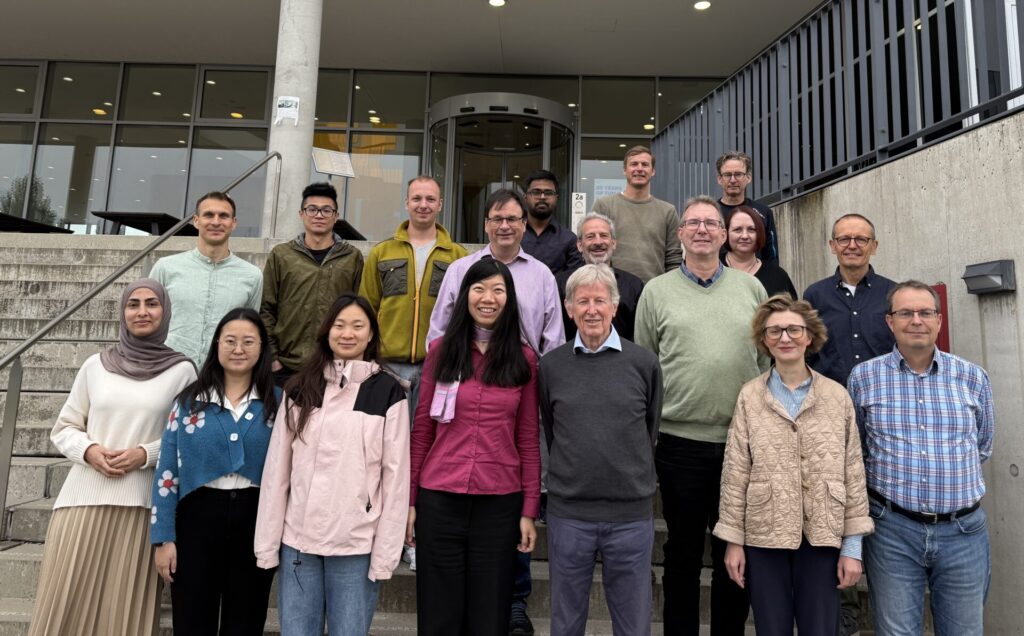
Earlier this month, Jia Chen of the Technical University of Munich (TUM) and Harvard atmospheric chemist Frank N. Keutsch co-hosted an international workshop that brought together some of the world’s leading air-quality researchers.
The September 9-11 workshop, organized as part of the Hans Fischer Senior Fellowship program and supported by the TUM Institute for Advanced Study (TUM-IAS), served as a platform for cutting-edge discussions on air-quality science, innovation, and solutions for pressing urban challenges.
Chen and Keutsch welcomed colleagues from around the world, including MIT, UC Berkeley, Karlsruhe Institute of Technology (KIT), ETH Zurich, Tsinghua University, the University of Innsbruck, the University of Augsburg, and EMPA in Switzerland. Over three days, participants engaged in a rich exchange of knowledge and experience, sharing their latest findings and exploring collaborative opportunities.
A key highlight was the presentation of results from a detailed air-quality measurement campaign conducted in Munich during the summer of 2023 and the spring of 2024. This large-scale campaign, jointly carried out by the teams of Chen, Keutsch, and Harald Saathoff (KIT), aimed to address a critical question: “Which emissions – and under what conditions – can be reduced to measurably improve Munich’s air quality?”
The campaign involved the deployment of advanced sensor networks, ground-based monitoring with high-precision instrumentation, and modeling, enabling the collection of an exceptionally detailed dataset. The insights generated are expected to guide scientific understanding and future policy decisions aimed at improving urban air quality.
Beyond the campaign results, the workshop facilitated in-depth discussions on a wide range of topics central to the future of air-quality research. These included characterizing heterogeneous urban emission sources, applying high-resolution air-quality modeling, using distributed sensor networks, and data-driven analytical approaches that leverage machine learning and big data. This exchange of ideas was particularly valuable, highlighting innovative ways to combine measurements and models to better understand pollution dynamics and inform effective mitigation strategies.
Participants also reflected on the broader implications of their work, emphasizing the importance of international collaboration in advancing air-quality science. The workshop provided a unique setting to explore ongoing and prospective projects, and to identify opportunities for joint studies that could address complex air-pollution challenges at both local and regional scales. By strengthening these collaborations, researchers aim to produce outcomes with both scientific and societal impact, supporting evidence-based policy solutions that protect public health and the environment.