

Climate Adaptation and Resilience
Cape Ann Project
Cape Ann is a coastal community facing a unique set of challenges and opportunities regarding climate change. Decisions made today by residents, community organizations, and municipal leaders will determine the resilience of this community. In light of these challenges, members from the Strengthening Communities Cluster have joined with local organizations—the Cape Ann Climate Coalition, Gloucester Meetinghouse Foundation, the City of Gloucester, and the Town of Manchester-by-the-Sea—to begin to envision a sustainable future for the region.
The Harvard GSD Office for Urbanization has engaged in a multi-year scenario planning design research study on Cape Ann to examine the region’s vulnerability to climate change. The work is made possible through partnerships with local organizations, including Town Green, Water Alliance, Cape Ann Climate Coalition, the City of Gloucester, and the town of Manchester-by-the-Sea. The project is entering its third phase of work on climate adaptation that builds directly upon previous tranches of work, including (phase 0, 2020) Cultural Landscapes Survey of Cape Ann; (phase 1, 2021-22) Great Storm of 2038 and Near Future Adaptations; and (phase 2, 2023-24) Regenerative Landscapes: Beyond Conservation to Adaptation. In Phase Three of the study (2024-25), Cluster faculty Diane Davis and Jason Beckfield are contributing to the ongoing initiative to build local capacity to anticipate, prepare for, manage, and recover from extreme weather events associated with rising sea levels as well as increased frequency and intensity of tropical storms and hurricanes. Davis is working on Governance & Policy to enhance the capacity of Cape Ann’s municipal governments to develop effective policies and governance practices to manage the challenges and threats of increasingly frequent and intense tropical storms and hurricanes, and adapt the region’s regenerative landscapes. Beckfield is working on Engagement & Communication to strengthen the capacity for Cape Ann’s municipalities to communicate and engage with civic and community leaders as well as the public in decision-making in relation to extreme weather events and ecological resilience.
External partners:
Resources:
- Rough Seas Ahead Conference (recorded by 1623 Studios)
- Community and Communications for Cape Ann Climate Resilience
- Divided We Drown: Exploring Cross-Municipal Cooperation for Climate Resilience in Cape Ann
- Office for Urbanization: Compound Vulnerabilities Project
- Climate Justice and Energy Transition in Massachusetts Cities and Towns
People
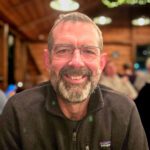
Jason Beckfield (he/him/his) is the Robert G. Stone Jr. Professor of Sociology at Harvard University. He took his PhD. in Sociology…
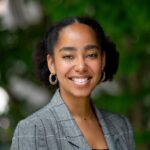
Amelia Linton (She/Her) is a Pre-Doctoral Research Fellow at Harvard’s Institute for Quantitative Social Science, working on the Strengthening Communities…

Diane E. Davis is the Charles Dyer Norton Professor of Regional Planning and Urbanism at Harvard’s Graduate School of Design. Before…

Samantha Wyman is a Doctoral Student in Sociology at Harvard University. During her graduate career, she is eager to explore…
Supporting Tribal-led climate adaptation and mitigation
Tribal Nations in the United States are uniquely exposed to the impacts of climate change, and are spearheading novel, effective adaptation and mitigation solutions. However, Tribes also report significant, persistent barriers and unmet needs to achieve their adaptation goals. The Cluster is supporting two projects designed to support Tribes’ identify and address these barriers:
First, in the Pacific Northwest, the Cluster is supporting work to build on the August 2024 report, Climate Adaptation Barriers and Needs Experienced by Northwest Coastal Tribes: Key Findings from Tribal Listening Sessions. This collaborative project seeks to develop policy resources and tools to address those barriers, in partnership with the Affiliated Tribes of Northwest Indians (ATNI), the Tribal Coastal Resilience Project of the Northwest Climate Resilience Collaborative, the Native American Law Center at the University of Washington School of Law, the Environmental and Energy Law Program (EELP) at Harvard Law School, and the Environmental Policy Innovation Center (EPIC).
Second, in Louisiana, the Cluster is supporting research into How the Gulf Coast Can Lead the Energy Transition. This project takes a closer look at equitable energy and industrial transitions and is being implemented in partnership with the Lowlander Center and the Disaster Justice Network (DJN).
External partners (Pacific Northwest):
Affiliated Tribes of Northwest Indians (ATNI)
Environmental Policy Innovation Center (EPIC)
External partners (Louisiana):
People

Hannah Perls (she/ella) is a Senior Staff Attorney with the Harvard Environmental & Energy Law Program (EELP) where she supervises…
Jason Beckfield (he/him/his) is the Robert G. Stone Jr. Professor of Sociology at Harvard University. He took his PhD. in Sociology…

Daniel Alain Evrard is a PhD student in the Department of Sociology at Harvard University. Spanning multiple levels of analysis…

Legal Fellow, Environmental and Energy Law Program at Harvard Law School

JD ’25, Emmett Environmental Law Center at Harvard Law School

JD ‘24, Harvard Law School