

Key opportunities for reducing methane emissions – even during challenging times
Watch the recording of this session here.
Carbon dioxide is the primary greenhouse gas affecting Earth’s climate. And it gets most of the attention. But methane is close behind, accounting for some 30 percent of climate warming from human activities, said Robert Stavins, the A.J. Meyer Professor of Energy and Economic Development at Harvard, at Harvard Climate Action Week.
Considered over the period of the next 100 years, methane’s impact per unit released is 28 times greater than that of carbon dioxide.

“It’s extremely important,” Stavins said, describing how cheap fixes make methane an obvious target in efforts to keep global warming in check. “Methane emissions abatement can significantly reduce greenhouse gas concentrations and climate change, particularly in the short term.”
But figuring out exactly where, and in what quantities, these emissions are happening is the challenge, said Daniel Jacob, the Vasco McCoy Family Professor of Atmospheric Chemistry and Environmental Engineering at Harvard. Methane can come from a variety of sources – such as oil and gas operations, landfills, and agriculture.
“Those are extremely difficult to quantify and therefore make it hard to devise a strategy,” said Jacob, a specialist in watching those emissions remotely from satellites.
“Satellites play a critical role because they provide global continuous observations. Methane has nowhere to hide,” he said, describing how satellite data have established that livestock and landfills are important sources of methane.
Take landfills. Jacob’s work has shown enormous variability. Some leak very little, while others spew fast-flowing streams of methane into the atmosphere. The difference is not how much waste they hold, but efforts by facility owners – and incentives to stop.
Data drive smart policy – and savings
In the landfill sector, as in others, policy is a crucial lever to standardize best practices that drive down emissions.
That is harder under the Trump administration.
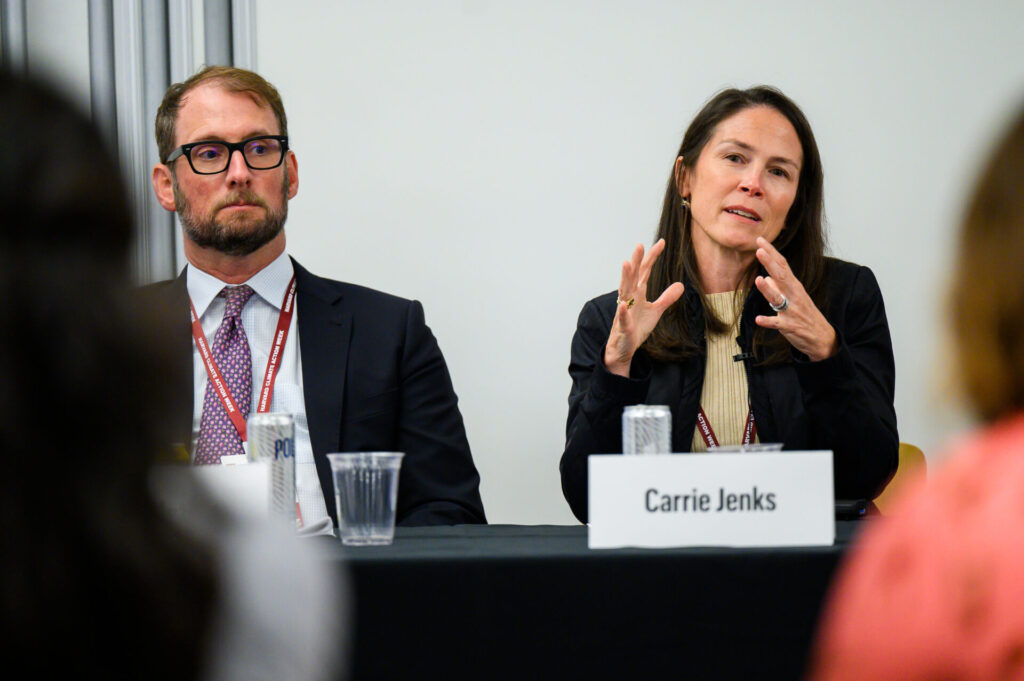
“We have the federal government moving to eliminate a lot of regulations,” said Carrie Jenks, executive director of the Environmental and Energy Law Project at Harvard Law School. “We also have courts that are really skeptical of [regulatory] agencies, especially the past administration’s environmental regulations.”
But methane offers an unusual case. As the main ingredient in natural gas, it is a valuable product, so reducing losses has real economic value. Producers want to know they are leaking if stopping those leaks gives them more product to sell.
“At Chevron, we have a bit of a motto: We just tell everybody it’s all about keeping methane in the pipe. […] Methane in the pipe is a product that we can sell,” said Vanessa Ryan, general manager for climate and engagement at the energy company.
For oil and gas producers, there’s an incentive to stop emissions if they know what works and what doesn’t, Jenks added, pointing out that the Environmental Protection Agency is moving away from collecting that kind of data.
“Without data, you don’t have information that’s transparent, and companies don’t know what works,” Jenks said.
Global buyers raise the bar
Despite cutbacks to methane monitoring and other climate-related measures under the Trump administration, “the United States is not an island,” said Jon Goldstein, associate vice president at the Environmental Defense Fund.
Today, “we have a better understanding than we ever had before about the sources of emissions,” he said, noting that international buyers of American gas, such as the European Union, are using that understanding to develop strict import standards for fuels, “requiring that energy be as clean as it can be.”
“That’s a source of optimism for me.”