

Making the case for water (and water’s) rights
Indigenous communities worldwide are disproportionately impacted by water pollution, scarcity, and degraded aquatic and coastal ecosystems. They’re also at the forefront of efforts to conserve water systems and to secure water as a fundamental right for humans and nonhumans alike.
At a September 16 panel discussion hosted by Harvard Kennedy School’s Carr-Ryan Center for Human Rights, three Indigenous leaders detailed their work to protect water rights on ancestral lands and beyond, and to create legal and cultural frameworks that center Indigenous voices and knowledge in the global water justice movement.
“When we talk about rights of nature, [we] really speak for the fish, for the wind, for the air, for the rocks. Those are all thought of as beings,” said Bryan Bainbridge, a member of the Red Cliff Band of Lake Superior Chippewa Indians and chief executive officer of the Great Lakes Inter-Tribal Council.
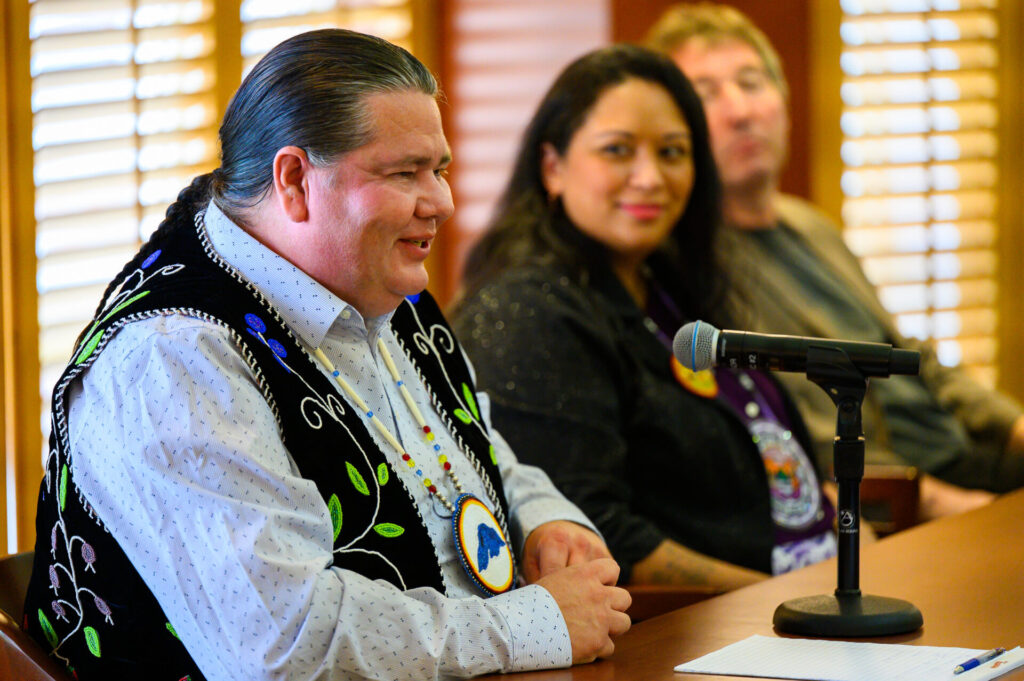
Panelists described the need to restore human connections with nature and reverence for the water and entities that rely on it.
“We are taught to respect all living things back at home,” said Charitie Ropati, an educator, activist, and water engineer of Yup’ik and Samoan heritage who serves as a youth climate adviser to the UN Secretary-General. The land provided abundance, “from animals to birds, while the water provided fish, seals, and whales. In my culture, they are considered our relatives, and there’s a very close connection between the animal and human worlds.”
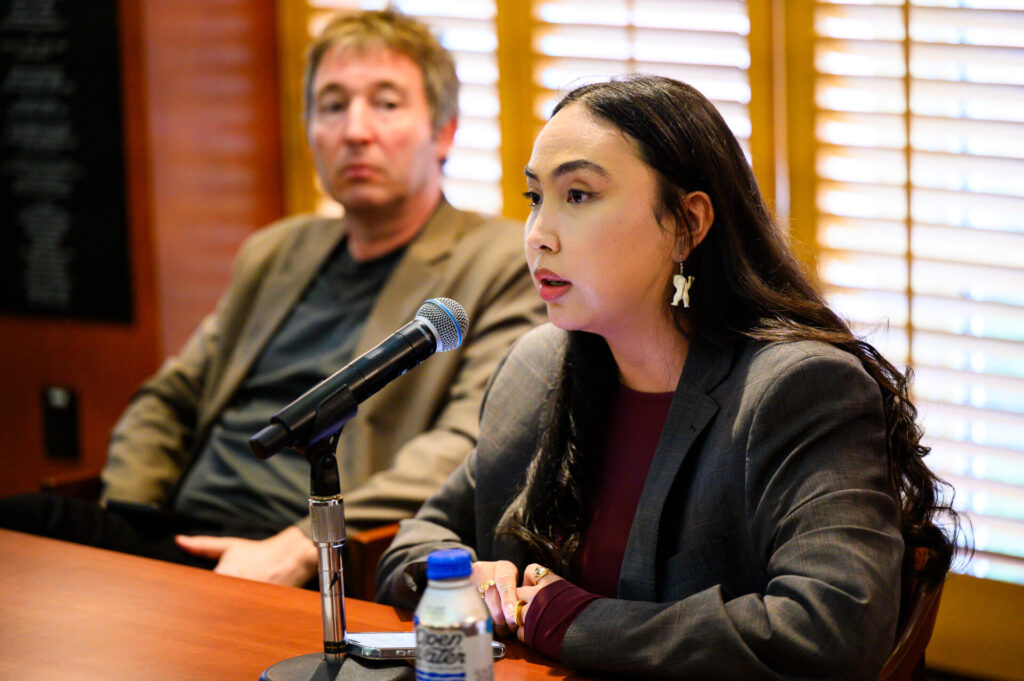
Through her Arctic activism and her family lineage, Ropati says she has witnessed the environmental consequences of separation from the natural world. She recounted the story of her great-grandfather, whose village in southwestern Alaska was threatened by thawing permafrost and rising waters. In 1967, Ropati recounts the entire community was forced by rising waters to uproot their homes and transport them 11 miles across frozen tundra using little more than one small tractor and dog sleds.
“They did this without the help of the federal government, state organizations, or local aid,” Ropati said. “Time and time again, we have seen Indigenous peoples, not only in Alaska and in the Arctic, but throughout the entire world, make these hard decisions and sacrifices.”
Kelsey Leonard, a water policy scholar at the University of Waterloo and member of the Shinnecock Nation, encouraged critical thinking about what justice means and whom it benefits. Justice, she said, is often viewed through Eurocentric, militaristic, and male-dominated lenses, all of which ignore centuries of Indigenous experience practicing regenerative ways of healing the planet.
Leonard pointed to the Earth law movement as a legal framework to restore connection to – and responsibilities toward – the natural world. Earth law is rooted in the idea that natural ecosystems should have legally enforceable rights to exist and thrive. Leonard pointed to efforts worldwide to recognize legal personhood for water systems. New Zealand, for example, granted personhood to the Whanganui River in 2017 with legislation calling the river “a spiritual and physical entity” and “an indivisible and living whole from the mountains to the sea.”
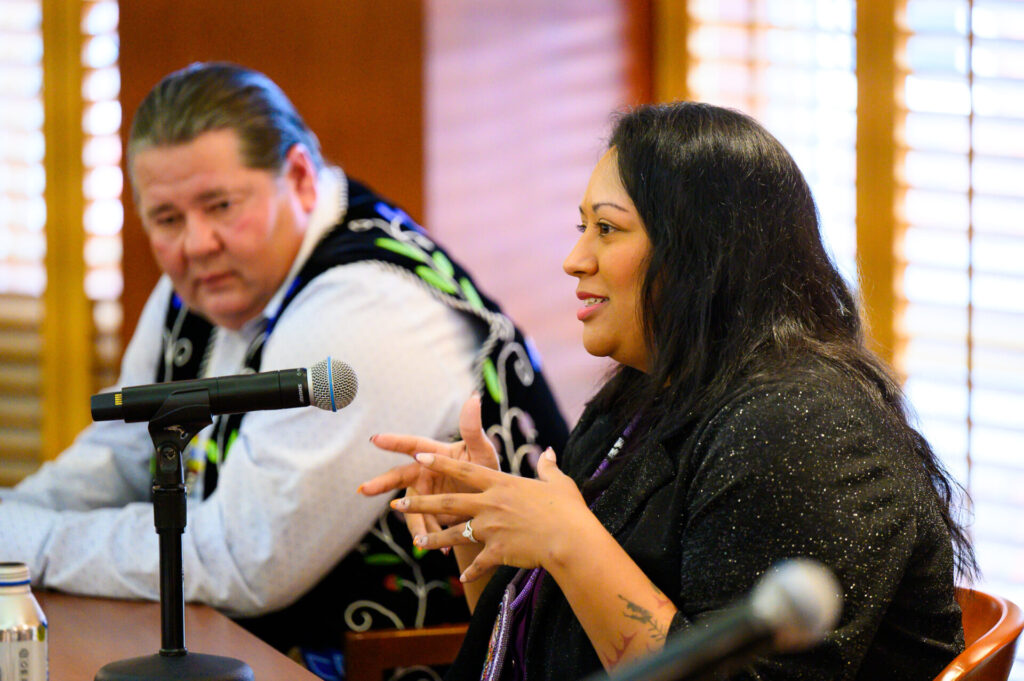
Similar efforts are underway in the United States. In 2020, the Menominee Indian Tribe of Wisconsin passed a resolution that grants the Menominee River the rights to restoration, preservation, unpolluted water, and natural biodiversity. Similar legislation passed in 2019 by the Yurok Tribe grants personhood to the Klamath River, but this designation isn’t recognized under California state law.
Panelists emphasized that the U.S. federal government currently does not recognize water as a human right – though the United Nations and some countries do – but that establishing personhood for water systems creates legal channels for challenging extractive projects.
Youth are “leading the cause”
When asked whether they had hope for the future, panelists agreed that climate change makes their work more urgent and that the path to success is strewn with setbacks. “We’re playing a game of Whack-a-Mole—that’s what it feels like, constantly,” said Leonard.
It is the younger generations of Indigenous activists that inspire hope, panelists agreed.
“Youth have the ability to reimagine our world where we have everything we need to really thrive, realities in which our homes are no longer sinking into the ocean, realities in which our communities aren’t being eroded away, realities in which we no longer have to fear occupation,” said Ropati, the UN youth climate adviser. “All of these stories lie with our children and youth, and it’s really them leading the cause.”