

From Harvard to Beacon Hill: Salata interns help write Massachusetts’ climate playbook
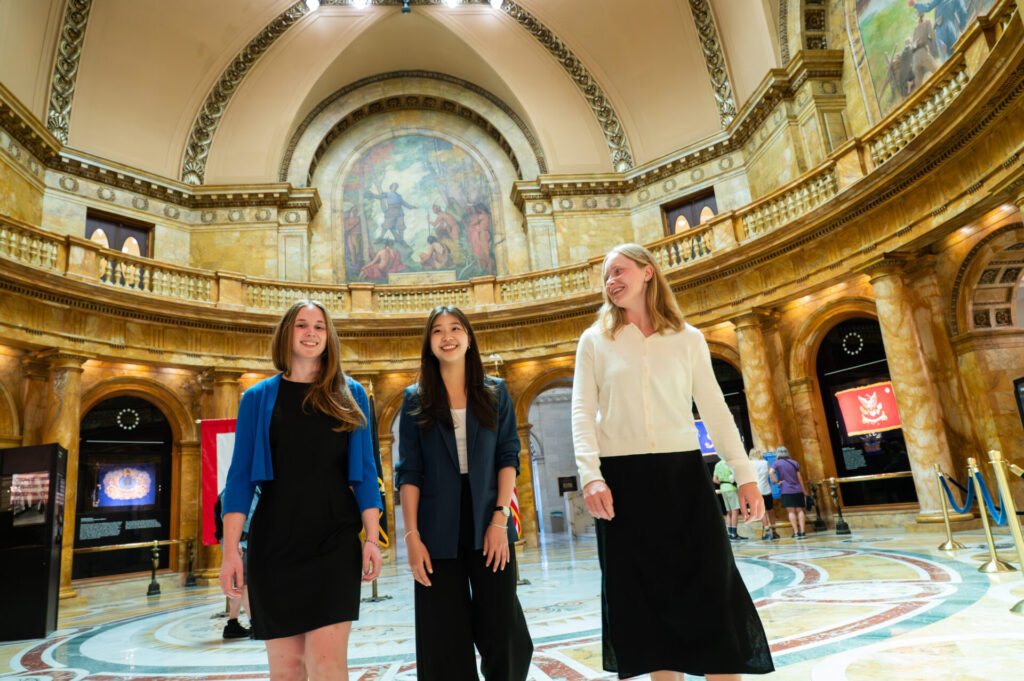
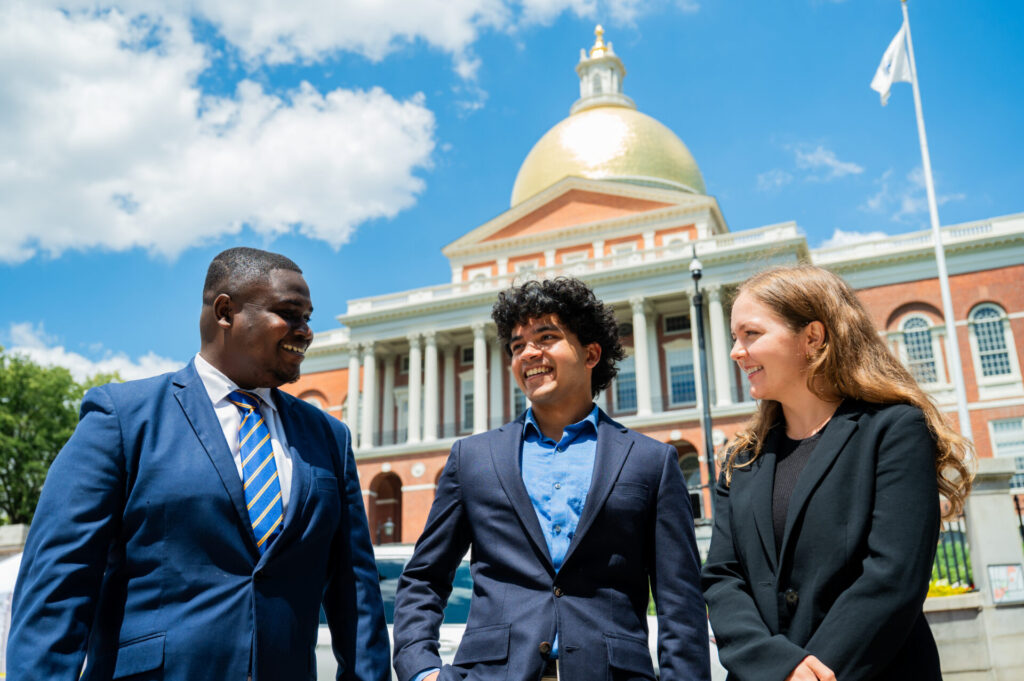
The Massachusetts State House buzzes in July. Tourists crowd its marble halls, lawmakers race to roll call, and, for the third consecutive year, Harvard students cluster in cubicles and anterooms churning out memos that shape the commonwealth’s fight against climate change.
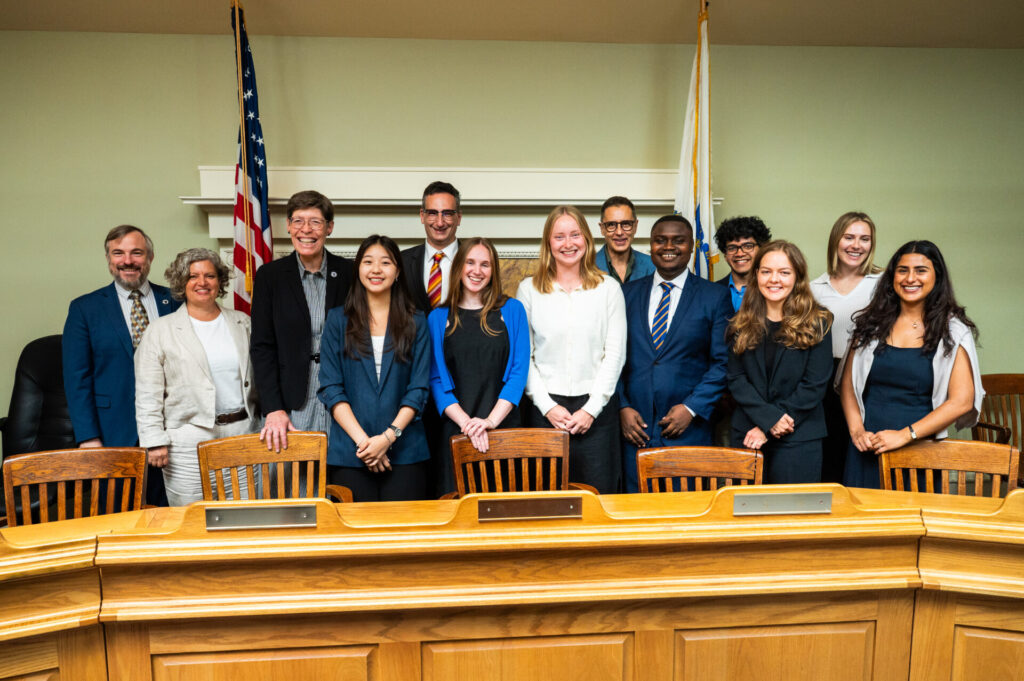
This year seven Harvard students are embedded on Beacon Hill through the Climate Policy Summer Internship Program, a partnership between the Salata Institute for Climate and Sustainability and several climate-focused state legislators.
The program provides professional development opportunities for Harvard students – who range from undergraduates to doctoral candidates – to explore the intersection of climate, policy, and public service. Students get an unvarnished look at how an idea becomes statutory language, or dies in committee.
By paying their salaries, the Salata Institute allows students to try out public service during a summer when they might otherwise be forced to focus on their pocketbooks elsewhere.
Their work touches every corner of Massachusetts’ ambitious climate agenda, from urban tree canopies to offshore wind power.
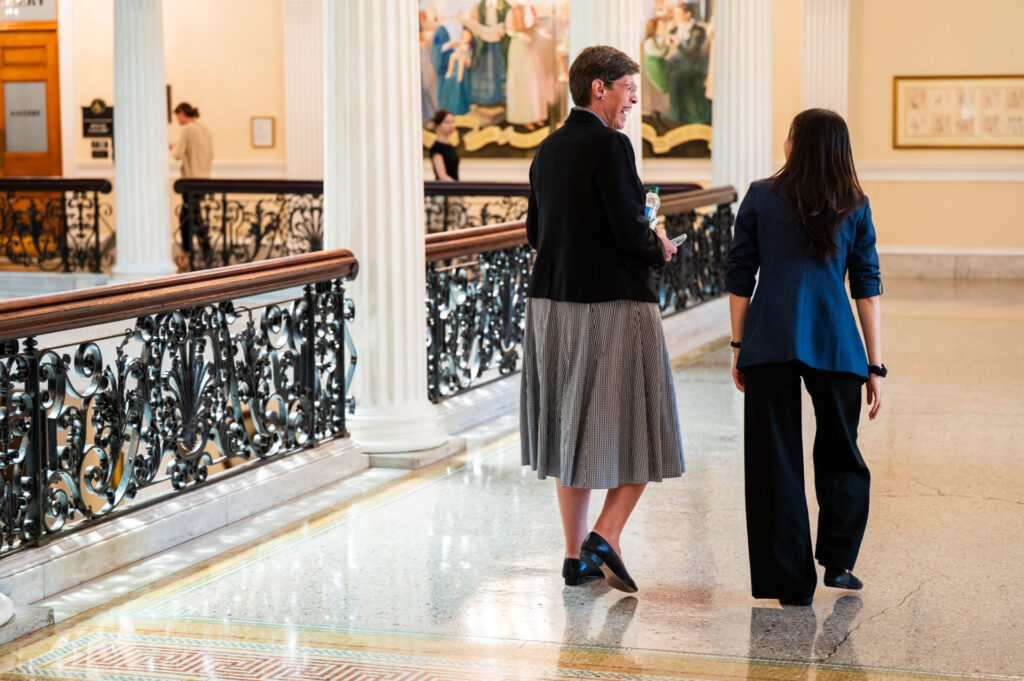
“We need you to come in and inform good policy,” Representative Joan Meschino ‘87, a key facilitator for the program, told the interns at a recent lunch. “This is how it works: We need trusted sources, good reliable research, good information, thought leadership – those building blocks. That is how you educate and inform legislation.”
Each intern carries a different brief.
Susanna Soelberg has waded into the thicket of environmental permitting. Her assignment: Outline reforms that would speed conservation projects without sacrificing environmental review. In particular, she is focusing on a bill that would restore salt marshes north of Boston to create a more resilient coast and protect homes from rising seas.
One lesson is rhetorical as much as legal. “Not focusing as much on the words ‘climate change’, even if that is what we’re addressing,” explained Soelberg, a fourth-year environmental science and government student from Texas. Framing a proposal around flood protection or economic efficiency, she learned, can win over skeptics faster than a lecture on rising sea levels.
“I think you have to appeal to broader issues. Everyone cares about water and people want to save money,” said Soelberg, who is writing a policy memo and advocacy materials to support an environmental bond bill to pay for climate resiliency. “So that can mean not focusing as much on climate change, even if that is what we’re addressing.”
Several legislators stressed the importance of communications skills.
“This is a very technical field, and it’s easy to get lost in the weeds on a policy, particularly something as gnarly as permitting work. And it’s important to understand how you convey the big picture,” said Soelberg’s mentor, Representative Dawne Shand. “The reason I picked Susanna as my intern was her research and writing abilities.”
Learning to speak Beacon Hill
For Graduate School of Design students steeped in studio critiques, the federal-style State House building echoes with a novel vocabulary: committee markups, budget riders.
“I’m learning I need to be a good negotiator, a good communicator. I need to know how to pick up something really quickly, be okay with steep learning curves, and be ready to show up and engage,” said Fatima Tajammal, a master’s student in urban planning from British Columbia. Tajammal spent July addressing heat islands, food deserts, and flooding in the Worcester district of Rep. David LeBoeuf ’13 using stakeholder engagement and tactical urbanism – rapid low-cost interventions to test longer-term solutions.

“I’m learning I need to be a generalist. That’s not a designer or architect’s typical lens. That’s the real world,” said Tajammal.
Down the hall, Julia Downey, a third-year economics student from Mattapoisett, Massachusetts, is spending her days dissecting Governor Maura Healey’s Energy Innovation Act, flagging implementation pitfalls and preparing talking points for harried staffers. “Now, if I’m talking about zoning, I can see things from a senator’s point of view,” she said.
Downey, who is writing her capstone project for Senator Dylan Fernandes, M.P.A. ’22, on how to recycle solar panels and wind-turbine blades, plans to test the private sector after graduation, perhaps at a green tech startup. “But I think the experience gained from this internship will help me a lot,” she said.
Indeed, throughout the program, students cultivate skills they can apply to any field: relationships, timing, and the endless search for consensus.
“Hopefully you have each come in and not just focused on research,” Rep. Meschino reminded the students, “but you have focused on building your relationships. This is a business about relationships.”