

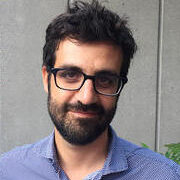
Bruno Carvalho
Bruno Carvalho specializes in urban life and how cities change. He is the author of The Invention of the Future: A History of Cities in the Modern World (Princeton University Press, forthcoming in January 2026).The book opens in the 1750s, when city dwellers and planners began to assume that the future would be radically different from the past. It recasts modern urbanization within a history of competing visions, amid dramatic technological, intellectual, and cultural transformations. Mobility is a central focus. The book argues that the futures of the past can help us better understand the history of built environments, as well as our own crossroads in an increasingly urban world.
Carvalho has published numerous articles and essays. His interdisciplinary approaches tend to bridge history, literary analysis, urban design, landscape architecture, and the social sciences concerned with cities. His award-winning Porous City: A Cultural History of Rio de Janeiro was published in Brazil in a revised and expanded edition. He is co-editor of O Livro de Tiradentes: Transmissão atlântica de ideias políticas no século XVIII, 2013), as well as Occupy All Streets: Olympic Urbanism and Contested Futures in Rio de Janeiro (2016), and of the book series Lateral Exchanges (University of Texas Press), on historical and contemporary issues in design and the built environment (with Alison Isenberg).
At Harvard, Carvalho is Co-Director of the Harvard Mellon Urban Initiative and Chair of the Standing Committee on Degrees in History & Literature. He also sits on the Advisory Committees of the Brazil Studies Program, the program in Ethnicity, Migration, Rights, as well as the Executive Committees of the Weatherhead Initiative on Global History and of the David Rockefeller Center for Latin American Studies. He is also a Faculty Affiliate in the Critical Media Practice program, at the Afro-Latin American Research Institute, The Salata Institute for Climate and Sustainability, the Graduate School of Design, the Bloomberg Center for Cities, the Weatherhead Center for International Affairs, and the Center for Population and Development Studies. Carvalho serves on the boards of the Dumbarton Oaks Ex Horto book series on garden and landscape studies, the Mellon Democracy and Landscape Initiative, and the Temple Hoyne Buell Center for the Study of American Architecture at Columbia University.
The Salata Institute
The Salata Institute supports interdisciplinary research that leads to real-world action, including high-risk/high-reward projects by researchers already working in the climate area and new endeavors that make it easier for Harvard scholars, who have not worked on climate problems, to do so. Faculty interested in the Climate Research Clusters program should note an upcoming deadline for concepts on April 1, 2024.